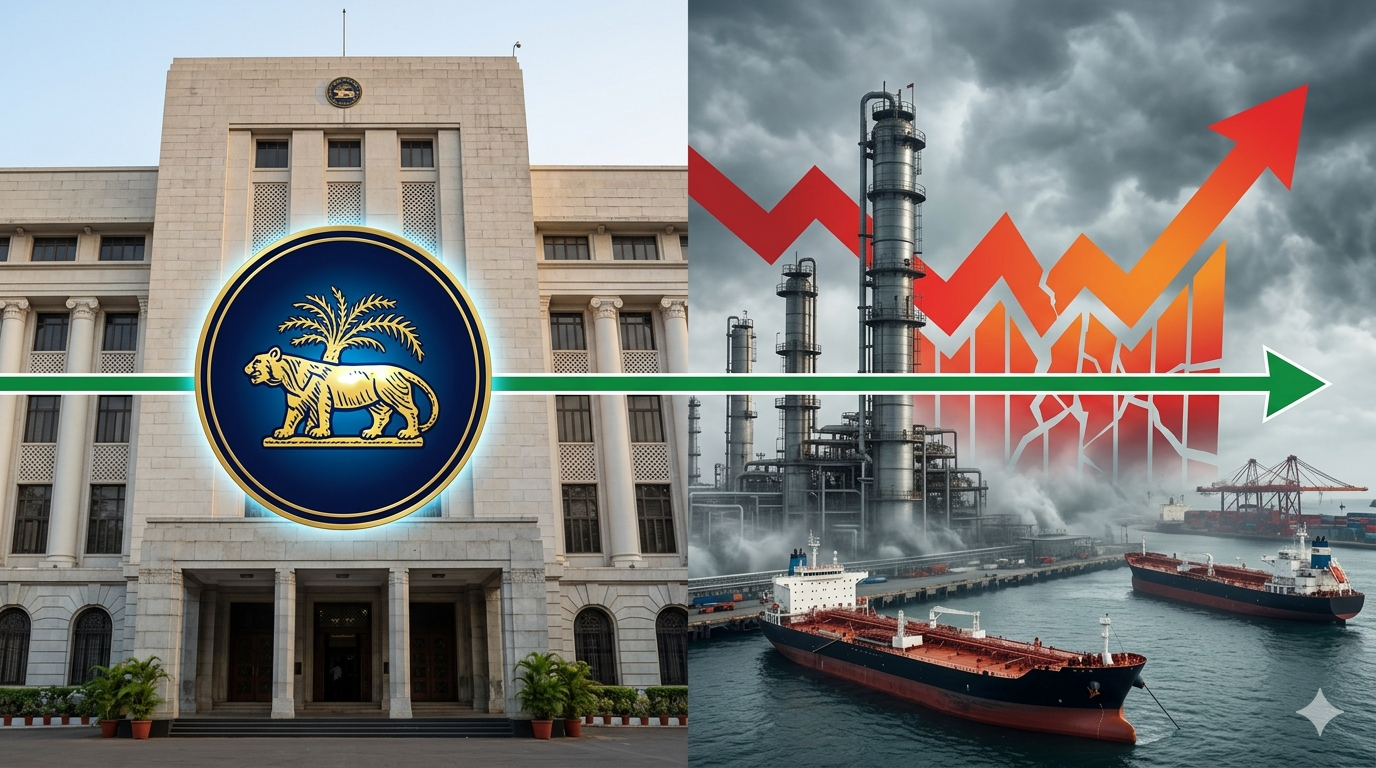
The Reserve Bank of India (RBI) is poised to maintain its current monetary policy stance in the upcoming Monetary Policy Committee (MPC) meeting scheduled for April 6-8, as global oil shocks and geopolitical tensions overshadow domestic banking resilience. India’s banking sector, led by giants like State Bank of India (SBI), HDFC Bank, ICICI Bank, and Axis Bank, continues to exhibit stability with double-digit credit and deposit growth, even as
NIFTY Bank index faces pressures from rupee depreciation and rising yields. RBI’s March 2026 Bulletin underscores economic momentum driven by robust GDP estimates for 2025-26 at strong levels, yet flags inflationary upticks from food prices and energy disruptions, complicating the outlook for lenders amid volatile commodity markets and foreign portfolio outflows.
Key Highlights
- RBI likely to stay on hold in April MPC amid larger oil shock risks, balancing growth support against inflation control.
- Indian economy shows resilience with high-frequency indicators signaling momentum in February, backed by record agriculture, auto sales, and services.
- Bank credit and deposit growth sustain double-digit rates; system liquidity remains comfortable due to government spending and RBI interventions.
- Headline CPI inflation rises in February on food and beverages, with global energy shocks posing upside risks to domestic prices.
- Rupee under pressure from Middle East conflict, leading to equity corrections, hardened bond yields, and widened current account deficit.
RBI Policy Stance in Banking Sector
The RBI’s anticipated decision to hold rates steady reflects a nuanced response to a macroeconomic landscape marked by escalating global uncertainties, particularly the severe supply disruptions in crude oil, natural gas, and fertilizers described by the International Energy Agency as the largest in global oil market history. This oil shock has triggered sharp commodity price swings, spilling over into financial markets with weakened equities, elevated bond yields, and depreciation pressures on emerging market currencies including the INR. For the
banking sector, these dynamics translate into heightened volatility, as lenders navigate firming yields on government securities that could squeeze net interest margins if sustained.
Domestic resilience provides a counterbalance, with second advance estimates projecting robust GDP growth for 2025-26 fueled by strong urban and rural consumption. High-frequency indicators point to accelerating economic activity in February, underpinned by record agricultural output, surging automobile sales, and steady services sector performance. Banks like SBI, with its dominant market share in public sector lending, and private peers HDFC Bank and ICICI Bank have capitalized on this momentum, reporting sustained double-digit loan book expansion. Investors looking to participate in this market movement can
open demat account online through SEBI-registered brokers to access these opportunities. Axis Bank, focusing on retail and SME segments, has similarly benefited from comfortable system liquidity, bolstered by proactive RBI measures and government expenditure.
However, emerging inflationary pressures pose risks to this stability. Headline CPI inflation climbed in February, driven primarily by food and beverages, especially volatile vegetable prices. Global energy disruptions are expected to amplify these upside risks, potentially eroding real disposable incomes and dampening loan demand. RBI’s policy conundrum—supporting growth while anchoring inflation and stabilizing the rupee—will directly influence banking profitability, as higher funding costs from yield hardening could offset credit growth gains.
Banking Liquidity and Credit Dynamics
Financial conditions in the Indian banking system remain broadly stable, with liquidity described as comfortable, enabling uninterrupted double-digit growth in both credit and deposits. SBI leads with its extensive branch network, channeling funds into priority sectors amid rising domestic demand, while HDFC Bank’s merger synergies continue to drive efficiency in retail banking, posting loan growth above 15 percent year-on-year in recent quarters. ICICI Bank has emphasized digital transformation, boosting unsecured lending portfolios, and Axis Bank has seen deposit mobilization accelerate to match its aggressive credit expansion targets.
Market data underscores this vigor:
NIFTY 50 and
SENSEX have corrected modestly amid global risk aversion, but NIFTY Bank has held relatively firm, down only 2-3 percent over the past week as of March 24. Foreign portfolio outflows have pressured the INR, which weakened by 1.5 percent against the USD, prompting RBI interventions to maintain orderly conditions. India’s foreign exchange reserves provide an adequate buffer against external shocks, covering over 11 months of imports, which reassures investors in bank stocks.
Yet, the widened current account deficit, stemming from elevated petroleum and gold imports, signals vulnerabilities. This development presents new considerations for stock investment strategies focused on Indian equities. Banks face transmission of global volatility through higher import bills for corporates, potentially straining non-performing asset ratios in energy-exposed segments. Analysts note that while credit growth hovers at 14-16 percent for majors like SBI and HDFC, deposit growth at 12-13 percent indicates a narrowing credit-deposit ratio, necessitating vigilant liability management.
Major Banks Performance Analysis
| Bank |
Market Cap |
Credit Growth |
Key Metrics |
| SBI |
Rs 7 lakh crore+ |
15% |
Rural recovery focus, watchful on MSME slippages |
| HDFC Bank |
– |
16.5% YoY |
Post-merger advances, CASA ratio stable at 38% |
| ICICI Bank |
– |
20% (Retail) |
Net interest income projected up 18% |
| Axis Bank |
– |
14% (Deposits) |
Focus on high-yield corporate books |
Comparative metrics reveal private banks outperforming on efficiency: HDFC and ICICI boast return on assets above 2 percent versus SBI’s 1 percent, though public sector scale offers dividend stability for institutional portfolios.
Market Outlook
Looking ahead, the banking sector’s trajectory hinges on the evolution of Middle East tensions and oil prices, with RBI’s MPC hold signaling a wait-and-watch approach. Retail participation has grown significantly as access to a
reliable stock trading platform has become more widespread, enabling greater market participation across various investor segments. Key players like SBI and HDFC remain attractive for yield-seeking portfolios, but risks from rupee volatility and potential NPAs in trade finance warrant careful consideration. Upside catalysts include RBI’s liquidity tools and domestic capex revival, potentially lifting sector earnings growth to 15 percent FY27, favoring selective exposure to high-growth privates amid SENSEX stabilization.
Conclusion
India’s banking sector stands as a pillar of economic resilience amid global storms, with RBI’s steady hand navigating oil shocks and currency pressures while sustaining credit momentum. Institutions like SBI, HDFC, ICICI, and Axis Bank exemplify this fortitude through robust balance sheets and adaptive strategies, yet vigilance on inflation pass-through and external balances is paramount. For discerning investors, the confluence of domestic strength and policy prudence positions banking as a core allocation in Indian portfolios, poised for measured gains as uncertainties resolve.
Leave a Reply