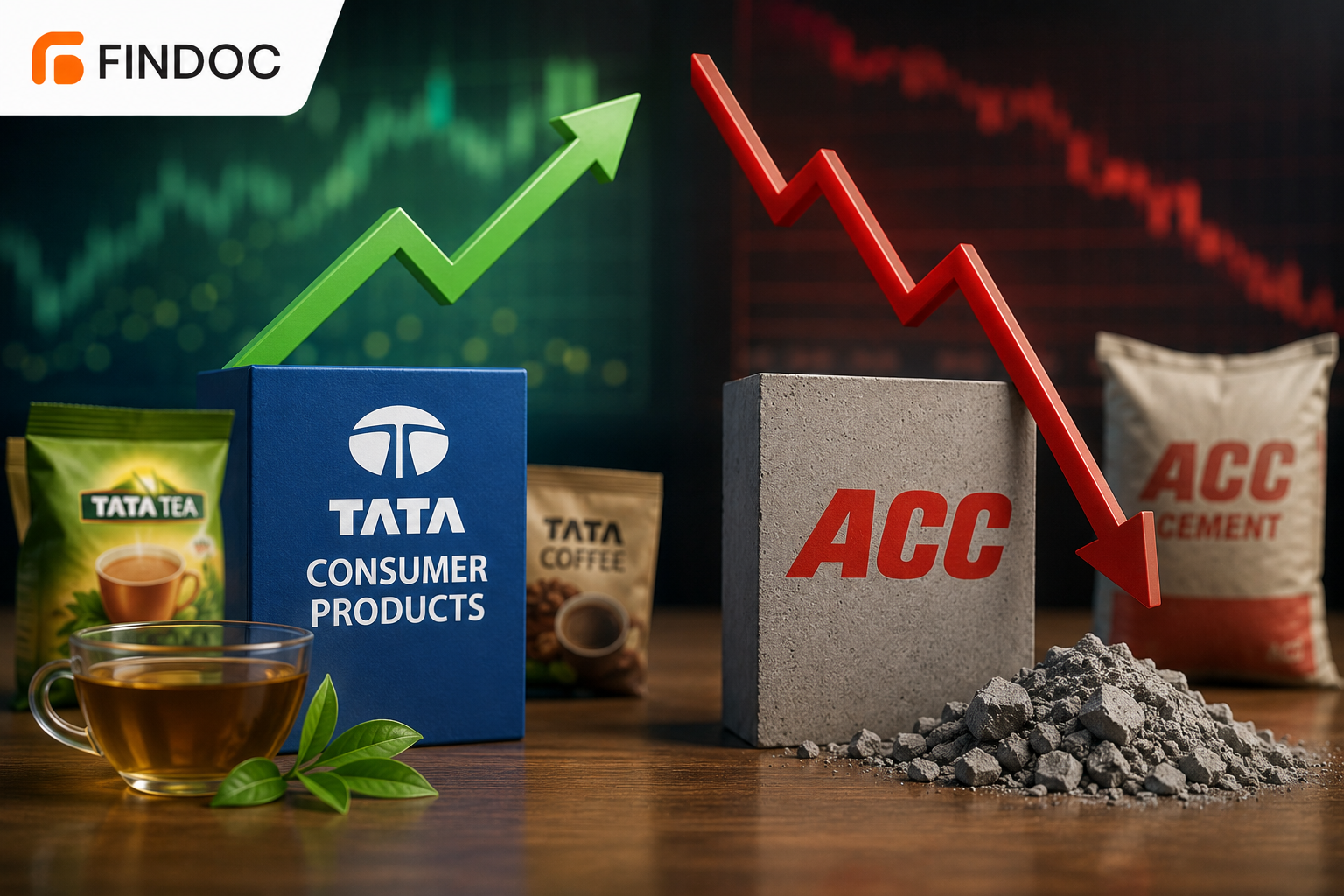
India’s first-quarter earnings season delivered a mixed picture on July 24, 2026. Several major companies reported their Q1 results, revealing sharp contrasts in performance across sectors. Tata Consumer Products led with strong profit growth, while ACC posted a steep decline. Meanwhile, Shriram Finance, Hindustan Zinc, SBI Life, SBI Cards, and Laurus Labs all reported profit increases. Bank of Baroda, NTPC, SAIL, and KFin Tech were scheduled to announce results later in the day.
What Changed
The Q1 results season highlighted diverging fortunes across India’s corporate landscape. Tata Consumer Products reported a 28.4% year-on-year rise in consolidated profit after tax (PAT), signaling robust consumer demand and improved operational efficiency. In contrast, ACC’s PAT fell sharply by 61.5%, reflecting pressure on the cement sector from input costs and pricing challenges.
| Company | Q1 PAT Movement | Sector |
|---|---|---|
| Tata Consumer Products | +28.4% YoY | FMCG / Consumer Goods |
| ACC | -61.5% YoY | Cement |
| Shriram Finance | Rise (quantum not disclosed) | NBFC / Financial Services |
| Hindustan Zinc | Rise (quantum not disclosed) | Metals & Mining |
| SBI Life Insurance | Rise (quantum not disclosed) | Insurance |
| SBI Cards | Rise (quantum not disclosed) | Financial Services |
| Laurus Labs | Rise (quantum not disclosed) | Pharmaceuticals |
Why It Matters for Investors
Q1 results serve as a critical barometer of corporate health. For investors tracking India’s equity markets, the disparity between winners and laggards this quarter underscores the importance of sector selection. Consumer staples and financial services showed resilience, while cement faced structural headwinds.
Investors seeking exposure to these earnings cycles can open demat and trading account online through SEBI-registered platforms to access stocks in real time as results unfold. In addition, the breadth of companies reporting on a single day, spanning FMCG, metals, insurance, and pharma, highlights the diversified nature of India’s listed corporate universe.
Potential Financial Impact
Tata Consumer’s strong PAT growth suggests margin expansion and volume recovery across its tea, food, and beverage segments. This could support re-rating of the stock if sustained in subsequent quarters. However, ACC’s dramatic profit decline raises questions about the cement sector’s near-term earnings outlook, particularly given elevated energy and logistics costs.
For financial services players like Shriram Finance and SBI Cards, profit growth indicates healthy credit demand and asset quality. Laurus Labs’ improved profitability reflects a recovery in pharmaceutical exports and domestic formulations. The exact magnitude of profit growth for these companies remains not disclosed at this stage of reporting.
Expert or Market Reaction
Market participants reacted cautiously to the mixed Q1 scorecard. Analysts had broadly anticipated pressure on cement companies amid competitive pricing environments. Therefore, ACC’s steep decline was not entirely surprising, though its scale exceeded some forecasts. On the other hand, Tata Consumer’s outperformance reinforced bullish sentiment among consumer sector investors.
Financial sector results from Shriram Finance and SBI Life were seen as broadly positive signals for credit growth and insurance penetration in India. Meanwhile, Hindustan Zinc’s profit rise added confidence to the base metals space, where demand recovery has been uneven globally. Specific analyst price target revisions remain not disclosed pending detailed earnings calls.
Broader Context
India’s Q1 FY27 earnings season is unfolding against a backdrop of moderating inflation, relatively stable interest rates, and continued rural consumption recovery. The Reserve Bank of India’s monetary stance has supported lending activity, benefiting NBFCs and banks. However, global commodity price volatility continues to weigh on input-cost-sensitive sectors like cement and metals.
| Sector | Q1 Trend | Key Driver |
|---|---|---|
| FMCG | Positive | Volume recovery, rural demand |
| Cement | Negative | Input cost pressure, pricing |
| Financial Services | Positive | Credit growth, asset quality |
| Pharmaceuticals | Positive | Export recovery, formulations |
| Metals & Mining | Mixed to Positive | Commodity prices, volumes |
Key Risks and Factors to Consider
Despite several bright spots, investors must weigh significant risks. The cement sector’s weakness may persist if infrastructure spending slows or pricing pressure intensifies. For consumer companies like Tata Consumer, sustaining margin gains will depend on raw material costs and competitive intensity in branded food and beverages.
Financial services firms face risks from potential asset quality deterioration if macroeconomic conditions soften. Regulatory changes affecting NBFCs or insurance products could also impact profitability. Furthermore, pharmaceutical companies like Laurus Labs remain exposed to US FDA regulatory scrutiny and pricing pressure in export markets. Valuation concerns may also limit upside for stocks that have already re-rated following strong results.
What Investors Should Watch Next
- Results from Bank of Baroda, NTPC, SAIL, and KFin Tech, scheduled for the same day, will provide further signals on banking, energy, and capital markets sectors.
- Management commentary from Tata Consumer and ACC on Q2 outlook and input cost trajectories will be critical for forward earnings estimates.
- Credit quality updates from Shriram Finance and SBI Cards will indicate whether NBFC asset stress is rising or stabilizing.
- Hindustan Zinc’s volume and realization data will offer insights into base metal demand trends in India and export markets.
- Investors using a best trading platform should track post-result price action closely, as earnings surprises often drive significant single-day volatility in mid- and large-cap stocks.
Conclusion
India’s Q1 FY27 earnings season is reinforcing sector divergence as a dominant theme. Consumer, financial services, and pharmaceutical companies are generally delivering profit growth. Meanwhile, cement faces a difficult operating environment. The contrast between Tata Consumer’s 28.4% PAT rise and ACC’s 61.5% decline illustrates how sector dynamics can vary sharply within the same reporting period.
As more results arrive from Bank of Baroda, NTPC, SAIL, and KFin Tech, investors will gain a more complete picture of corporate India’s health heading into the second quarter. Disciplined sector analysis and careful monitoring of management guidance will remain essential for navigating this earnings cycle effectively.
- Tata Consumer’s strong 28.4% PAT growth positions it as a standout performer in Q1, reflecting consumer demand resilience.
- ACC’s 61.5% PAT decline signals persistent sector-level challenges in cement, warranting caution on the broader sector.
- Financial services and pharma companies broadly reported profit gains, supporting positive sentiment in these segments heading into Q2.
Leave a Reply