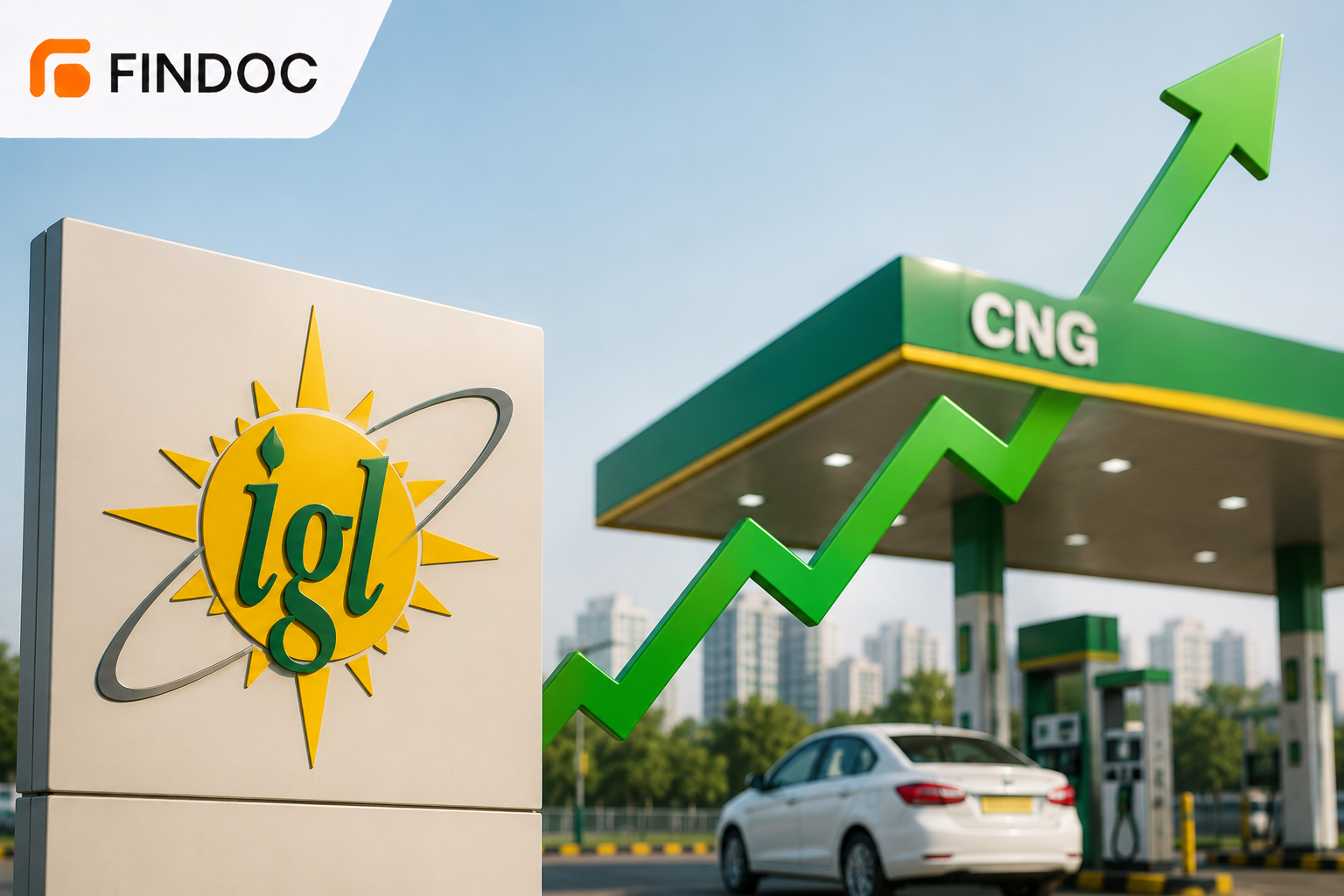
Indraprastha Gas shares climbed nearly 3% on August 31 after the company raised Delhi-NCR CNG prices by ₹3.89/kg, its fifth hike this year, prompting Citi to reiterate a Buy rating with a ₹180 target price.
Stock Jumps on CNG Price Revision
Shares of Indraprastha Gas Ltd (IGL) touched an intraday high of ₹152.39 on the National Stock Exchange on Monday, extending gains of roughly 2-3% from the previous session’s close. The move came in the first trading session after the company revised CNG rates across Delhi-NCR over the weekend, effective August 29.
Delhi’s retail CNG price rose by ₹3.89 per kg to ₹86.98/kg, up from ₹83.09/kg. Adjoining NCR cities also saw revisions: Noida and Ghaziabad now pay ₹95.59/kg, Meerut residents pay ₹95.47/kg, and Gurugram’s rate stands at ₹92.01/kg.
This marks IGL’s fifth CNG price increase in 2026 and its first since May, when the company had raised rates by a cumulative ₹6/kg across four separate revisions within ten days. Despite Monday’s rally, IGL stock remains down over 21% for the calendar year and roughly 27% lower over the past twelve months, having touched a 52-week low of ₹141.74 in April.
Why IGL Needed to Raise Prices
The price hike is directly tied to elevated global liquefied natural gas (LNG) costs. Since the West Asia conflict intensified in late February 2026, disrupting shipping routes and tightening supply, global LNG benchmarks have surged sharply Europe’s TTF index is up roughly 105% and Asia’s JKM benchmark nearly 113% over the past six months.
Delhi CNG prices, by contrast, rose only about 7.8% in the same period, highlighting a wide gap between international gas costs and what city gas distributors have been able to pass on to consumers. Compounding this pressure, the Indian government’s October 2025 cut to Administered Price Mechanism (APM) gas allocations forced distributors like IGL to source a larger share of their supply from costlier imported spot LNG.
That squeeze showed up clearly in IGL’s Q1 FY27 earnings. Net profit fell nearly 29.5% sequentially to ₹240 crore from ₹341 crore, while EBITDA dropped 30.4% to ₹293.4 crore. The company’s EBITDA margin narrowed to 6.4% from 10% in the previous quarter, even as revenue grew 10% to ₹4,586 crore on the back of 6% CNG and 7% PNG volume growth.
Citi’s Read on the Hike
Brokerage Citi described the latest CNG revision as a “well-calibrated” move that should lift IGL’s blended realisations by approximately ₹1.8 per standard cubic metre (scm), helping arrest the margin erosion seen in the June quarter, when EBITDA margin had fallen to a multi-year low of ₹3.4/scm.
Citi has maintained its Buy rating on the stock with a target price of ₹180, implying an upside of roughly 22% from current levels. Among the 31 analysts tracking IGL, 24 currently rate the stock a Buy, four have a Hold rating, and three rate it a Sell.
The brokerage also noted that despite five rounds of hikes this year, CNG remains about 49% cheaper than petrol on a running-cost basis for vehicle owners, suggesting the fuel retains its cost advantage even after the latest price revision.
A Sector-Wide Pattern, Not an Isolated Move
IGL’s price hike fits into a broader trend across India’s city gas distribution (CGD) sector. Citi’s note pointed out that IGL, along with peers Mahanagar Gas (MGL) and Gujarat Gas, have collectively raised CNG prices by a cumulative 15-16% since the October 2025 APM allocation cuts took effect.
This synchronized pricing action across distributors suggests the sector is collectively working to protect margins rather than compete on price, a dynamic that matters for anyone evaluating CGD stocks as a group rather than IGL in isolation.
What This Means for Market Watchers
For investors tracking the oil and gas or utilities space, IGL’s price action offers a useful example of how regulated fuel-distribution companies respond to input-cost shocks. The stock’s rally reflects market expectations that successive price hikes will gradually restore margins compressed by expensive imported LNG, though the company’s near-term earnings still reflect that pressure.
Those looking to track stocks like IGL or other CGD names as this margin-recovery story develops would typically need to open a demat account to hold and trade listed securities on the NSE or BSE. Real-time price movements, volume trends, and analyst target updates for stocks such as IGL can be monitored through an online trading platform, which allows investors to follow sector-wide developments across city gas distributors as new pricing data and quarterly results emerge.
With global LNG prices still elevated due to ongoing West Asia supply disruptions, further pricing action from IGL and its CGD peers will likely depend on how international gas benchmarks and domestic gas allocation policy evolve in the coming months.
Leave a Reply