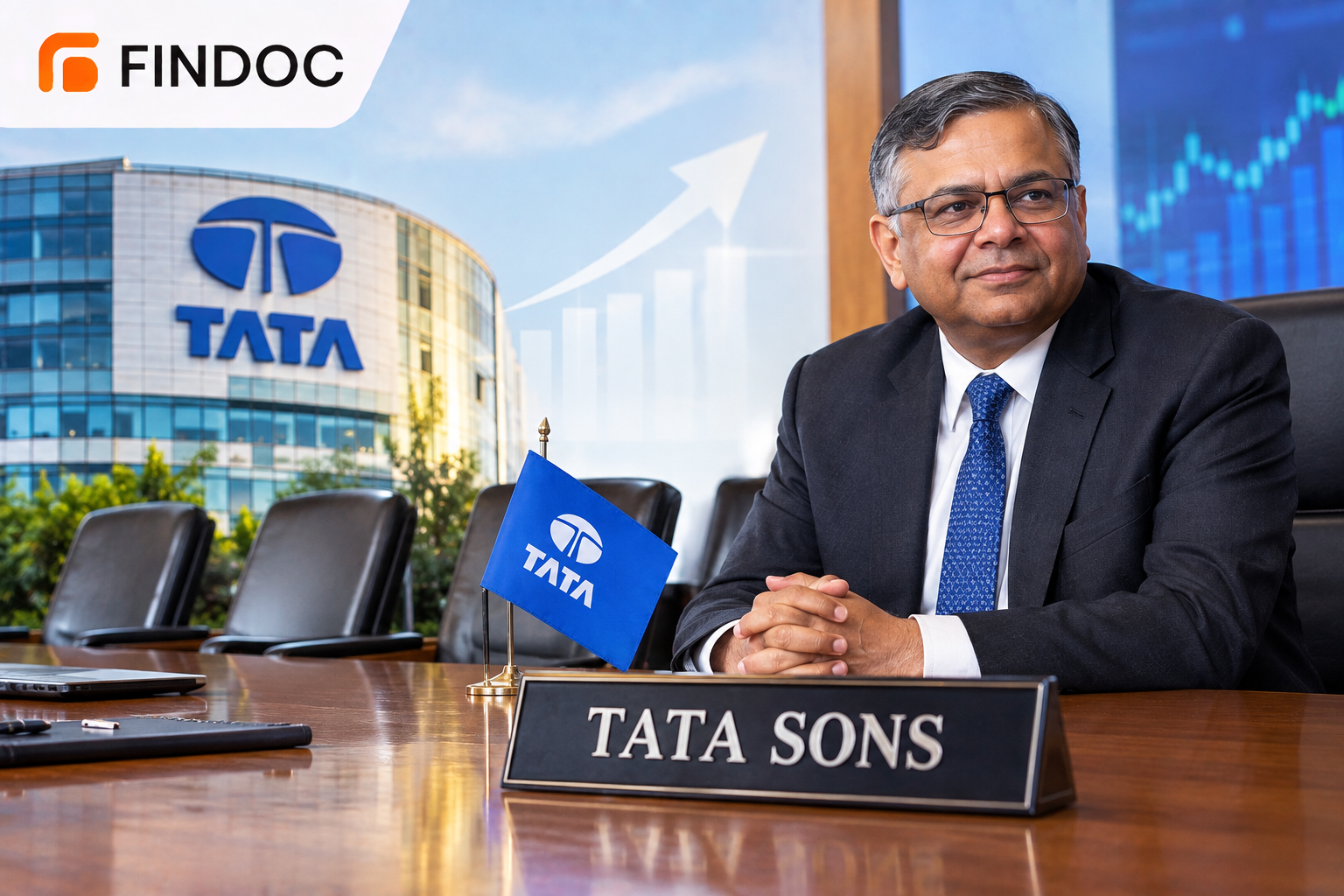
Tata Sons’ board approved plans to list the company on stock exchanges and gave chairman N. Chandrasekaran a fresh five-year term, at a Mumbai meeting on 17 September 2026 that followed RBI’s rejection of the group’s bid to stay private.
What the Board Decided in Mumbai
The Tata Sons board met in Mumbai on Thursday, 17 September 2026, in a session that reportedly ran close to three hours. Two decisions came out of it: the board agreed to move ahead with listing the holding company on stock exchanges, and it approved a fresh five-year term for Chairman N. Chandrasekaran.
Business Standard reported that Tata Trusts chairman Noel Tata, who had previously resisted both a listing and Chandrasekaran’s reappointment, was outvoted by the rest of the board on the extension.
The RBI Order Behind the Push to List
This isn’t a voluntary move. In September 2022, the Reserve Bank of India (RBI) classified Tata Sons as an “upper layer” non-banking financial company (NBFC). Under its Scale Based Regulation framework, any NBFC with standalone assets of ₹1 lakh crore or more must eventually list on the stock exchanges.
Tata Sons’ standalone assets are estimated at around ₹1.75 lakh crore well past that mark. The company had tried a different route: it repaid its debt and applied to surrender its Core Investment Company (CIC) registration, hoping to exit the NBFC framework and remain private.
The RBI rejected that application on 11 September 2026. Days later, the central bank also filed a caveat in the Bombay High Court, a routine legal step that ensures it gets heard if anyone challenges the listing directive in court. With that route effectively closed, Thursday’s board resolution confirms Tata Sons will now prepare for a public listing.
Behind Chandrasekaran’s Five-Year Extension
Chandrasekaran took charge as Tata Sons chairman in February 2017 and was renewed for a second five-year term in February 2022, due to end on 20 February 2027. In August 2026, he told the board he would not seek a third term, after a proposed extension recommended by Sir Dorabji Tata Trust and Sir Ratan Tata Trust had stalled at board level since February 2026.
With the listing process now beginning, the board decided leadership continuity mattered more than a planned exit. Preparing a listing typically involves a Draft Red Herring Prospectus, valuation exercises, and multiple regulatory sign-offs a process where investors usually want a settled chairman in place throughout.
The decision also comes against an unusual governance stretch at Tata Sons: its 108th annual general meeting on 18 August 2026 was adjourned for lack of quorum, the first such adjournment in the group’s history. The Registrar of Companies later extended the AGM deadline to 31 December 2026, from an original 30 September deadline.
Tata Chemicals: The Listing’s Loudest Proxy Trade
Investors have been watching one stock in particular: Tata Chemicals. It holds a 2.53% stake in Tata Sons, a stake estimated to be worth around ₹25,300 crore actually higher than Tata Chemicals‘ own standalone market capitalisation of roughly ₹18,700 crore.
That gap explains the price move. After the RBI’s rejection became public, Tata Chemicals shares surged 20% to hit the upper circuit at ₹734.90 on 15 September 2026, one of its sharpest single-day gains in years. Several other listed Tata firms, including Tata Investment Corporation and Tata Consultancy Services, also rose that day on the same listing buzz.
| Metric | Figure |
|---|---|
| Tata Sons standalone assets | ~₹1.75 lakh crore |
| RBI’s upper-layer NBFC asset threshold | ₹1 lakh crore |
| Tata Trusts’ stake in Tata Sons | 66% |
| Shapoorji Pallonji Group’s stake | 18.4% |
| Tata Chemicals’ stake in Tata Sons | 2.53% (~₹25,300 crore) |
| Tata Chemicals’ own market cap | ~₹18,700 crore |
| Tata Chemicals share price, 15 Sept 2026 | ₹734.90 (20% upper circuit) |
A Tata Sons listing, if it eventually happens, would turn several such long-illiquid cross-holdings into stakes the market can price directly. That said, nothing here should be read as a buy or sell signal on any of these stocks, and a listing timeline hasn’t been announced.
Sessions like Tata Chemicals’ 15 September rally move fast, often within minutes of news breaking, which is why investors tracking this story need an active demat account and trading account already in place, along with an online trading platform that shows real-time price and circuit-limit data.
What Happens Next
Tata Sons hasn’t announced a timeline for filing listing documents. The company could still explore other paths, such as seeking reconsideration from the RBI or restructuring parts of its balance sheet to fall below the ₹1 lakh crore threshold, though the RBI’s caveat filing narrows the option of a court challenge.
For now, Thursday’s dual decision clearing the listing process while locking in Chandrasekaran for five more years gives the group a settled leadership structure to manage whatever comes next.
Investments in securities markets are subject to market risks. This article is for information only and is not investment advice.
Leave a Reply