findocblog

Blog

  • Nifty 50 Rebounds Above 24,000 as Banking and Midcap Stocks Lead

    Nifty 50 Rebounds Above 24,000 as Banking and Midcap Stocks Lead

    Indian equities posted a robust recovery in the latest trading session, with the Nifty 50 reclaiming the 24,000 mark and the Sensex closing firmly higher. The rebound came after a bout of volatility and a sharp decline earlier this week, which had pushed the Nifty back below 24,000 and triggered broad profit booking across sectors.

    Market data from the National Stock Exchange showed the Nifty 50 closing around 24,120, up more than 120 points on the day. The Sensex ended near 77,270, gaining over 350 points. The advance decline ratio on the Nifty 50 stood in favor of advances, indicating broad participation in the rebound.

    Alongside the headline indices, the Nifty Bank, Nifty Midcap 100 and Nifty Next 50 outperformed, reflecting renewed risk appetite among institutional and retail investors.

    Benchmark Indices Stage Strong Rebound After Recent Selloff

    The rebound has to be viewed against the backdrop of a sharp decline seen in the previous session. The Nifty 50 had dropped by more than 190 points to close just below 24,000, while the Sensex had fallen over 700 points. That decline was driven by risk aversion, profit booking and concerns around global cues.

    The swift recovery indicates that, at current levels, domestic institutional flows and continued retail participation are providing support. The Nifty Bank index rose more than 1 percent in the latest session, while the Nifty Midcap 100 gained over 1.5 percent. The Nifty Next 50 also advanced about 1 percent.

    For investors, this pattern of sharp intraday swings and quick reversals underlines that the current phase is more tactical and sentiment driven, rather than a clear directional trend. Position sizing and risk management therefore remain critical.

    Top Nifty Gainers: Sun Pharma, Bharti Airtel, IndiGo and Kotak Bank in Focus

    The recovery in the Nifty 50 was driven by a mix of pharma, telecom, aviation and financial stocks. Sun Pharmaceutical Industries emerged as the top gainer on the index, rising about 2.6 percent. Bharti Airtel followed with gains of more than 2 percent, while InterGlobe Aviation (IndiGo) and Kotak Mahindra Bank rose a little over 2 percent each.

    These moves are noteworthy because they cut across defensives and cyclicals. Sun Pharma and Bharti Airtel have been key contributors to Nifty’s resilience in recent months, supported by strong earnings visibility and sector specific tailwinds. IndiGo’s gains reflect continued optimism around air travel demand and capacity additions, while the rebound in Kotak Mahindra Bank helped shore up sentiment in the banking space, which had seen selling pressure during the recent correction.

    Top Nifty 50 Gainers Approximate Gain (%)
    Sun Pharmaceutical Industries 2.6
    Bharti Airtel 2.3
    InterGlobe Aviation (IndiGo) 2.1
    Kotak Mahindra Bank 2.0

    Exact closing prices for individual stocks in this session were not disclosed in the aggregated coverage. However, the percentage changes indicate that these counters were among the most actively discussed names on Dalal Street during the rebound.

    Sector Trends: Banks, Midcaps and Select Defensives Drive the Move

    Sector performance showed a clear tilt toward financials and broader market stocks. The gains in Kotak Mahindra Bank helped shore up private banking sentiment at a time when investors are closely tracking credit growth, margin trajectories and asset quality across lenders.

    Midcap and smallcap indices outperformed the large cap benchmarks, reflecting a renewed appetite for higher beta names after the recent correction. This outperformance is consistent with the broader trend this year, where domestic investors have increasingly rotated into midcaps and thematic stories in manufacturing, consumer and capital goods.

    At the same time, defensives such as pharmaceuticals and telecom remained firm. Sun Pharma’s move as the top Nifty gainer and Bharti Airtel’s strong showing indicate that investors continue to seek balance between growth sectors and earnings visibility in their portfolios.

    Key Drivers Behind the Latest Rally in Indian Equities

    Several factors contributed to the rebound in the Nifty 50 and Sensex. Easing crude oil prices provided relief on inflation and fiscal concerns, supporting sentiment in rate sensitive sectors. Foreign portfolio investors turned net buyers after a phase of selling, which helped lift the benchmark indices.

    Domestic macro data, including resilient industrial output and stable tax collections, has added to the constructive medium term narrative for Indian equities. While global risk factors remain in focus, the latest session showed that local fundamentals and domestic savings continue to be important anchors for the market.

    On the derivatives side, Nifty futures data indicated short covering in the index and select large caps, which amplified the move higher. Options positioning around the 24,000 strike suggested that this level remains a key pivot for traders in the near term.

    What Nifty’s Rebound Above 24,000 Means for Investors

    For institutional investors and large traders, the recovery above 24,000 on the Nifty 50 signals that the immediate support zone near 23,800 to 24,000 is holding for now. That said, the market continues to trade at elevated valuations compared with its long term averages, making stock selection and entry timing crucial.

    For retail investors and mutual fund participants, the latest move reinforces the importance of disciplined, systematic investing over trying to time short term swings. Systematic investment plans in diversified equity and large and midcap funds can help smooth volatility while maintaining exposure to the structural growth story.

    Investors with a short term orientation should monitor index levels around 24,000 and 24,300, as well as sector leadership. Sustained leadership from banks, large consumers and quality midcaps would be a positive sign. Persistent rotation into only a narrow set of counters, by contrast, would warrant caution.

    Risk Factors and Near-Term Triggers to Track

    Despite the rebound, several risk factors remain relevant. Global central bank decisions on rates, movements in US yields and any fresh geopolitical flare ups can influence foreign flows into Indian equities. Crude oil prices, though off recent highs, remain a key variable for inflation and corporate margins.

    Domestically, upcoming quarterly earnings for index heavyweights in sectors such as IT, banking, autos and energy will be closely scrutinized. Any earnings disappointment relative to already optimistic expectations can trigger renewed volatility.

    Investors should also keep an eye on regulatory and policy developments impacting sectors like telecom, financial services and pharmaceuticals. Changes to capital requirements, pricing frameworks or compliance norms can affect the risk reward profile of individual stocks even if the broader index trend remains intact.

    Practical Considerations for Indian Equity Investors

    Against this backdrop, investors reviewing their equity allocations may consider a barbell approach, combining high quality large caps with select midcap names where earnings visibility and balance sheet strength are clear. Over concentration in momentum names that have rallied sharply in recent months can increase portfolio risk.

    For new market participants, a stable brokerage relationship and a well structured demat account are essential. It is important to understand that the decision to open demat account is only the first step, and must be followed by a clear investment policy and risk limits.

    Active traders should evaluate their execution tools, data access and risk controls, and choose a top stock market trading and investing platform that supports these needs without encouraging excessive leverage or speculative behavior.

    Conclusion: Nifty’s Recovery Highlights Resilience but Not Complacency

    The latest rebound in the Nifty 50 above 24,000 and the Sensex’s strong close underscores the resilience of Indian equities, backed by domestic flows and supportive macro indicators. Leadership from Sun Pharma, Bharti Airtel, IndiGo and Kotak Mahindra Bank reflects a balanced mix of defensives and growth oriented sectors driving the move.

    At the same time, the sharp swings seen over the past few sessions are a reminder that valuations, global risks and earnings expectations remain critical variables. For Indian investors, a measured approach that emphasizes diversification, quality and long term discipline is more appropriate than chasing short term rallies.

    Equity markets are likely to continue reacting quickly to new data and global cues. Investors who anchor their decisions in fundamentals, manage risk proactively and align their portfolios with their time horizons will be better placed to benefit from the broader trajectory of Indian equities, even as the Nifty and Sensex navigate periods of heightened volatility.

    Also Explore 

    Check Indices
    BSE BANKEX Companies BSE Largecap Comapnies
    FINNIFTY Companies Nifty Midcap 50 Companies
    NIFTY MIDCAP 150 Companies Nifty Pharma Companies
    BSE 500 Companies Nifty Smallcap 100 Companies
    BSE 100 Companies BSE MIDCAP Companies
  • India GDP Growth Seen Slowing to 6.6% as Oil Prices and Weak

    India GDP Growth Seen Slowing to 6.6% as Oil Prices and Weak

    India’s growth narrative is shifting from post pandemic outperformance to a more moderate phase, with a fresh Reuters poll of economists pointing to gross domestic product (GDP) growth of 6.6 percent in FY2026-27, down from an estimated 7.7 percent in FY2025-26. The survey highlights rising crude prices and soft private capital expenditure as the key drags on the outlook for the coming year.

    The poll, conducted between July 21 and 27 among 42 economists, suggests that while India will likely remain one of the fastest growing major economies, the pace of expansion is expected to cool against a backdrop of higher energy costs, tighter global financial conditions and uneven private sector capex. Growth is forecast to recover modestly to 6.8 percent in FY2027-28, but the near term narrative is clearly one of consolidation rather than acceleration.

    How the new growth forecasts compare with RBI and multilateral estimates

    The Reuters poll adds another data point to a gradually converging consensus around mid 6 percent growth for FY2026-27. The Reserve Bank of India (RBI), in its latest Monetary Policy Committee communication, has projected real GDP growth at 6.6 percent for FY2026-27, with quarterly prints ranging from 6.3 percent to 6.8 percent. This aligns almost exactly with the median economist forecast.

    Multilateral agencies have also trimmed their projections in recent weeks, largely citing higher energy prices and external uncertainty. The International Monetary Fund has lowered its FY2026-27 estimate to 6.4 percent, while the Asian Development Bank has pegged growth at 6.6 percent. All three sets of projections point to India staying ahead of most emerging peers, but with less policy room than in the recent past.

    For investors, the key message is that the era of 7.5 percent plus trend growth may be on pause, at least for the next couple of years. Portfolio strategies that assumed a near automatic reversion to 8 percent real growth require recalibration to a more conservative baseline.

    Source FY2026-27 GDP Forecast Notes
    Reuters Poll (42 economists) 6.6% Survey conducted July 21 to 27
    Reserve Bank of India (RBI) 6.6% Quarterly range: 6.3% to 6.8%
    International Monetary Fund 6.4% Revised lower citing energy prices and external uncertainty
    Asian Development Bank 6.6% Consistent with RBI and Reuters poll median


    Oil prices and weak private investment emerge as key macro headwinds

    The Reuters survey explicitly identifies higher crude oil prices and subdued private investment as the primary reasons for the downgrade in India GDP expectations. Economists flag that the recent rise in global energy prices has widened the trade deficit and pressured imported inflation, limiting the space for aggressive monetary easing and fiscal expansion.

    Higher oil prices typically affect India through three channels: a larger import bill, a weaker current account balance and potential upward pressure on retail fuel and transport costs. These in turn can weigh on household consumption, especially discretionary spending, and compress corporate margins in energy intensive sectors such as chemicals, cement, logistics and aviation.

    On the investment side, while public capex has remained strong, the poll notes that private sector capex has been slower to pick up despite healthy corporate balance sheets. Factors cited include caution in committing large greenfield projects, global demand uncertainty and the lagged impact of higher interest rates on project viability. This combination of weaker private investment and costlier energy explains a significant portion of the downward adjustment in growth forecasts for FY2026-27.

    RBI monetary policy stance and inflation backdrop

    The RBI has been running a cautious monetary policy, balancing the need to support growth with the imperative to keep inflation aligned with its 4 percent target. Headline CPI inflation has moderated from the peaks seen in early 2025, helped by food price normalization and supply side interventions, but core inflation remains an area to watch given the pass through of higher energy costs.

    In recent policy communications, the central bank has acknowledged that while domestic demand is resilient, imported risks from commodity prices and geopolitics justify a calibrated approach. With growth forecasts now anchored closer to 6.5 percent and inflation moving within a more acceptable band, the probability of a rapid rate cut cycle appears limited. Instead, investors should expect a “higher for longer” rate environment relative to the ultra low rate period earlier in the decade.

    For bond market participants, this mix suggests a stable policy rate path with modest room for easing if global conditions soften. For equity investors, it underscores the importance of focusing on companies that can maintain pricing power and margin discipline in a still cost sensitive environment.

    Implications for Indian equities, sectors and foreign portfolio flows

    A shift in India GDP expectations from 7.7 percent to 6.6 percent has direct implications for earnings estimates, sector positioning and valuation comfort. While a 6.6 percent growth rate is still strong by global standards, the market cannot assume uniform earnings acceleration across the board.

    Domestic demand oriented sectors such as consumer discretionary, autos and select services may see slightly lower volume growth assumptions baked into analyst models. Export sensitive sectors, including IT services and specialty chemicals, face a double drag from global demand uncertainty and currency volatility linked to oil prices and risk sentiment.

    At the same time, beneficiaries of public capex, including infrastructure, construction, capital goods and select PSU banks, could remain relatively insulated, given continued government focus on roads, railways, digital infrastructure and energy transition. These themes can still deliver strong order books even under a 6.5 percent growth backdrop.

    Foreign portfolio investors (FPIs) typically respond to changes in growth and rate expectations through sector rotation rather than outright withdrawal. A moderate slowdown combined with still positive real rates may encourage FPI interest in financials, industrials and select consumer names, while more cyclical plays see position trimming. Currency volatility amid higher oil prices could be a swing factor for timing of flows, especially in emerging market allocations.

    Rupee, current account dynamics and currency risk for investors

    The rupee’s trajectory is closely linked to the interplay of oil prices, FPI flows and the current account deficit. Higher crude typically widens the trade deficit and can pressure the rupee, particularly if global risk aversion is high and capital flows are uneven. The latest GDP forecasts implicitly assume that India will manage these pressures without a disruptive currency move, but investors should remain cognizant of rupee risk.

    For equity and debt investors, currency management becomes more critical when the growth differential over global peers narrows. A moderate depreciation of the rupee over time can help maintain export competitiveness, but sharp moves can affect imported inflation, interest rate expectations and portfolio returns.

    Institutional investors often respond by increasing hedging of foreign currency exposures, selectively favoring companies with natural hedges or domestic oriented revenue, and watching the RBI’s forex intervention pattern. For retail investors, awareness of currency risk matters especially in global funds and overseas exposures, where rupee movements directly impact returns in rupee terms.

    Practical portfolio strategies for Indian investors in a 6.6 percent growth world

    A shift to a more measured India GDP path calls for nuanced portfolio positioning rather than a binary risk on or risk off approach. Investors should reassess their assumptions on earnings growth, margin resilience and valuation multiples, particularly for sectors that are highly sensitive to domestic demand and energy costs.

    First, asset allocation between equities, debt and cash should reflect a realistic view of nominal GDP and earnings growth. With growth expected around 6.6 percent and inflation likely within the 4 to 5 percent band, nominal expansion will still support corporate revenue growth, but not all sectors will participate equally. Diversification across cyclicals, defensives and structural themes remains essential.

    Second, within equities, preference may tilt toward companies with strong balance sheets, disciplined capital allocation and demonstrated ability to pass on cost increases. Public capex linked themes and select financials with sound asset quality can continue to perform even under a slightly slower growth regime.

    Third, investors new to equities and derivatives should ensure that they use regulated brokers and platforms and that they open demat and trading account online only with entities they have evaluated for costs, risk controls and governance standards. Quality of execution, research and risk management support becomes more important when macro tailwinds are less generous.

    Finally, experienced traders and allocators often emphasize platform reliability when volatility is driven by macro data like GDP and inflation prints. Choosing the best trading platform is not just a matter of lower brokerage, but of stability during data releases, transparent margining and access to analytics that can help interpret evolving economic trends.

    Conclusion

    The latest Reuters poll marking India GDP growth at 6.6 percent for FY2026-27, down from 7.7 percent in the previous year, is a timely reminder that even fast growing economies face phases of moderation when external and domestic constraints converge. Higher oil prices, cautious private investment and global uncertainty are visible headwinds for the coming year, even as India retains its relative advantage over many peers.

    For investors, this is not a call to exit risk assets, but a prompt to refine assumptions, stress test portfolios and pay closer attention to sector specific drivers. The RBI’s growth and inflation mix points to a steady monetary stance, multilateral forecasts affirm continued resilience, and public capex remains a firm support to the medium term story. Within that framework, disciplined asset allocation, selective sector bets and attention to currency and rate risks will define outcomes more than headline GDP numbers alone.

    In a 6.6 percent growth environment, Indian markets can still offer compelling opportunities, but the emphasis shifts from broad beta capture to careful stock selection and risk aware strategy. Investors who acknowledge the new macro baseline, adapt their portfolios and remain anchored in fundamentals will be best placed to benefit as the cycle eventually turns from moderation back to higher momentum.

    Also Explore 

    Also Check Market Data
    Penny Stocks Penny Stocks Under ₹1
    Penny Stocks Under ₹10 Penny Stocks Under ₹5
    Stocks Under ₹20 FMCG Stocks
    Automobile Stocks Information Technology Stocks
    Bank Stocks High Return Penny Stocks
  • Xtranet Technologies IPO Allotment to Be Finalised Today

    Xtranet Technologies IPO Allotment to Be Finalised Today

    The much-anticipated allotment for the Xtranet Technologies IPO is set to be finalised today, Tuesday, 28 July 2026. Investors who applied for shares are now eagerly waiting to find out whether their applications have been successful. With a positive grey market premium already in play, market interest around this IPO remains active.

    For those new to the IPO process, the allotment date is when the company and its registrar officially confirm which investors have received shares. If you applied and your application was successful, shares will be credited to your demat account shortly after allotment.

    IPO Allotment: What Is Happening Today

    Today marks the allotment finalisation date for the Xtranet Technologies IPO. Once the registrar processes all applications and resolves any oversubscription, investors receive an official confirmation. This confirmation can be checked through multiple channels, which are listed below.

    Allotment finalisation is a critical milestone in the IPO timeline. It comes after the subscription window closes and before shares are listed on the stock exchange. Investors should check their allotment status promptly, as this helps them plan their next steps, whether they received shares or not.

    Grey Market Premium: What the GMP Tells Us

    According to data from Investorgain, Xtranet Technologies IPO shares are currently commanding a grey market premium of Rs 7.5. This means that in the unofficial grey market, buyers are willing to pay Rs 7.5 above the issue price to acquire shares before official listing.

    The grey market is an unofficial, unregulated platform where IPO shares are traded before they list on the stock exchange. While GMP can offer a rough indication of investor sentiment, it is important to understand that it does not guarantee actual listing gains. GMP can change significantly in the hours before listing depending on broader market conditions.

    A positive GMP of Rs 7.5 suggests moderate optimism among grey market participants. However, retail investors should treat GMP as one indicator among many, not as a definitive prediction of listing performance.

    How to Check Your Xtranet Technologies IPO Allotment Status

    Investors can check their allotment status through several official methods. Here are the most common ways:

    • BSE Website: Visit the BSE official website, go to the IPO allotment section, enter your application number and PAN details, and check your status directly.
    • Registrar’s Website: The registrar appointed for this IPO will host an allotment status page. Enter your PAN, application number, or DP client ID to verify your allotment.
    • CDSL or NSDL: If shares are allotted, they will appear in your demat account. You can log in to your CDSL or NSDL account to confirm this.
    • Broker Platform: Many brokerage platforms notify investors directly through their app or portal once allotment is confirmed.

    Keeping your application number and PAN handy makes the process quicker and simpler. Most registrar portals are updated within hours of the allotment being finalised.

    Key IPO Details at a Glance

    Detail Information
    Company Name Xtranet Technologies
    Allotment Date 28 July 2026
    Grey Market Premium (GMP) Rs 7.5 per share
    GMP Source Investorgain
    Issue Price Not disclosed
    Listing Exchange Not disclosed
    Registrar Not disclosed


    What Happens After Allotment

    Once the allotment is finalised, investors who received shares can expect them to be credited to their demat accounts within the next working day or two. Investors who did not receive an allotment will typically get a refund processed to their bank accounts around the same time.

    After shares are credited, the next key event is the official listing on the stock exchange. The listing date is when investors can first buy or sell Xtranet Technologies shares through a stock trading platform of their choice. The listing price may be higher or lower than the issue price depending on market conditions at the time.

    Investors planning to sell on listing day should keep a close eye on the opening price and early trading trends. Those with a longer-term view may choose to hold shares beyond listing regardless of early price movements.

    Should You Be Interested as an Investor

    For investors who applied, today is a day to monitor their allotment status carefully. For those who missed applying, the listing date will provide the first opportunity to buy shares through the open market.

    New investors who wish to participate in future IPOs should ensure they have an active demat account. If you do not already have one, you can open demat account online through a registered broker or financial platform. Having a demat account is the first step to applying for any IPO in India.

    The grey market premium of Rs 7.5 suggests some positive sentiment, but investors should not base decisions solely on GMP figures. Always consider the company’s fundamentals, the broader market environment, and your own risk appetite before making any investment decision.

    Conclusion

    The Xtranet Technologies IPO allotment is being finalised today, and investors across the country are checking their application status with anticipation. With a grey market premium of Rs 7.5 per share as reported by Investorgain, there is a degree of positive market sentiment around this IPO. However, investors should remain measured in their expectations and verify their allotment status through official channels only.

    The coming days, leading up to the listing date, will be important for tracking how this IPO performs once it enters the public markets.

    Investor Takeaways

    • Xtranet Technologies IPO allotment is being finalised on 28 July 2026. Check your status via BSE, the registrar’s website, or your demat account.
    • The grey market premium stands at Rs 7.5 per share as of today, indicating moderate positive sentiment. GMP is not a guaranteed indicator of listing gains.
    • Investors who did not receive allotment can expect refunds to be processed shortly after allotment is confirmed.
    • Always rely on official platforms and verified sources when checking your IPO allotment status to avoid misinformation.
    Also Check Market Data
    Penny Stocks Penny Stocks Under ₹1
    Penny Stocks Under ₹10 Penny Stocks Under ₹5
    Stocks Under ₹20 FMCG Stocks
    Automobile Stocks Information Technology Stocks
    Bank Stocks High Return Penny Stocks
  • Adani Energy Solutions’ Rs 3,500 Crore QIP Oversubscribed

    Adani Energy Solutions’ Rs 3,500 Crore QIP Oversubscribed

    Adani Energy Solutions has successfully closed its Qualified Institutional Placement, or QIP, raising Rs 3,500 crore from some of the biggest names in institutional investing. The issue drew bids worth over Rs 10,800 crore, making it oversubscribed by 3.1 times. The strong response signals solid institutional confidence in the company’s growth plans.

    The QIP was priced at Rs 1,615 per share, offered at a discount to the SEBI-mandated floor price. Participants included domestic mutual funds, insurance companies, foreign institutional investors, and Azim Premji’s investment firm, Premji Invest.

    QIP at a Glance

    Detail Information
    Issue Size Rs 3,500 crore
    Total Bids Received Over Rs 10,800 crore
    Oversubscription 3.1 times
    Issue Price Rs 1,615 per share
    Pricing Basis Discount to SEBI floor price
    Key Investors Domestic mutual funds, insurers, FIIs, Premji Invest
    Date 28 July 2026


    What Is a QIP and Why Does It Matter?

    A Qualified Institutional Placement is a way for listed companies to raise fresh capital by selling shares directly to institutional investors. Unlike a public issue, a QIP is faster and involves fewer regulatory formalities. Only qualified institutional buyers, such as mutual funds, insurance companies, and foreign portfolio investors, can participate.

    For retail investors, a heavily oversubscribed QIP is often read as a positive signal. It shows that large, sophisticated investors are willing to put significant money into the company. In this case, the demand was more than three times the shares on offer, which is a strong show of institutional interest.

    Who Participated in the Issue?

    The breadth of participation in this QIP stands out. Domestic mutual funds and insurance companies, which typically take a cautious approach to large fundraises, placed significant bids. Foreign institutional investors also joined in, reflecting interest from global capital.

    One notable participant was Premji Invest, the family investment office of Azim Premji, founder of Wipro. The firm is known for taking selective positions in quality businesses. Its presence in this QIP adds a layer of credibility to the fundraising round.

    If you are looking to track and participate in such opportunities, having the right tools matters. Using a stock trading platform that gives you real-time updates and research tools can help you stay informed when institutional activity picks up around a stock.

    How Will the Proceeds Be Used?

    Adani Energy Solutions has outlined four broad uses for the Rs 3,500 crore it has raised through this QIP. Each use is aimed at strengthening the company’s financial and operational position.

    • Capital Expenditure: Funding ongoing and future infrastructure projects.
    • Debt Repayment: Reducing the company’s existing borrowings to improve financial health.
    • Acquisitions: Pursuing strategic purchases that could expand the company’s business.
    • General Corporate Purposes: Covering operational and administrative needs as required.

    This is a well-spread allocation. Paying down debt while simultaneously investing in growth shows a balanced approach to capital management. It also reduces financial risk, which is something long-term investors tend to appreciate.

    What the Oversubscription Tells Us

    An oversubscription of 3.1 times is not a routine outcome. It means that for every share available, there was demand for roughly three shares. Institutions do their homework before committing funds of this size. The fact that diverse investor categories, from domestic insurers to foreign funds to a well-respected family office, all participated suggests broad confidence in the company’s fundamentals and outlook.

    At the same time, investors should keep in mind that QIP pricing is typically at a discount to the prevailing market price. This allows institutions to lock in a better entry point. The SEBI floor price provides a regulatory baseline, and pricing below it offers additional value to institutional buyers.

    Adani Energy Solutions: A Brief Background

    Adani Energy Solutions is part of the Adani Group, one of India’s largest conglomerates. The company focuses on power transmission and distribution infrastructure, a sector that plays a central role in India’s energy transition. With the country pushing to expand its grid capacity and integrate more renewable energy, businesses in this space are positioned to benefit from long-term policy tailwinds.

    The energy infrastructure sector in India has been attracting growing institutional attention as the government continues to prioritise power sector modernisation. This broader context likely made the QIP an attractive opportunity for investors looking at multi-year growth stories.

    Investor Takeaways

    • The QIP was oversubscribed 3.1 times, reflecting strong institutional confidence in Adani Energy Solutions.
    • The funds will be used for capital expenditure, debt reduction, acquisitions, and general corporate purposes, a balanced allocation that supports both growth and financial stability.
    • Participation by Premji Invest alongside large mutual funds and foreign investors signals broad-based conviction across different investor categories.
    • Retail investors tracking this space should consider opening a free demat account to monitor institutional activity and related stock movements more effectively.

    Conclusion

    Adani Energy Solutions’ QIP has set a strong tone with its 3.1 times oversubscription. The Rs 10,800 crore in total bids against a Rs 3,500 crore issue reflects genuine institutional appetite. With proceeds directed toward debt repayment, capital investment, and acquisitions, the company appears focused on building a stronger financial foundation while pursuing growth.

    For investors, events like this are worth watching closely. They often provide useful signals about how institutional money is moving within a sector. As always, any investment decision should be based on thorough research and an understanding of your own risk tolerance.

    Explore Trending Stocks
    Adani Enterprises Share Price Apollo Hospital Ent. Share Price
    Asian Paints Share Price Axis Bank Share Price
    Bajaj Auto Share Price Bharat Electronics Share Price
    Bharti Airtel Share Price Cipla Share Price
    Dr. Reddy’s Labs. Share Price Eicher Motors Share Price
  • Nifty July Futures Trade at Premium IT Giants Lead Volume

    Nifty July Futures Trade at Premium IT Giants Lead Volume

    India’s equity derivatives market showed firm activity on Friday, July 24, 2026, as Nifty July futures traded at a notable premium to the spot index. The session drew significant participation from institutional and retail traders alike. Infosys, HDFC Bank, and Tata Consultancy Services (TCS) emerged as the top traded contracts in the futures and options segment, reflecting sustained investor interest in heavyweight blue-chip names.

    What Changed

    Nifty July futures closed at a premium over the underlying spot index, signaling a broadly positive sentiment in the near-term outlook among derivatives traders. The cost of carry remained elevated, suggesting that participants are willing to hold long positions into the expiry cycle. Trading volumes were robust across the top three contracts.

    Contract Segment Rank by Volume Futures Sentiment
    Infosys IT / Technology #1 Active participation
    HDFC Bank Banking / Financial Services #2 Active participation
    Tata Consultancy Services IT / Technology #3 Active participation
    Nifty July Futures Index Derivatives Benchmark Trading at premium

    The dominance of IT majors Infosys and TCS in trading volumes underscores continued market focus on the technology sector. Meanwhile, HDFC Bank’s high activity reflects ongoing attention to private banking performance amid evolving credit and deposit dynamics.

    Why It Matters for Investors

    When Nifty futures trade at a premium, it generally reflects positive market bias. Traders are pricing in expectations of further upside or are hedging long equity portfolios. This is an important signal for short-term positioning decisions. However, premiums can narrow quickly if sentiment shifts.

    For investors tracking large-cap exposure, the high volume in Infosys, HDFC Bank, and TCS contracts is meaningful. These three stocks carry significant weight in both the Nifty 50 and benchmark mutual fund portfolios. Their derivatives activity often influences broader index movement. Open demat and trading account online platforms have made accessing these derivative products significantly easier for retail investors seeking to participate in futures markets efficiently.

    Potential Financial Impact

    The premium in July futures indicates a positive cost of carry. This reflects market confidence heading into the near-term expiry. Infosys and TCS, both of which recently reported quarterly earnings, have provided forward revenue guidance that traders are actively pricing into futures contracts. HDFC Bank’s loan growth trajectory and net interest margin outlook also remain central to institutional positioning strategies in the banking segment.

    Expert or Market Reaction

    Market participants noted that IT sector contracts attracted the bulk of speculative and hedging interest following recent earnings releases. Analysts observed that the Nifty July futures premium reflects a constructive tone among domestic institutional investors. However, some traders flagged caution around global macroeconomic cues that could influence index direction before expiry.

    In addition, options data from the session revealed significant open interest build-up at key strike prices. This suggests that the market is watching critical support and resistance zones closely. Derivative analysts noted that implied volatility remained moderate, pointing to a measured rather than euphoric sentiment environment.

    Broader Context

    India’s futures and options market has grown substantially in recent years. The NSE remains one of the largest derivatives exchanges globally by contract volume. The participation of heavyweight stocks like Infosys, HDFC Bank, and TCS as top traded contracts is consistent with historical patterns, particularly around earnings seasons.

    Factor Current Observation
    Nifty Futures Premium Positive, reflecting bullish near-term bias
    IT Sector Activity Elevated post Q1 earnings disclosures
    Banking Sector Focus HDFC Bank credit growth and margin trends
    Global Macro Environment Uncertain; monitored for index direction

    Therefore, the current derivatives activity provides a snapshot of where large market participants are placing their bets for the remainder of the July series. The expiry date will be a key moment of price discovery for all active contracts.

    Key Risks and Factors to Consider

    While positive futures premiums signal short-term optimism, investors must weigh several risk factors carefully. Global macroeconomic headwinds, including interest rate decisions by major central banks, could quickly alter risk appetite. A sharp reversal in global IT spending sentiment could pressure Infosys and TCS contracts significantly.

    For HDFC Bank, execution risk around deposit mobilization and credit quality remains a monitored area. Regulatory changes in the banking sector add another layer of uncertainty. Furthermore, elevated valuations in the broader market mean limited room for error if earnings disappoint. Margin pressure and competitive dynamics in the IT sector also deserve close attention from derivatives traders.

    What Investors Should Watch Next

    • Monitor the Nifty July futures premium closely as the expiry date approaches, any narrowing could signal shifting sentiment.
    • Track weekly open interest changes in Infosys and TCS contracts for directional cues on IT sector positioning.
    • Watch HDFC Bank’s loan growth and asset quality data releases for impact on banking futures contracts.
    • Follow global cues, including US Federal Reserve commentary and currency movements, which directly affect IT earnings estimates.
    • Use a reliable stock trading platform to monitor real-time open interest, volume trends, and cost-of-carry data across these key contracts efficiently.

    Conclusion

    Nifty July futures trading at a premium reflects a cautiously positive near-term market tone. The leadership of Infosys, HDFC Bank, and TCS in traded contract volumes highlights concentrated institutional interest in these benchmark names. Investors should treat derivatives activity as a directional indicator rather than a definitive forecast.

    As always, risk management remains critical. The July expiry cycle will provide clearer answers on whether current premiums are justified by underlying fundamentals. Staying informed and disciplined remains the most prudent approach in this environment.

    • Nifty July futures traded at a premium, indicating positive near-term market sentiment among derivatives participants.
    • Infosys, HDFC Bank, and TCS dominated contract volumes, reflecting sustained institutional focus on IT and banking sectors.
    • Key risks include global macro uncertainty, valuation concerns, and potential margin pressure in the IT and banking segments.
    Explore Nifty 50 Stocks
    Adani Enterprises Share Price Apollo Hospital Ent. Share Price
    Asian Paints Share Price Axis Bank Share Price
    Bajaj Auto Share Price Bharat Electronics Share Price
    Bharti Airtel Share Price Cipla Share Price
    Dr. Reddy’s Labs. Share Price Eicher Motors Share Price
  • Tata Consumer PAT Jumps 28.4% ACC Slumps 61.5% in Q1

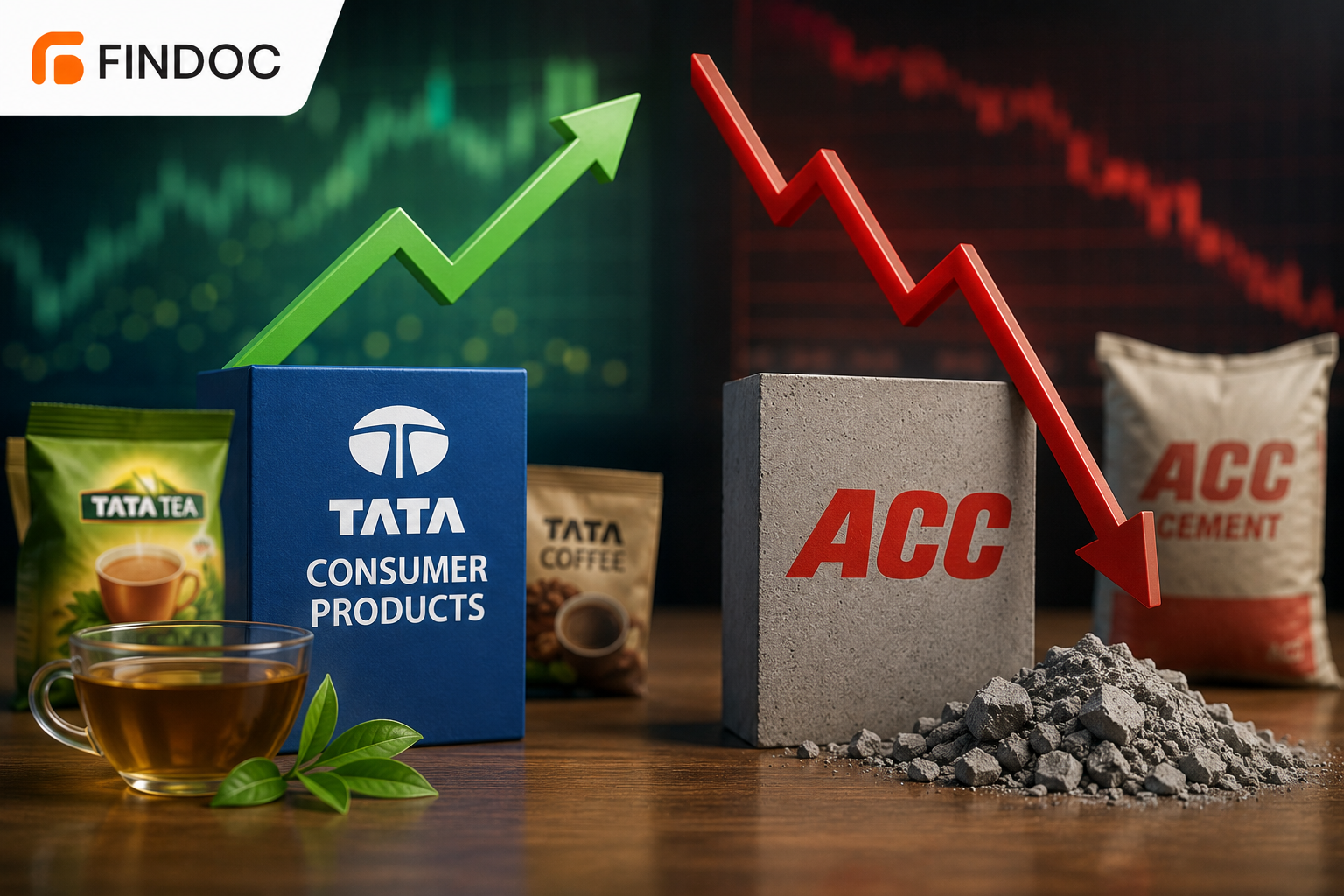
    Tata Consumer PAT Jumps 28.4% ACC Slumps 61.5% in Q1

    India’s first-quarter earnings season delivered a mixed picture on July 24, 2026. Several major companies reported their Q1 results, revealing sharp contrasts in performance across sectors. Tata Consumer Products led with strong profit growth, while ACC posted a steep decline. Meanwhile, Shriram Finance, Hindustan Zinc, SBI Life, SBI Cards, and Laurus Labs all reported profit increases. Bank of Baroda, NTPC, SAIL, and KFin Tech were scheduled to announce results later in the day.

    What Changed

    The Q1 results season highlighted diverging fortunes across India’s corporate landscape. Tata Consumer Products reported a 28.4% year-on-year rise in consolidated profit after tax (PAT), signaling robust consumer demand and improved operational efficiency. In contrast, ACC’s PAT fell sharply by 61.5%, reflecting pressure on the cement sector from input costs and pricing challenges.

    Company Q1 PAT Movement Sector
    Tata Consumer Products +28.4% YoY FMCG / Consumer Goods
    ACC -61.5% YoY Cement
    Shriram Finance Rise (quantum not disclosed) NBFC / Financial Services
    Hindustan Zinc Rise (quantum not disclosed) Metals & Mining
    SBI Life Insurance Rise (quantum not disclosed) Insurance
    SBI Cards Rise (quantum not disclosed) Financial Services
    Laurus Labs Rise (quantum not disclosed) Pharmaceuticals


    Why It Matters for Investors

    Q1 results serve as a critical barometer of corporate health. For investors tracking India’s equity markets, the disparity between winners and laggards this quarter underscores the importance of sector selection. Consumer staples and financial services showed resilience, while cement faced structural headwinds.

    Investors seeking exposure to these earnings cycles can open demat and trading account online through SEBI-registered platforms to access stocks in real time as results unfold. In addition, the breadth of companies reporting on a single day, spanning FMCG, metals, insurance, and pharma, highlights the diversified nature of India’s listed corporate universe.

    Potential Financial Impact

    Tata Consumer’s strong PAT growth suggests margin expansion and volume recovery across its tea, food, and beverage segments. This could support re-rating of the stock if sustained in subsequent quarters. However, ACC’s dramatic profit decline raises questions about the cement sector’s near-term earnings outlook, particularly given elevated energy and logistics costs.

    For financial services players like Shriram Finance and SBI Cards, profit growth indicates healthy credit demand and asset quality. Laurus Labs’ improved profitability reflects a recovery in pharmaceutical exports and domestic formulations. The exact magnitude of profit growth for these companies remains not disclosed at this stage of reporting.

    Expert or Market Reaction

    Market participants reacted cautiously to the mixed Q1 scorecard. Analysts had broadly anticipated pressure on cement companies amid competitive pricing environments. Therefore, ACC’s steep decline was not entirely surprising, though its scale exceeded some forecasts. On the other hand, Tata Consumer’s outperformance reinforced bullish sentiment among consumer sector investors.

    Financial sector results from Shriram Finance and SBI Life were seen as broadly positive signals for credit growth and insurance penetration in India. Meanwhile, Hindustan Zinc’s profit rise added confidence to the base metals space, where demand recovery has been uneven globally. Specific analyst price target revisions remain not disclosed pending detailed earnings calls.

    Broader Context

    India’s Q1 FY27 earnings season is unfolding against a backdrop of moderating inflation, relatively stable interest rates, and continued rural consumption recovery. The Reserve Bank of India’s monetary stance has supported lending activity, benefiting NBFCs and banks. However, global commodity price volatility continues to weigh on input-cost-sensitive sectors like cement and metals.

    Sector Q1 Trend Key Driver
    FMCG Positive Volume recovery, rural demand
    Cement Negative Input cost pressure, pricing
    Financial Services Positive Credit growth, asset quality
    Pharmaceuticals Positive Export recovery, formulations
    Metals & Mining Mixed to Positive Commodity prices, volumes


    Key Risks and Factors to Consider

    Despite several bright spots, investors must weigh significant risks. The cement sector’s weakness may persist if infrastructure spending slows or pricing pressure intensifies. For consumer companies like Tata Consumer, sustaining margin gains will depend on raw material costs and competitive intensity in branded food and beverages.

    Financial services firms face risks from potential asset quality deterioration if macroeconomic conditions soften. Regulatory changes affecting NBFCs or insurance products could also impact profitability. Furthermore, pharmaceutical companies like Laurus Labs remain exposed to US FDA regulatory scrutiny and pricing pressure in export markets. Valuation concerns may also limit upside for stocks that have already re-rated following strong results.

    What Investors Should Watch Next

    • Results from Bank of Baroda, NTPC, SAIL, and KFin Tech, scheduled for the same day, will provide further signals on banking, energy, and capital markets sectors.
    • Management commentary from Tata Consumer and ACC on Q2 outlook and input cost trajectories will be critical for forward earnings estimates.
    • Credit quality updates from Shriram Finance and SBI Cards will indicate whether NBFC asset stress is rising or stabilizing.
    • Hindustan Zinc’s volume and realization data will offer insights into base metal demand trends in India and export markets.
    • Investors using a best trading platform should track post-result price action closely, as earnings surprises often drive significant single-day volatility in mid- and large-cap stocks.

    Conclusion

    India’s Q1 FY27 earnings season is reinforcing sector divergence as a dominant theme. Consumer, financial services, and pharmaceutical companies are generally delivering profit growth. Meanwhile, cement faces a difficult operating environment. The contrast between Tata Consumer’s 28.4% PAT rise and ACC’s 61.5% decline illustrates how sector dynamics can vary sharply within the same reporting period.

    As more results arrive from Bank of Baroda, NTPC, SAIL, and KFin Tech, investors will gain a more complete picture of corporate India’s health heading into the second quarter. Disciplined sector analysis and careful monitoring of management guidance will remain essential for navigating this earnings cycle effectively.

    • Tata Consumer’s strong 28.4% PAT growth positions it as a standout performer in Q1, reflecting consumer demand resilience.
    • ACC’s 61.5% PAT decline signals persistent sector-level challenges in cement, warranting caution on the broader sector.
    • Financial services and pharma companies broadly reported profit gains, supporting positive sentiment in these segments heading into Q2.
    Explore Trending Stocks
    Adani Enterprises Share Price Adani Green Energy Share Price
    Adani Power Share Price Aditya Infotech Share Price
    Ambuja Cement Share Price Apollo Tyres Share Price
    Asahi India Glass Share Price Asian Paints Share Price
    Ather Energy Share Price Bajaj Finance Share Price
  • Caliber Mining Shares Fall 8% After Strong 19% IPO Debut

    Caliber Mining Shares Fall 8% After Strong 19% IPO Debut

    Caliber Mining and Logistics made a notable stock market entry, but the excitement was short-lived. Shares debuted at a 19% premium over the IPO price, only to give back significant gains almost immediately. The stock fell over 8% from its listing price, drawing attention from both retail and institutional investors watching the mining and logistics sector closely.

    What Changed

    The post-listing correction wiped out a meaningful portion of the initial listing gains. While a 19% premium debut signals strong initial demand, the subsequent 8% drop reflects profit-booking by short-term investors. This kind of price action is common in newly listed stocks, particularly when early allottees lock in gains quickly after listing.

    Metric Details
    IPO Listing Premium 19% above IPO price
    Post-Listing Decline Over 8% from listing price
    Listing Date Friday, July 25, 2026
    Sector Mining and Logistics
    Analyst Stance (Allottees) Hold for medium to long term
    Analyst Stance (Fresh Buyers) Wait for dip or consolidation


    Why It Matters for Investors

    IPO listings with strong premiums often attract aggressive profit-booking in the first trading session. However, a sharp post-listing correction does not automatically signal weak fundamentals. For investors, the key question is whether the business can deliver sustained earnings growth beyond the listing buzz.

    Caliber Mining and Logistics operates in a sector that benefits from infrastructure spending and commodity demand cycles. Therefore, medium-term performance will largely depend on order book visibility, margin stability, and execution quality. Investors who want exposure to this segment should evaluate the business carefully. For those looking to participate in upcoming IPOs or track new listings, the decision to open demat account online gives direct access to primary market opportunities as they arise.

    Potential Financial Impact

    Specific revenue and profit figures for Caliber Mining and Logistics post-IPO are not disclosed in the available data. However, the IPO subscription trends and listing premium suggest reasonable investor interest in the company’s growth narrative. A sustained premium above the IPO price, even after the correction, would indicate that the market continues to assign a positive valuation to the stock.

    Meanwhile, the 8% post-listing dip has created a price point that is closer to the IPO issue price. This may attract value-oriented investors who missed the IPO allotment but are cautious about chasing the listing price. As a result, near-term price action will be critical in establishing support and resistance levels for the stock.

    Expert or Market Reaction

    Analysts who have reviewed the listing performance recommend a differentiated approach. For IPO allottees who received shares at the original issue price, the advice leans toward holding through the medium to long term. The rationale is that short-term volatility at listing does not necessarily undermine the company’s underlying growth story.

    For fresh investors looking to enter from the open market, analysts urge caution. The recommendation is to wait for meaningful price consolidation or a clearer dip before initiating fresh positions. This conservative stance reflects concerns about overpaying during post-listing euphoria, which can result in capital being locked in at elevated prices for extended periods.

    Broader Context

    The Indian IPO market has seen a steady pipeline of new listings across various sectors in recent years. Mining and logistics companies have attracted attention due to India’s expanding infrastructure investments and growing commodity trade volumes. In addition, government-led initiatives targeting domestic resource development have improved the long-term outlook for firms in this space.

    However, listing-day volatility remains a recurring theme. Many IPOs that debut at strong premiums experience corrections within the first few sessions as early investors exit. This pattern highlights the difference between listing-day returns and actual long-term investment performance, which depends on fundamentals rather than sentiment.

    Key Risks and Factors to Consider

    Risk Factor Details
    Valuation Concern Post-IPO premium may not reflect near-term earnings
    Execution Risk Scaling operations post-listing can face delays
    Margin Pressure Input cost fluctuations in mining can compress margins
    Regulatory Changes Mining sector subject to evolving policy environment
    Competitive Pressure Established logistics and mining players dominate key markets
    Macroeconomic Headwinds Slowdowns in infrastructure spending can reduce order inflows


    What Investors Should Watch Next

    • Track the stock’s ability to stabilize above the IPO issue price in the coming sessions, as this would confirm sustained demand.
    • Monitor the company’s first quarterly earnings release post-listing for revenue and margin trends that validate the IPO valuation.
    • Watch for any institutional buying activity, as large investor participation often provides a floor during post-listing corrections.
    • Follow broader sector developments in mining and logistics, particularly government infrastructure announcements that could support order inflows.
    • Investors tracking multiple new listings can benefit from using a reliable investing and trading platform to monitor real-time price action and manage exposure efficiently.

    Conclusion

    Caliber Mining and Logistics has made a mixed market debut. The 19% listing premium confirms initial investor enthusiasm. However, the subsequent 8% correction reflects the typical profit-booking behavior seen in many newly listed stocks. The fundamental story remains intact for now, but it requires continued monitoring.

    Allottees are advised to maintain their positions through short-term volatility. Fresh investors should exercise patience and wait for price consolidation before committing capital. Ultimately, long-term performance will hinge on the company’s ability to grow revenues, manage costs, and execute its business plan effectively in a competitive sector.

    • Key Takeaway 1: Caliber Mining debuted at a 19% premium but corrected over 8%, reflecting typical listing-day profit-booking behavior.
    • Key Takeaway 2: Analysts recommend holding for allottees and waiting for consolidation for fresh investors before considering new positions.
    • Key Takeaway 3: Execution risk, margin pressure, and regulatory factors remain key considerations for evaluating this stock beyond the listing excitement.
    Also Check Market Data
    Penny Stocks Penny Stocks Under ₹1
    Penny Stocks Under ₹10 Penny Stocks Under ₹5
    Stocks Under ₹20 FMCG Stocks
    Automobile Stocks Information Technology Stocks
    Bank Stocks High Return Penny Stocks
  • Geopolitical Risks May Push Brent Crude to $120

    Geopolitical Risks May Push Brent Crude to $120

    Mohammed Imran, a senior analyst at Mirae Asset, has issued a sharp warning about rising geopolitical risks in global energy markets. According to Imran, escalating tensions in the Red Sea and the Strait of Hormuz could push Brent crude oil prices to $120 per barrel. This warning has drawn significant attention from institutional and retail investors alike. Energy stocks and commodity-linked assets are now firmly in the spotlight.

    Deal Highlights

    This is not a corporate deal in the traditional sense. Instead, it represents a critical analyst forecast that carries major implications for oil markets. The key details from Mirae Asset’s assessment are summarised below.

    Parameter Details
    Analyst Mohammed Imran, Mirae Asset
    Source Business Standard
    Current Brent Crude Level Not disclosed
    Projected Brent Crude Target $120 per barrel
    Key Risk Factors Red Sea tensions, Strait of Hormuz disruptions
    Timeline for Price Target Not disclosed
    Firm Mirae Asset

    Imran’s forecast highlights two critical chokepoints in global oil supply chains. The Red Sea and the Hormuz Strait together handle a massive share of the world’s daily oil shipments. Any sustained disruption in either region could tighten global supply significantly.

    Why It Matters

    Potential Business Impact

    Global oil supply depends heavily on safe maritime passage through key shipping lanes. The Strait of Hormuz alone handles roughly 20% of the world’s oil trade daily. As a result, any blockage or conflict in this region directly affects crude oil prices worldwide.

    Meanwhile, ongoing tensions in the Red Sea have already disrupted commercial shipping routes. Several major shipping firms have rerouted vessels around the Cape of Good Hope. This adds time, cost, and uncertainty to global energy logistics.

    Higher crude prices directly affect industries like aviation, logistics, manufacturing, and power generation. In addition, oil-importing nations like India face pressure on their trade deficits and currency values. This, in turn, can influence inflation and monetary policy decisions.

    Market Reaction

    Oil-linked stocks and energy funds tend to react swiftly to geopolitical forecasts of this magnitude. Investors have begun reassessing positions in upstream oil companies, refiners, and energy ETFs. However, exact stock price movements following this specific report are not disclosed.

    Asset Class Expected Impact Direction
    Upstream Oil Stocks Higher crude boosts revenue Positive
    Refining Companies Margins may compress with higher input costs Mixed
    Aviation Stocks Higher fuel costs squeeze profits Negative
    Energy ETFs Broad rally expected in oil-linked funds Positive
    Indian Rupee Higher import bill may weaken currency Negative

    Commodity traders and hedge funds are closely watching Brent crude futures. Furthermore, retail investors with exposure to oil PSUs and energy mutual funds are on alert. Market sentiment around crude has clearly shifted toward the bullish side.

    Industry Context

    The global oil market has faced repeated supply shocks in recent years. Following the Russia-Ukraine conflict, energy security became a top priority for governments worldwide. As a result, any new geopolitical flashpoint triggers outsized market reactions.

    The Red Sea crisis, driven largely by Houthi attacks on commercial vessels, has already raised shipping insurance premiums. In addition, transit delays have pushed up freight costs across multiple industries. These costs eventually pass through to consumers and businesses alike.

    The Strait of Hormuz remains one of the most strategically sensitive waterways on earth. Iran controls significant influence over this narrow passage. Therefore, any escalation involving Iran could immediately threaten global crude supply flows.

    What Investors Should Watch Next

    Investors should monitor the following key developments closely over the coming weeks:

    • Brent crude futures movement: Watch daily price action for signs of a sustained move toward $100 and beyond.
    • Geopolitical developments in the Red Sea and Hormuz: Any escalation could trigger rapid price spikes in crude oil markets.
    • India’s trade deficit data: Higher oil prices will likely widen India’s import bill and pressure the rupee.
    • Central bank responses: Rising inflation driven by energy costs may delay rate cuts in key economies.
    • Energy sector earnings: Track quarterly results from major oil producers and refiners for margin impact signals.

    Conclusion

    Mohammed Imran’s forecast from Mirae Asset serves as a timely reminder of how quickly geopolitical events can reshape global commodity markets. The Red Sea and Hormuz risks are real, ongoing, and directly tied to crude oil prices. Investors with energy exposure must stay informed and agile. A best trading platform helps investors track and act on such developments in real time.

    Investor Takeaways

    • Monitor energy stocks actively: Oil price spikes at $120 per barrel would significantly boost upstream producers while squeezing oil-dependent industries.
    • Diversify with caution: Consider balancing energy holdings with sectors less exposed to commodity price volatility, such as technology or domestic consumption.
    • Start investing today: Investors can open demat account online to access energy stocks, ETFs, and commodity-linked instruments quickly and efficiently.
    Also Explore
    Top Gainers Today Top Losers Today
    Top Performers Under Performers
    Advances & Declines Heat Map
    ADR Prices Bulk Deals Today
    Penny Stocks Penny Stocks Under ₹1
  • Mirae Asset Warns Higher Oil Prices May Outweigh

    Mirae Asset Warns Higher Oil Prices May Outweigh

    Mirae Asset has issued a notable market advisory. The firm warns that rising oil prices could reduce gold’s appeal as a safe-haven asset. This shift may significantly affect how investors allocate funds across commodities. As a result, both gold and energy markets are drawing close attention from traders worldwide.

    The advisory comes at a time when global commodity markets face mounting pressure. Oil prices have climbed steadily due to supply constraints and geopolitical tensions. Meanwhile, gold has traditionally benefited from uncertainty. However, Mirae Asset suggests this dynamic may now be changing.

    Deal Highlights

    Mirae Asset’s research team has outlined a clear position on the gold-versus-oil debate. The firm believes that elevated oil prices create inflationary pressure. This, in turn, raises the cost of holding gold as a non-yielding asset. Investors may therefore shift preference toward energy-linked investments.

    Factor Gold Oil
    Current Demand Driver Safe-haven sentiment Supply constraints + geopolitical risk
    Inflation Sensitivity Moderate positive Strong positive
    Yield None Indirect (via energy stocks)
    Mirae Asset Outlook Cautious Relatively Favourable
    Key Risk Oil price surge reducing appeal Demand slowdown

    The figures above reflect Mirae Asset’s current analytical framework. Specific price targets were not disclosed. However, the directional call is clear oil may lead commodity performance in the near term.

    Why It Matters

    Potential Business Impact

    Rising oil prices affect nearly every sector of the economy. In addition, they raise input costs for businesses and squeeze consumer spending power. This creates a complex environment for investors managing diversified portfolios.

    Gold has long served as a hedge during times of crisis. However, if inflation becomes a dominant concern, oil and energy assets may offer stronger returns. Mirae Asset’s view suggests investors should reassess their commodity exposure now.

    For gold-focused funds and ETFs, this outlook presents a challenge. Outflows could increase if institutional investors follow Mirae Asset’s guidance. Meanwhile, energy funds may see increased inflows in the coming months.

    Market Reaction

    Markets responded with moderate caution following Mirae Asset’s advisory. Gold prices showed signs of softening as traders absorbed the firm’s comments. Oil, on the other hand, held firm near recent highs.

    Asset Reaction to Advisory Trend Direction
    Gold Slight softening in sentiment Cautious/Bearish short-term
    Crude Oil Stable to positive Bullish short-term
    Energy Stocks Modest upside interest Positive
    Gold ETFs Increased scrutiny Under review

    Exact price movements at the time of publication were not disclosed. However, market participants noted a visible shift in tone across commodity trading desks. Following this advisory, several analysts echoed Mirae Asset’s concerns about gold’s near-term prospects.

    Industry Context

    The gold market has faced a mixed environment in recent months. On one hand, geopolitical uncertainty typically boosts safe-haven demand. On the other hand, persistent inflation and energy price surges complicate the picture.

    Oil-producing nations have maintained supply discipline. This has kept crude prices elevated for an extended period. As a result, energy inflation continues to ripple through global economies.

    Historically, gold and oil move in different directions during inflation cycles. However, when oil-driven inflation dominates, gold can underperform. Mirae Asset’s position aligns with this historical pattern, making it a view worth taking seriously.

    What Investors Should Watch Next

    • Oil supply updates from OPEC+ and major producers any further cuts could push prices higher and weigh on gold demand
    • Inflation data releases in the US and Europe strong readings may reinforce Mirae Asset’s cautious gold outlook
    • Central bank policy signals interest rate decisions directly affect gold’s attractiveness as a non-yielding asset
    • Gold ETF flow data sustained outflows would confirm weakening institutional interest in gold
    • Energy sector earnings strong results could accelerate rotation from gold into oil-linked equities

    Conclusion

    Mirae Asset’s advisory delivers a clear and timely message for commodity investors. Higher oil prices may erode the traditional safe-haven premium that gold commands. Investors should review their commodity allocations carefully and act on updated research.

    This is not a moment for complacency. The interplay between oil inflation and gold sentiment is shifting quickly. A best trading platform helps investors track and act on such developments in real time, ensuring they never miss a critical market move.

    Investor Takeaways

    • Reassess gold exposure — Mirae Asset’s outlook suggests reducing overweight positions in gold until oil price pressures ease
    • Increase energy sector watch — Oil-linked stocks and ETFs may outperform in the current inflationary environment, making them worth monitoring closely
    • Start investing efficiently — Investors can open demat account online to gain quick access to commodity ETFs, energy stocks, and gold instruments without delay
    Also Check Market Data
    Penny Stocks Penny Stocks Under ₹1
    Penny Stocks Under ₹10 Penny Stocks Under ₹5
    Stocks Under ₹20 FMCG Stocks
    Automobile Stocks Information Technology Stocks
    Bank Stocks High Return Penny Stocks
  • Brent Crude Hovers Above $100 on Red Sea Disruptions

    Brent Crude Hovers Above $100 on Red Sea Disruptions

    Brent crude oil prices climbed above the $100 per barrel mark as geopolitical tensions escalated in the Middle East. Red Sea shipping disruptions and growing fears of a broader Iran-linked conflict pushed energy markets into high alert. As a result, energy stocks surged globally, while investors scrambled to reassess their portfolios. This development marks a significant moment for commodity traders and equity investors alike.

    Deal Highlights

    The price spike stems from two major pressure points: ongoing Red Sea disruptions and rising concerns over potential Iran-linked military conflict. These factors combined to tighten oil supply expectations sharply. Meanwhile, shipping companies rerouted vessels away from the Red Sea, adding cost and time to global trade routes.

    Metric Detail
    Brent Crude Price Above $100 per barrel
    Key Trigger 1 Red Sea shipping disruptions
    Key Trigger 2 Iran war escalation concerns
    Previous Price Level Not disclosed
    Date of Spike Not disclosed
    Major Impacted Region Middle East / Global shipping lanes

    In addition, energy analysts noted that the combination of supply-side shocks and geopolitical uncertainty created a rare convergence of upward price pressures.

    Why It Matters

    Potential Business Impact

    Oil prices above $100 per barrel carry wide-ranging effects across industries. Airlines, logistics firms, and manufacturers face higher input costs immediately. However, energy producers and oil-linked equities stand to benefit significantly from elevated prices.

    Shipping companies that reroute around the Red Sea face longer voyages and higher fuel bills. This means consumers could eventually see price increases on imported goods. In addition, central banks may face renewed inflationary pressures, complicating their monetary policy decisions.

    Energy-exporting nations gain budget windfalls at these price levels. Meanwhile, energy-importing economies face growing current account pressures. The broader economic ripple effect touches nearly every sector of the global market.

    Market Reaction

    Energy stocks responded sharply to the price surge. Oil majors saw their share prices climb as investors priced in stronger earnings ahead. Meanwhile, broader equity indices showed mixed reactions, reflecting uncertainty about inflation and interest rates.

    Market Segment Reaction
    Global Energy Stocks Strong gains
    Shipping Stocks Mixed; cost pressures noted
    Broader Equity Indices Mixed reaction
    Commodity Markets Bullish on crude and related assets
    Bond Markets Not disclosed

    Following this spike, trading volumes in energy futures rose sharply. Investors moved quickly to add energy exposure to their portfolios. As a result, crude oil futures contracts saw heightened activity across major exchanges.

    Industry Context

    The Red Sea is one of the world’s most critical shipping corridors. It connects Europe and Asia through the Suez Canal, carrying a significant share of global trade. Therefore, any disruption in this route immediately affects supply chains and commodity pricing.

    Iran’s role in regional geopolitics adds another layer of complexity. Tensions involving Iran have historically triggered sharp oil price movements. However, the current situation appears more severe due to the simultaneous nature of multiple disruptions occurring together.

    Global oil markets were already navigating tight supply conditions before this escalation. OPEC+ production cuts had kept inventory levels lean. In addition, demand from Asia remained robust, leaving little buffer for unexpected supply shocks.

    What Investors Should Watch Next

    • Red Sea situation updates: Any escalation or resolution will directly move oil prices.
    • Iran-related diplomatic developments: Watch for statements from the U.S., EU, and regional powers.
    • OPEC+ response: Member nations may adjust output targets in response to price levels.
    • Inflation data releases: Higher oil prices could push inflation figures upward in coming months.
    • Central bank commentary: Fed and ECB officials may signal policy adjustments tied to energy-driven inflation.

    Conclusion

    Brent crude’s move above $100 per barrel signals a new phase of energy market volatility. Geopolitical risk, shipping disruptions, and tight supply conditions are all pushing prices higher simultaneously. However, investors who stay informed and act decisively can navigate this environment effectively.

    Energy sector exposure looks increasingly attractive under these conditions. In addition, commodity-linked assets may offer portfolio diversification benefits during this period of uncertainty. A best trading platform helps investors track and act on such developments in real time, ensuring they never miss a critical market move.

    Investor Takeaways

    • Act on energy exposure: Oil above $100 makes energy stocks worth reviewing in your portfolio immediately.
    • Diversify with commodities: Consider crude oil futures or ETFs to hedge against further supply shocks.
    • Start investing today: Investors can open demat account online to access energy stocks and commodity instruments quickly and efficiently.
    Also Explore
    Top Gainers Today Top Losers Today
    Top Performers Under Performers
    Advances & Declines Heat Map
    ADR Prices Bulk Deals Today
    Penny Stocks Penny Stocks Under ₹1