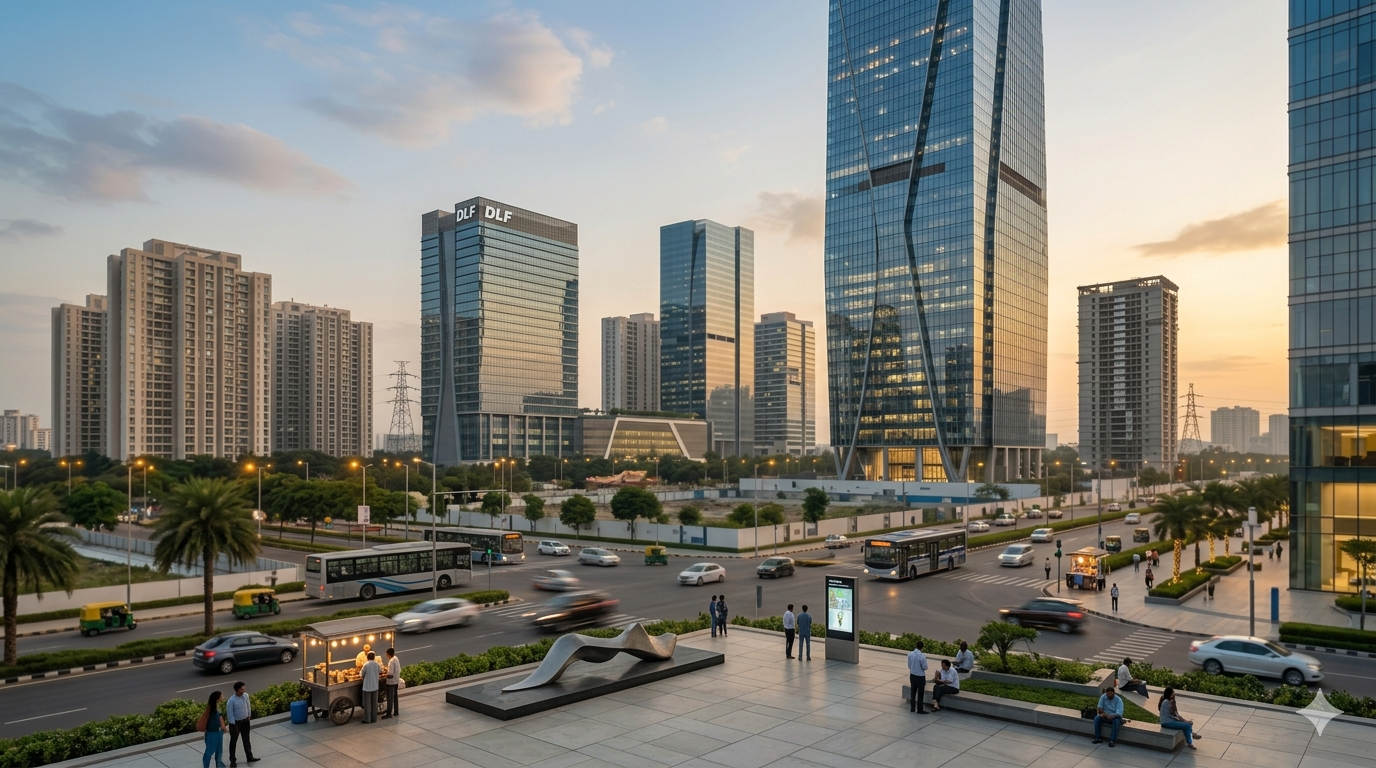
The Indian real estate sector demonstrates robust momentum as leading developers DLF and Godrej Properties report stellar performances, with DLF’s sales bookings more than doubling to Rs 15,757 crore in the first half of FY26 driven by luxury demand in Gurugram and Mumbai, while Godrej promoters increased their stake by 5% through Rs 2,674 crore public share purchases. This activity coincides with resilient market trends, including a 9.1% rise in new residential supply and 14% YoY surge in transaction values in Q3 2025, bolstered by policy supports like cement GST cuts and Budget 2026’s thrust on tier-II/III cities. Amid NIFTY Core Housing index’s -2.7% weekly dip, underlying fundamentals point to sustained growth for institutional investors eyeing real estate equities.
Key Highlights
- DLF Ltd sales bookings leap over 2-fold to Rs 15,757 crore in Apr-Sep FY26 on luxury homes demand in Gurugram and Mumbai.
- Godrej Properties promoters raise stake by 5% in FY26, acquiring public shares worth Rs 2,674 crore; recent land acquisitions in Gurugram and Kolkata total 16 acres for Rs 1,325 crore.
- Residential real estate resilient with 9.1% new supply growth and 14% YoY transaction value rise in Q3 2025, aided by GST cuts on cement and festive demand outlook.
- Budget 2026 allocates Rs 5,000 crore per City Economic Region in tier-II/III cities like Bengaluru and Surat, boosting residential and industrial demand.
- Godrej Properties stock at Rs 1,946.55 with Rs 58,630 crore market cap, trading at 37.76 P/E but overvalued per intrinsic estimates; DLF at Rs 756.25 down 2.62%.
DLF and Godrej Properties Lead Luxury Realty Boom
DLF Ltd’s exceptional performance underscores the premium housing segment’s dominance, with sales bookings surging more than twofold to Rs 15,757 crore during April-September FY26, primarily fueled by high demand for luxury projects in key markets like Gurugram and Mumbai. This marks a significant acceleration from prior periods, reflecting buyer confidence in high-end properties amid stable macroeconomic conditions and INR resilience against global pressures. DLF’s share price stood at Rs 756.25, reflecting a 2.62% intraday decline, yet the bookings figure signals strong forward revenue visibility for FY26.
Godrej Properties mirrors this trajectory with strategic moves enhancing its position. Promoters hiked their stake by 5% in FY26 through open market purchases totaling Rs 2,674 crore, demonstrating conviction in long-term growth. Complementing this, the company acquired over 16 acres across Gurugram and Kolkata for approximately Rs 1,325 crore as of early March 2026, positioning it for phased luxury developments. With a market capitalization of Rs 58,630 crore and end-of-day price of Rs 1,946.55 on March 17, Godrej trades at a trailing P/E of 37.76, 3.39 P/B, and 12.7 P/S based on TTM figures, though analysts deem it overvalued by 35% against median intrinsic value. These actions by key players highlight a sector pivot towards quality assets in high-growth corridors, appealing to institutional portfolios with realty exposure. Investors looking to participate in this market movement can open demat account through SEBI-registered brokers to access these opportunities.
Mumbai Real Estate and Broader Property Market Resilience
Mumbai’s real estate landscape benefits directly from DLF’s luxury push, where surging demand has propelled bookings amid a broader market shift to premium segments. PropTiger reports indicate residential resilience in Q3 2025, with new supply up 9.1% despite stable sales volumes, but total transaction values climbing 14% YoY due to larger ticket sizes in upscale homes. Policy tailwinds, including cement GST reductions and anticipated festive Q4 demand, are set to further elevate activity, with stable interest rates from RBI supporting buyer affordability.
Godrej Icon in Gurgaon’s Sector 88A exemplifies micro-market strength, with average property rates at Rs 11,507 per sq ft in February 2026, posting 1.24% monthly growth. Nationally, the sector gains from Naredco’s partnership with Magicbricks for enhanced data analytics and market intelligence, promising better transparency for investors navigating BSE and NSE listings. Peers like Arvind SmartSpaces target Rs 700 crore revenue from a Vadodara housing venture, signaling diversification beyond metros. Recent stock trends show Godrej Properties underperforming peers with -31.5% one-year returns versus DLF’s -11.4% and Macrotech Developers’ -2.3%, amid NIFTY Core Housing’s -6.4% annual dip, yet fundamentals like TTM revenues of Rs 4,618 crore for Godrej underpin recovery potential. This development presents new considerations for stock investment strategies focused on Indian equities.
Peer Comparison and Valuation Snapshot
The following table compares key realty peers on recent performance and valuation metrics as of March 17, 2026:
| Company | Price (Rs) | MCap (Rs Cr) | 1W Return | 1M Return | 1Y Return | P/E (TTM) |
|---|---|---|---|---|---|---|
| Godrej Properties | 1,946.55 | 58,630 | -5.2% | -9.7% | -31.5% | 37.76 |
| DLF Ltd | 756.25 | N/A | -3.1% | -7.7% | -11.4% | N/A |
| Macrotech Developers | N/A | N/A | -5.4% | -4.3% | -2.3% | N/A |
| Oberoi Realty | N/A | N/A | -2.9% | -3.3% | -6.3% | N/A |
This snapshot reveals Godrej’s premium valuation amid relative underperformance, with DLF showing superior bookings growth but similar short-term pressures from broader NIFTY India New Age Consumption index’s -2.4% weekly fall. Risks include overvaluation signals for Godrej, potentially capping upside unless FY26 deliveries accelerate, while DLF’s luxury focus offers downside protection via pre-sales. Investors should monitor quarterly updates on NSE for shifts in P/B ratios, currently 3.39 for Godrej against book value of Rs 17,302 crore. Retail participation has grown significantly as access to a reliable trading platform has become more widespread among individual investors tracking these real estate equities.
Market Outlook
Budget 2026’s emphasis on seven City Economic Regions with Rs 5,000 crore each over five years, alongside manufacturing incentives like Rs 40,000 crore for electronics and data centre tax holidays till 2047, positions tier-II/III cities as high-growth frontiers for residential, industrial, and logistics assets. High-speed rails linking Mumbai-Pune and freight corridors will elevate property values, unlocking REIT monetization of CPSE lands. For Indian investors, this implies 10-15% annualized returns in diversified realty portfolios, but watch RBI rate trajectories and INR volatility; key players like DLF and Godrej remain pivotal, with risks from supply gluts in metros offset by Mumbai real estate premiumization. Sanjeev Singh, MD SKJ Landbase, notes: “The next decade will belong to smaller cities… Developers who plan strategically today will capture long-term value.”
Conclusion
India’s real estate market, propelled by DLF’s booking surge, Godrej’s stake fortification, and policy-driven tier-II expansion, stands resilient against short-term index corrections, offering institutional investors a compelling risk-reward profile. With Mumbai and Gurugram anchoring luxury demand and Budget 2026 catalyzing broader urbanization, stakeholders must prioritize undervalued assets, track peer valuations, and hedge via SENSEX-aligned exposures. This convergence of corporate strength and structural reforms heralds a multi-year upcycle, demanding vigilant monitoring of Q4 festive sales and RBI cues for optimal positioning.
Leave a Reply