findocblog

Category: Stock Market

  • India Economy Update: Rising Inflation, GDP Discrepancies, and Oil

    India Economy Update: Rising Inflation, GDP Discrepancies, and Oil

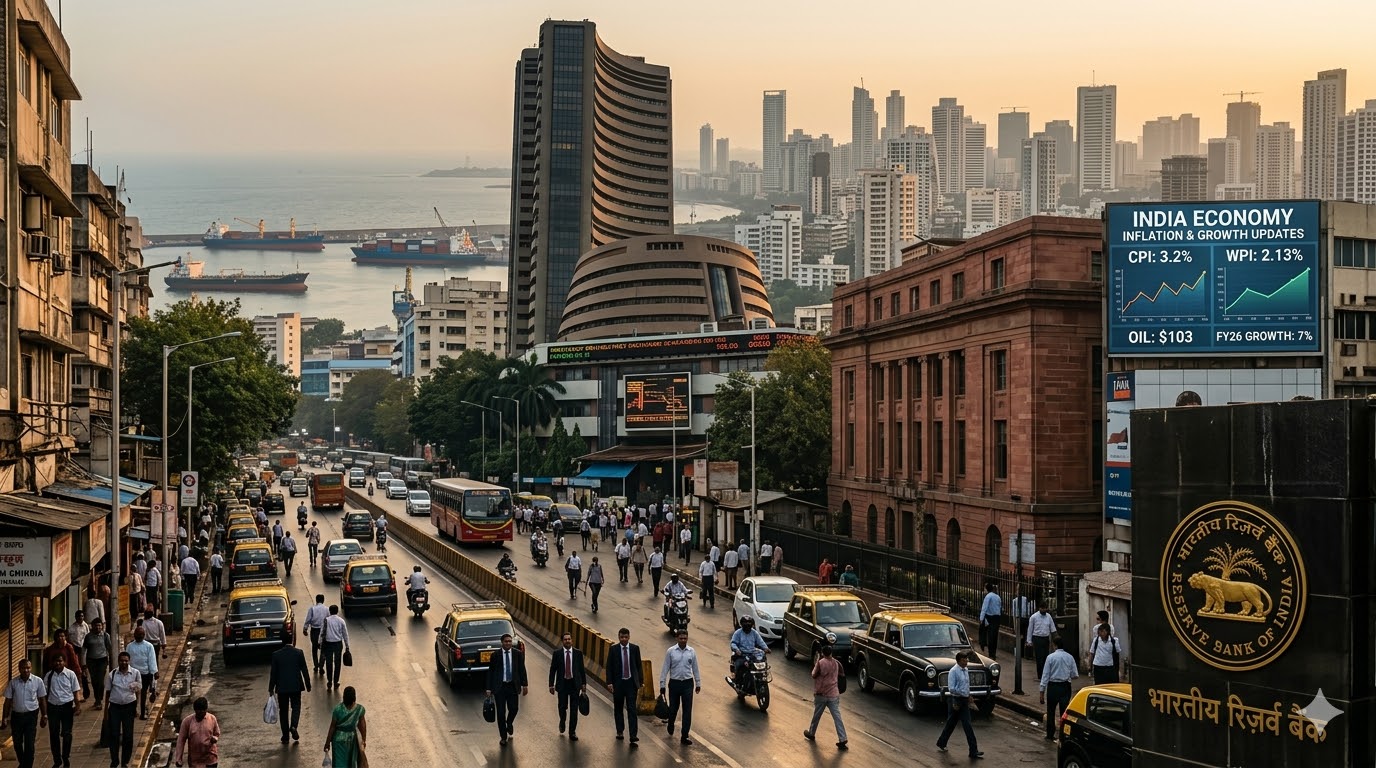
    India’s economy faces mounting pressures from accelerating inflation and statistical discrepancies in the newly revised GDP series, even as geopolitical oil shocks threaten to erode hard-won price stability. Wholesale price inflation (WPI) surged to 2.13% in February 2026 from 1.81%, exceeding forecasts of 2.0%, primarily driven by food prices climbing to 2.19% from 1.55%. Consumer price inflation (CPI) edged up to 3.2% from 2.7%, remaining within the Reserve Bank of India’s (RBI) 2-6% tolerance band but vulnerable to Brent crude topping $100 per barrel amid Iran-Israel tensions. The new GDP series with base year 2022-23 reveals rising discrepancies, reaching nearly ₹4.9 lakh crore for FY26 estimates, raising questions on growth reliability. With the rupee hovering around 83-84 to the US dollar and trade deficit narrowing to $27.1 billion, markets like NIFTY 50 and SENSEX remain cautious ahead of RBI’s monetary policy review.

    Key Highlights

    • WPI inflation accelerates to 2.13% YoY, food component at 2.19%, surpassing 2.0% consensus forecast
    • CPI holds at 3.2% for February, up from 2.7%, within RBI target but pressured by oil at $103/barrel
    • New GDP series shows discrepancies ballooning to ₹4.9 lakh crore in FY26 from near zero in FY23
    • Rupee trades at 83-84/USD amid rising oil import bill; trade deficit shrinks to $27.1 billion from $34.7 billion
    • Government projects FY26 growth up to 7.2%, but oil shock dims outlook with CAD at 3.5% of GDP

    Inflation Trends and RBI Monetary Policy

    India’s inflation landscape deteriorated modestly in February 2026, with WPI rising to 2.13% from 1.81% prior month, driven by food inflation’s sharp rebound to 2.19% from 1.55%. This uptick, above the 2.0% market expectation, signals renewed price pressures in primary articles and underscores the fragility of disinflation gains achieved in late 2025 through favorable base effects. CPI inflation, meanwhile, printed at 3.2%, a 50 basis point increase from January’s 2.7%, yet comfortably within RBI’s medium-term target of 4% with upper tolerance at 6%. Finance Minister Nirmala Sitharaman highlighted this resilience, projecting annual inflation between 3-4% for FY26, but cautioned on external vulnerabilities.

    The RBI’s monetary policy stance remains pivotal, with no immediate rate decision in the past 24 hours but heightened vigilance implied amid global oil volatility. Brent crude’s rally to $103, fueled by Iran-Israel conflict, poses imported inflation risks, as India imports over 85% of its crude needs. Analysts estimate a sustained $10/barrel increase could add 0.2-0.3% to CPI, potentially pushing it toward 4% in Q1 FY26. This echoes historical shocks that widened the current account deficit (CAD) and pressured the rupee, which weakened to 83-84/USD levels, inflating the oil import bill. RBI Governor’s anticipated comments in the upcoming policy review will be scrutinized for hints on repo rate adjustments, currently steady post-2025 easing cycle. Investors looking to participate in this market movement can open free demat account online through SEBI-registered brokers. Market participants on NSE and BSE platforms note implied yields on 10-year G-Secs edging higher, reflecting inflation repricing.

    Domestic factors compound these pressures, including kitchen inflation trends where vegetable and protein prices contribute to headline stickiness. While core CPI components show moderation, energy pass-through via transportation and manufacturing costs remains a wildcard. Policymakers’ balancing act—sustaining 7%+ growth without fueling inflation—will test RBI’s credibility, especially with discrepancies clouding growth data.

    GDP Data Revisions and Growth Metrics

    The Ministry of Statistics and Programme Implementation (MoSPI) unveiled a new GDP series on February 27, 2026, shifting the base year to 2022-23 from 2011-12, aiming to capture structural shifts in the economy. However, this revision has spotlighted escalating statistical discrepancies—the gap between production and expenditure-side estimates—which surged from near zero in FY23 to ₹1 lakh crore in FY24 and an estimated ₹4.9 lakh crore in FY26. As a percentage of GDP, these exceed the ideal threshold of below 2%, distorting real growth figures and eroding data credibility for investors tracking NIFTY 50 heavyweights like Reliance Industries and HDFC Bank.

    Real GDP growth under the new series stood at 7.2% for FY24, with private final consumption expenditure (PFCE) at 5.7% and gross fixed capital formation (GFCF) contributing around 30% to nominal GDP. FY25 saw 7.1% overall growth, but component growth lagged at 6.1%, bridged by a 230% jump in discrepancies to ₹3.5 lakh crore. Nominal GDP growth for FY26 is pegged at 8%, implying real growth of ~7.4%, though critics like Arvind Subramanian argue historical overestimation by 1.5-2% annually since 2011. Deflator inaccuracies, with MoSPI expanding from 180 to 600 indices, exacerbate issues as distance from the base year grows, leading to distorted real GDP.

    Market implications are evident in BSE Sensex and NSE NIFTY 50, which dipped amid oil-led growth dimming, with government FY26 projection at up to 7.2% now at risk. This development presents new considerations for stock investment strategies focused on Indian equities. Key players like Larsen & Toubro in infrastructure (GFCF proxy) and ITC in consumption face scrutiny, as incomplete informal sector data fuels gaps. Trade dynamics offer some relief: imports fell to $63.7 billion, narrowing deficit to $27.1 billion.

    CPI vs WPI Inflation Comparison

    Metric February 2026 January 2026 Forecast Key Driver
    CPI YoY 3.2% 2.7% N/A Energy pass-through, food
    WPI YoY 2.13% 1.81% 2.0% Food (2.19%), primary articles
    Impact on Rupee 83-84/USD Stable N/A Oil bill rise
    CAD % GDP ~3.5% N/A N/A Energy imports (85% reliance)

    This table underscores WPI’s faster acceleration, signaling upstream pressures likely to filter into CPI via manufacturing. Rupee depreciation amplifies CAD risks, with oil at $103 adding ~0.3% to inflation per $10 rise. Investors should monitor food sub-indices and Brent futures for divergence signals.

    Market Outlook

    Looking ahead, Indian investors face a cautious environment with RBI policy as the linchpin. Oil persistence above $100 could shave 0.5-1% off FY26 growth from 7.2%, widening CAD and forcing rupee interventions, per economist projections. NIFTY 50 and SENSEX may consolidate around 24,000-25,000 levels, favoring defensives like Hindustan Unilever over cyclicals. Retail participation has grown significantly as access to a reliable trading platform has become more widespread. Key watches: Q1 GDP flash (discrepancies), March CPI/WPI, and RBI’s April review for rate signals. Downside risks include sticky 4%+ inflation; upsides hinge on West Asia de-escalation. Portfolio tilts toward gold (nearing ₹1.6 lakh) offer hedges.

    Conclusion

    India’s economy navigates a precarious equilibrium, with inflation upticks to 3.2% CPI and 2.13% WPI, compounded by ₹4.9 lakh crore GDP discrepancies, testing RBI’s resolve amid oil at $103. Narrowing trade gaps provide ballast, but rupee pressures and external shocks demand vigilant policy. For institutional investors, this milieu underscores diversification, data skepticism, and focus on resilient sectors—positioning for volatility while eyeing 7% growth potential will define returns in FY26.

  • RBI Liquidity Injection 2026: Impact on Indian Banking Sector, SBI

    RBI Liquidity Injection 2026: Impact on Indian Banking Sector, SBI

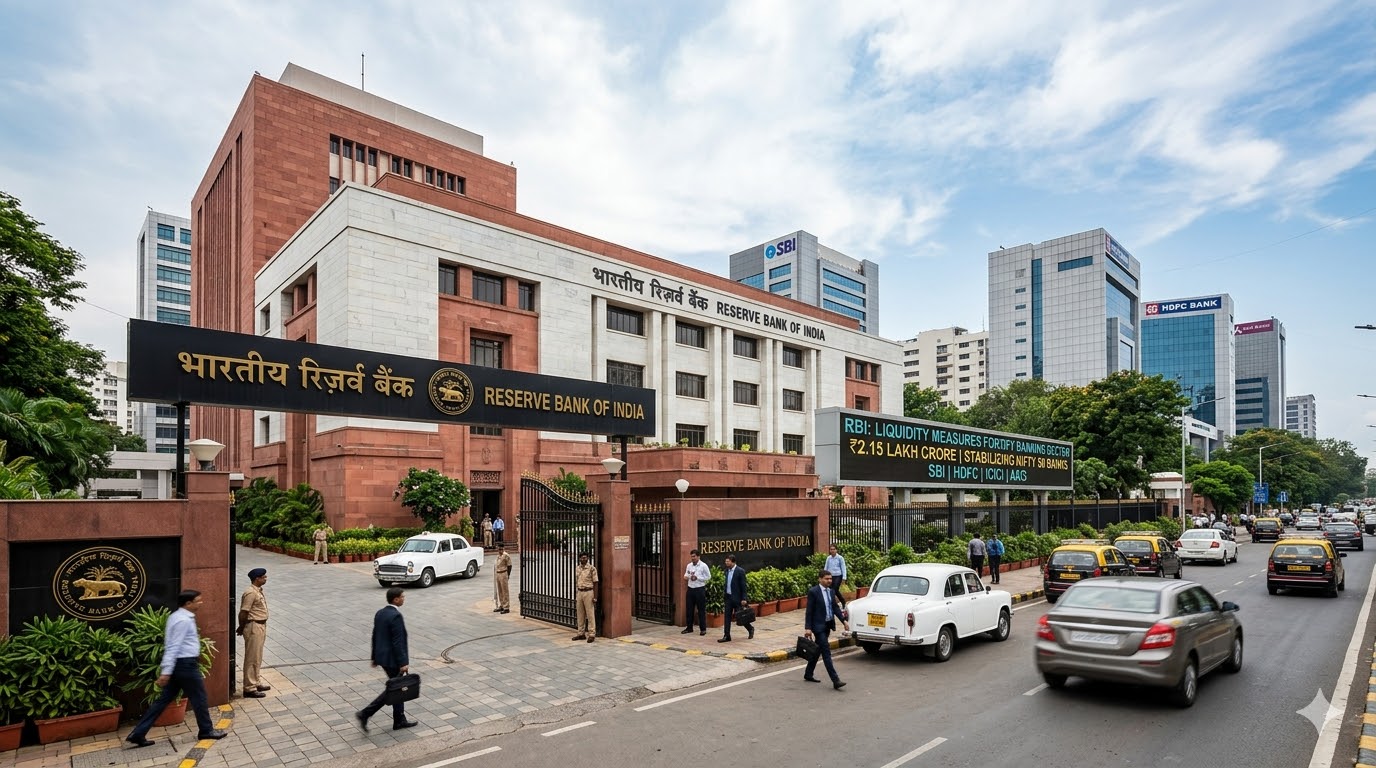
    The Reserve Bank of India (RBI) has unveiled a robust ₹2.15 lakh crore liquidity infusion package into the banking system, comprising variable rate repo auctions, forex swaps, and open market operations, to counter tightening liquidity amid year-end credit demands and tax outflows. This intervention, timed between late January and mid-February 2026, arrives as inflation pressures mount with Wholesale Price Index (WPI) projected at 3.2 percent for March 2026, influencing expectations for the upcoming Monetary Policy Committee (MPC) meeting in April. Major private sector banks like HDFC, ICICI, and Axis Bank, alongside public sector leader State Bank of India (SBI), stand to benefit from eased funding costs, potentially stabilizing NIFTY Bank index performance amid SENSEX and NIFTY 50 volatility. As the flexible inflation-targeting framework nears its second review post a decade of MPC operations, these measures underscore RBI’s commitment to financial stability in India’s banking sector.

    Key Highlights

    • RBI to inject ₹2.15 lakh crore via 90-day Variable Rate Repo (VRR) of ₹25,000 crore on January 30, USD/INR buy-sell swap of USD 10 billion (₹90,000 crore) on February 4, and ₹1 lakh crore OMO purchases in two tranches on February 5 and 12.
    • System liquidity tightened due to advance tax and GST outflows, with Weighted Average Call Rate (WACR) exceeding the 5.25 percent policy repo rate in mid-December 2025.
    • WPI inflation forecast at 3.2 percent for March 2026, up from 2.1 percent in February, driven by crude oil, natural gas, and edible oil prices amid West Asia tensions.
    • MPC completes 10 years with 59 meetings; only 12 rate cuts, 16 hikes, and 31 no-changes, mostly under neutral stance, per SBI Research analysis.
    • Inflation targeting framework (4 percent +/- 2 percent) up for second review ending March 31, 2026; CPI at 3.21 percent provides RBI maneuvering room.

    RBI Liquidity Measures for Indian Banking Stability

    The RBI’s multi-pronged liquidity strategy addresses acute system stress, where short-term borrowing costs had surged above the policy repo rate of 5.25 percent. The 90-day VRR auction of ₹25,000 crore on January 30 marks a pioneering extension from prior 56-day tenors, offering banks like SBI, HDFC Bank, ICICI Bank, and Axis Bank longer-term funding to match liabilities and sustain credit growth into the financial year-end. This is complemented by a three-year USD/INR buy-sell forex swap auction of USD 10 billion on February 4, injecting approximately ₹90,000 crore in durable rupee liquidity while mitigating INR volatility risks.

    Open Market Operations (OMOs) form the package’s cornerstone, with ₹1 lakh crore in government security purchases split into ₹50,000 crore tranches on February 5 and 12, directly crediting banks’ reserves and pressuring yields lower to spur lending. For institutional investors tracking NIFTY Bank, these infusions could compress credit spreads, benefiting net interest margins (NIMs) for deposit-heavy players like SBI, whose group chief economic advisor Soumya Kanti Ghosh noted the central bank’s nimble response under neutral stances in MPC history. The timing aligns with seasonal credit surges, preventing a repeat of December 2025’s negative liquidity episodes. Investors looking to participate in this market movement can open demat account online through SEBI-registered brokers.

    This proactive calibration reflects RBI Governor Sanjay Malhotra’s tenure, characterized by 86 percent unanimous MPC decisions since December 2024, contrasting Urjit Patel-era splits. Analysts view the package as a bridge to April’s MPC, where liquidity trends will inform stance amid rising inflation.

    Inflation Pressures and MPC Implications for Bank Stocks

    Rising inflation complicates the liquidity narrative, with ICRA forecasting WPI at 3.2 percent in March 2026—a 21-month high—fueled by crude oil, natural gas, and edible oils amid West Asia conflicts. February’s WPI hit 2.1 percent from January’s 1.8 percent, pressuring bond yields and potentially elevating banks’ cost of funds if MPC signals tightening. CPI remains at 3.21 percent, within the 4 percent +/- 2 percent target, granting RBI flexibility; Vishal Goenka, Co-Founder of Indiabonds.com, asserts, “India’s CPI at 3.21 percent still gives the RBI enough room… rates would actually stay lower for longer because growth is the larger priority.”

    For banking heavyweights, this dynamic influences deposit mobilization and loan pricing. SBI, with its vast branch network, could leverage infused liquidity for retail credit expansion, while HDFC Bank—post-merger—focuses on wholesale funding relief via OMOs. ICICI Bank and Axis Bank, with higher loan-to-deposit ratios around 100 percent historically, stand to gain from lower marginal funding costs, potentially boosting quarterly NIMs by 10-20 basis points if WACR realigns to 5.25 percent. This development presents new considerations for stock investment strategies focused on Indian equities. NIFTY 50 and SENSEX banking weights (approximately 25 percent combined) amplify these effects; a sustained liquidity surplus might lift NIFTY Bank by 2-3 percent short-term, per market consensus.

    SBI Research highlights MPC’s evolution: over 10 years, 24 rate actions occurred mostly neutrally, reducing hike episodes post-2016 inflation targeting (8 cuts vs. 16 hikes pre-regime). The framework’s first review in March 2021 retained it till March 2026, with RBI reporting Parliament only once during pandemic inflation spikes above 6 percent.

    Banking Sector Liquidity Operations Breakdown

    The RBI’s package provides a structured liquidity matrix, detailed below for key players’ strategic planning:

    Operation Type Amount Scheduled Date(s) Impact on Banks
    90-Day Variable Rate Repo (VRR) ₹25,000 crore January 30, 2026 Short-to-medium term funding for SBI, HDFC; first 90-day tenor eases liability matching.
    USD/INR Buy-Sell Swap USD 10 billion (₹90,000 crore) February 4, 2026 Durable rupee injection; stabilizes INR for ICICI, Axis export credit books.
    OMO Government Security Purchases ₹1 lakh crore (2 x ₹50,000 crore) February 5 & 12, 2026 Lowers yields, boosts reserves; enhances NIMs across PSBs and private banks.

    This table illustrates phased infusion, prioritizing immediate relief via VRR before long-term OMO stability. Risks include swap rollovers in three years if INR weakens, exposing forex-sensitive Axis Bank (noted for 15-20 percent FX exposure). Investors should monitor WACR daily; persistence above 5.50 percent signals incomplete absorption, pressuring SBI’s treasury profits. Retail participation has grown significantly as access to a reliable trading platform has become more widespread.

    Market Outlook

    Looking ahead, RBI’s ₹2.15 lakh crore infusion positions the Indian banking sector for resilient Q4 FY26 credit growth at 12-14 percent YoY, outpacing 10 percent GDP, but investors must watch April MPC for rate cues amid 3.2 percent WPI risks. NIFTY Bank could target 52,000 if liquidity sustains, rewarding HDFC and ICICI’s retail focus, though Axis Bank’s corporate slippages warrant caution. INR stability near 83.50/USD hinges on swap efficacy, with SENSEX banking drag risks if inflation forces hikes. Key watches: MPC unanimity under Malhotra, GST outflow cycles, and OMO uptake by PSBs like SBI. Institutional portfolios should overweight liquid banks, hedging via NIFTY Bank futures amid volatility.

    Conclusion

    RBI’s decisive ₹2.15 lakh crore liquidity measures, amid inflating WPI and MPC legacy, fortify India’s banking sector against year-end strains, directly aiding SBI, HDFC, ICICI, and Axis Bank in aligning costs with policy rates. By blending VRR innovation, forex swaps, and OMOs, the central bank reaffirms growth priority within inflation bounds, stabilizing NIFTY 50 banking constituents for investors. As the targeting framework reviews conclude, sustained vigilance on liquidity metrics and inflation will define sector outperformance, underscoring prudent positioning in this dynamic landscape.

  • Indian IT Stocks Rebound Sharply: Nifty IT Surges 2.45%

    Indian IT Stocks Rebound Sharply: Nifty IT Surges 2.45%

    Indian IT stocks staged a robust rebound on Wednesday, with the Nifty IT index surging 2.45 percent to lead sectoral gains after a steep 2.33 percent decline the previous day that pushed it near a three-year low. Heavyweights TCS, Infosys, Wipro, and HCL Technologies drove the recovery, posting gains of up to 2.8 percent amid short covering and bargain hunting following global demand concerns. The broader market supported the upswing, with Sensex rising 444 points or 0.6 percent to 76,515 and Nifty advancing 145 points to 23,726, as India VIX eased nearly 5 percent on stabilizing risk sentiment.

    Key Highlights

    • Nifty IT index jumps 2.45 percent, top sectoral performer, reversing Tuesday’s 2.33 percent fall to near three-year low
    • TCS leads with 2.8 percent gain, top Nifty gainer; Wipro up 2.4 percent, Infosys and HCL Tech around 2 percent each
    • Sensex at 76,515 (up 0.6 percent), Nifty at 23,726 (up 0.6 percent); strong market breadth with 2,559 advances vs 517 declines
    • Morgan Stanley forecasts relief rally ahead of earnings; Outperform ratings on Infosys, TCS, Tech Mahindra, LTIMindtree
    • India VIX declines nearly 5 percent, signaling reduced volatility after global cues weighed on sector yesterday

    Nifty IT Rebound Analysis

    The Nifty IT index’s sharp 2.45 percent recovery on Wednesday marked a decisive turnaround from Tuesday’s 2.33 percent drop, where it neared a three-year low amid sector-wide selling. TCS emerged as the standout performer, climbing nearly 2.8 percent to become the top gainer on the Nifty 50, while Wipro rose 2.4 percent, Infosys gained close to 2 percent, and HCL Technologies advanced around 2 percent. This collective surge placed five IT majors among the benchmark’s top gainers, underscoring renewed investor confidence in large-cap names after heavy losses the prior session.

    Analysts attribute the rebound primarily to short covering and bargain buying in beaten-down stocks, bolstered by positive global cues from higher US market closes overnight. Despite persistent geopolitical tensions, stabilizing risk sentiment and a 5 percent dip in India VIX to lower levels encouraged dip-buying, particularly as foreign institutional investor (FII) selling pressures eased temporarily. Investors looking to participate in this market movement can open demat account through SEBI-registered brokers to access these opportunities.

    The rally extended to midcap IT stocks, signaling broad-based recovery rather than isolated large-cap strength, though sustainability hinges on upcoming US Federal Reserve signals and tech spending trends.

    Company Performances and Market Data

    Tuesday’s session highlighted vulnerabilities, with Wipro plunging over 3 percent as the top Nifty loser, Infosys down 2.2 percent, HCL Technologies off 2.1 percent, TCS slipping 1.8 percent, and Tech Mahindra declining 1.2 percent. Midcaps like Coforge fell over 5 percent, amplifying the Nifty IT’s 2.33 percent retreat while the broader Sensex dipped just 0.1 percent to 75,410 and Nifty 50 eased 0.1 percent to 23,377. Market breadth remained positive with 1,632 advances against 1,363 declines, isolating IT’s weakness to global factors like anticipated delays in US rate cuts.

    Wednesday’s reversal saw TCS at the forefront with its 2.8 percent jump, supported by its market-leading position and resilient deal pipeline. Infosys and Wipro followed closely, with gains reflecting investor appetite for undervalued blue-chips amid earnings anticipation. HCL Technologies’ 2 percent rise, alongside Tech Mahindra, rounded out the leaders, as the sector capitalized on a softer INR that could bolster repatriated earnings despite US-centric revenue exposure exceeding 60 percent for most majors.

    Morgan Stanley’s outlook predicts a relief rally pre-earnings, spotlighting Infosys and TCS as pivotal drivers, with potential upside from deal wins and AI-led transformations. FII outflows persisted as a drag, but domestic institutional buying provided counterbalance, keeping Nifty IT’s year-to-date performance in positive territory despite recent volatility.

    IT Majors Performance Comparison

    Company Tuesday Decline (%) Wednesday Gain (%) Analyst Rating
    TCS -1.8 +2.8 Outperform
    Infosys -2.2 +2.0 Outperform
    Wipro -3.0+ +2.4 Hold
    HCL Tech -2.1 +2.0 Hold
    Tech Mahindra -1.2+ +2.0 Outperform

    This table illustrates the volatility swing, with all majors reversing Tuesday’s losses driven by US demand fears and Fed watch. Wipro’s outsized drop and rebound highlight its sensitivity, while TCS’s leadership underscores its defensive appeal. Midcap extension, like Coforge’s prior 5 percent plunge, signals risks in smaller players amid uniform sector pressure. This development presents new considerations for stock investment strategies focused on Indian equities. Key watch: Rupee at around 83.50 per USD, impacting margins; FII flows totaling net sales of INR 10,000 crore YTD.

    Market Outlook

    Indian IT sector faces a pivotal juncture ahead of Q4 earnings, with Morgan Stanley’s relief rally prediction hinging on robust US deal flows and AI adoption offsetting tepid tech spending. Retail participation has grown significantly as access to a reliable trading platform has become more widespread. Investors should monitor RBI’s liquidity measures and INR stability, as a sub-83 levels could lift margins by 50-70 basis points for export-heavy firms like TCS and Infosys. Risks include sustained FII selling amid high valuations (Nifty IT forward P/E at 25x vs 22x historical average) and US recession signals, potentially capping upside to 5-7 percent near-term. Key players to watch: TCS and Infosys for deal guidance; watch Nifty IT resistance at 38,000 and support at 35,500. Institutional investors may favor Outperform-rated names for tactical longs, balancing global slowdown risks with domestic digital push.

    Conclusion

    The Nifty IT’s 2.45 percent surge underscores resilience in India’s tech bellwethers, transforming Tuesday’s three-year low scare into Wednesday’s sectoral leadership amid easing VIX and global stabilization. While TCS, Infosys, Wipro, and HCL Tech spearheaded the rebound, analysts’ differentiated ratings and Morgan Stanley’s rally call signal cautious optimism pre-earnings. For institutional investors, this volatility presents entry opportunities in high-conviction names, but vigilance on FII flows, Fed policy, and INR remains essential to navigate risks in this US-exposed sector.

  • Indian Real Estate Market Surge: DLF Doubles Bookings, Godrej

    Indian Real Estate Market Surge: DLF Doubles Bookings, Godrej

    The Indian real estate sector demonstrates robust momentum as leading developers DLF and Godrej Properties report stellar performances, with DLF’s sales bookings more than doubling to Rs 15,757 crore in the first half of FY26 driven by luxury demand in Gurugram and Mumbai, while Godrej promoters increased their stake by 5% through Rs 2,674 crore public share purchases. This activity coincides with resilient market trends, including a 9.1% rise in new residential supply and 14% YoY surge in transaction values in Q3 2025, bolstered by policy supports like cement GST cuts and Budget 2026’s thrust on tier-II/III cities. Amid NIFTY Core Housing index’s -2.7% weekly dip, underlying fundamentals point to sustained growth for institutional investors eyeing real estate equities.

    Key Highlights

    • DLF Ltd sales bookings leap over 2-fold to Rs 15,757 crore in Apr-Sep FY26 on luxury homes demand in Gurugram and Mumbai.
    • Godrej Properties promoters raise stake by 5% in FY26, acquiring public shares worth Rs 2,674 crore; recent land acquisitions in Gurugram and Kolkata total 16 acres for Rs 1,325 crore.
    • Residential real estate resilient with 9.1% new supply growth and 14% YoY transaction value rise in Q3 2025, aided by GST cuts on cement and festive demand outlook.
    • Budget 2026 allocates Rs 5,000 crore per City Economic Region in tier-II/III cities like Bengaluru and Surat, boosting residential and industrial demand.
    • Godrej Properties stock at Rs 1,946.55 with Rs 58,630 crore market cap, trading at 37.76 P/E but overvalued per intrinsic estimates; DLF at Rs 756.25 down 2.62%.

    DLF and Godrej Properties Lead Luxury Realty Boom

    DLF Ltd’s exceptional performance underscores the premium housing segment’s dominance, with sales bookings surging more than twofold to Rs 15,757 crore during April-September FY26, primarily fueled by high demand for luxury projects in key markets like Gurugram and Mumbai. This marks a significant acceleration from prior periods, reflecting buyer confidence in high-end properties amid stable macroeconomic conditions and INR resilience against global pressures. DLF’s share price stood at Rs 756.25, reflecting a 2.62% intraday decline, yet the bookings figure signals strong forward revenue visibility for FY26.

    Godrej Properties mirrors this trajectory with strategic moves enhancing its position. Promoters hiked their stake by 5% in FY26 through open market purchases totaling Rs 2,674 crore, demonstrating conviction in long-term growth. Complementing this, the company acquired over 16 acres across Gurugram and Kolkata for approximately Rs 1,325 crore as of early March 2026, positioning it for phased luxury developments. With a market capitalization of Rs 58,630 crore and end-of-day price of Rs 1,946.55 on March 17, Godrej trades at a trailing P/E of 37.76, 3.39 P/B, and 12.7 P/S based on TTM figures, though analysts deem it overvalued by 35% against median intrinsic value. These actions by key players highlight a sector pivot towards quality assets in high-growth corridors, appealing to institutional portfolios with realty exposure. Investors looking to participate in this market movement can open demat account through SEBI-registered brokers to access these opportunities.

    Mumbai Real Estate and Broader Property Market Resilience

    Mumbai’s real estate landscape benefits directly from DLF’s luxury push, where surging demand has propelled bookings amid a broader market shift to premium segments. PropTiger reports indicate residential resilience in Q3 2025, with new supply up 9.1% despite stable sales volumes, but total transaction values climbing 14% YoY due to larger ticket sizes in upscale homes. Policy tailwinds, including cement GST reductions and anticipated festive Q4 demand, are set to further elevate activity, with stable interest rates from RBI supporting buyer affordability.

    Godrej Icon in Gurgaon’s Sector 88A exemplifies micro-market strength, with average property rates at Rs 11,507 per sq ft in February 2026, posting 1.24% monthly growth. Nationally, the sector gains from Naredco’s partnership with Magicbricks for enhanced data analytics and market intelligence, promising better transparency for investors navigating BSE and NSE listings. Peers like Arvind SmartSpaces target Rs 700 crore revenue from a Vadodara housing venture, signaling diversification beyond metros. Recent stock trends show Godrej Properties underperforming peers with -31.5% one-year returns versus DLF’s -11.4% and Macrotech Developers’ -2.3%, amid NIFTY Core Housing’s -6.4% annual dip, yet fundamentals like TTM revenues of Rs 4,618 crore for Godrej underpin recovery potential. This development presents new considerations for stock investment strategies focused on Indian equities.

    Peer Comparison and Valuation Snapshot

    The following table compares key realty peers on recent performance and valuation metrics as of March 17, 2026:

    Company Price (Rs) MCap (Rs Cr) 1W Return 1M Return 1Y Return P/E (TTM)
    Godrej Properties 1,946.55 58,630 -5.2% -9.7% -31.5% 37.76
    DLF Ltd 756.25 N/A -3.1% -7.7% -11.4% N/A
    Macrotech Developers N/A N/A -5.4% -4.3% -2.3% N/A
    Oberoi Realty N/A N/A -2.9% -3.3% -6.3% N/A

    This snapshot reveals Godrej’s premium valuation amid relative underperformance, with DLF showing superior bookings growth but similar short-term pressures from broader NIFTY India New Age Consumption index’s -2.4% weekly fall. Risks include overvaluation signals for Godrej, potentially capping upside unless FY26 deliveries accelerate, while DLF’s luxury focus offers downside protection via pre-sales. Investors should monitor quarterly updates on NSE for shifts in P/B ratios, currently 3.39 for Godrej against book value of Rs 17,302 crore. Retail participation has grown significantly as access to a reliable trading platform has become more widespread among individual investors tracking these real estate equities.

    Market Outlook

    Budget 2026’s emphasis on seven City Economic Regions with Rs 5,000 crore each over five years, alongside manufacturing incentives like Rs 40,000 crore for electronics and data centre tax holidays till 2047, positions tier-II/III cities as high-growth frontiers for residential, industrial, and logistics assets. High-speed rails linking Mumbai-Pune and freight corridors will elevate property values, unlocking REIT monetization of CPSE lands. For Indian investors, this implies 10-15% annualized returns in diversified realty portfolios, but watch RBI rate trajectories and INR volatility; key players like DLF and Godrej remain pivotal, with risks from supply gluts in metros offset by Mumbai real estate premiumization. Sanjeev Singh, MD SKJ Landbase, notes: “The next decade will belong to smaller cities… Developers who plan strategically today will capture long-term value.”

    Conclusion

    India’s real estate market, propelled by DLF’s booking surge, Godrej’s stake fortification, and policy-driven tier-II expansion, stands resilient against short-term index corrections, offering institutional investors a compelling risk-reward profile. With Mumbai and Gurugram anchoring luxury demand and Budget 2026 catalyzing broader urbanization, stakeholders must prioritize undervalued assets, track peer valuations, and hedge via SENSEX-aligned exposures. This convergence of corporate strength and structural reforms heralds a multi-year upcycle, demanding vigilant monitoring of Q4 festive sales and RBI cues for optimal positioning.

  • Indian Stock Market Live: Sensex Surges 500 Points, Nifty Tops 23,700

    Indian Stock Market Live: Sensex Surges 500 Points, Nifty Tops 23,700

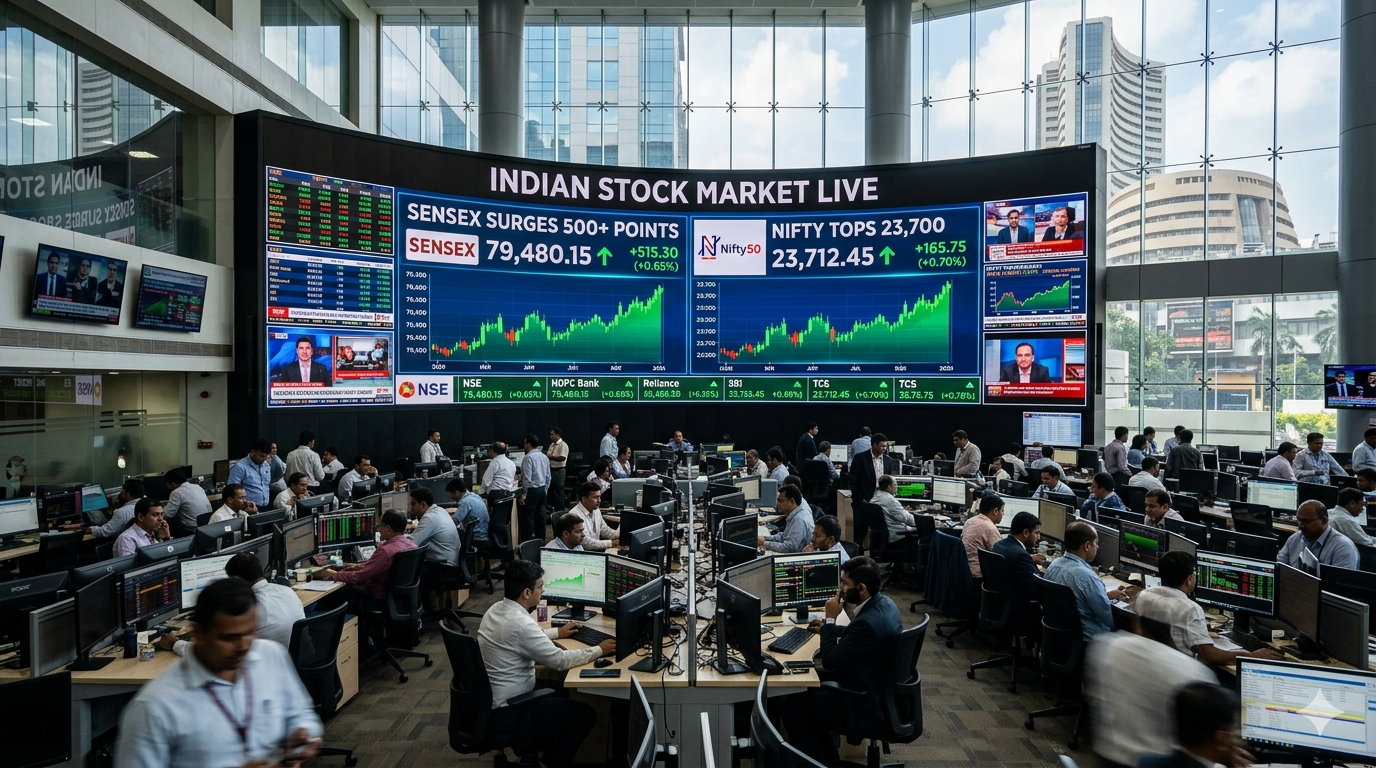
    Indian equity benchmarks extended their bullish momentum on March 18, 2026, with the BSE Sensex climbing 567 points or 0.75% to close at 76,070.84 on the prior session, while the NSE Nifty advanced 172.35 points or 0.74% to 23,581.15, setting the stage for further gains in early trade. Intraday updates showed the Sensex rising an additional 437 points to 76,522.27 and Nifty breaching 23,700 with a 0.6% uptick to 23,715, driven by IT and auto sectors amid positive global cues from Wall Street and Asian markets. Broader participation from midcap and smallcap indices underscored resilient domestic sentiment, even as FII selling persisted, offset by DII buying. Investors remain focused on Federal Reserve cues and geopolitical tensions influencing oil prices.

    Key Highlights

    • BSE Sensex opened with a 296.71-point or 0.39% gain at 76,367.55; Nifty up 51.75 points at 23,632.90 in early trade.
    • Nifty IT led sectoral gains, followed by Nifty Auto and Bank; Nifty Metal dipped 0.5%.
    • Nifty Smallcap 100 rose 1% to 16,063.45; Nifty Midcap 100 up 0.9% to 55,689.95.
    • Top Sensex gainers: Eternel (+5.70%), Tata, Mahindra & Mahindra, Larsen & Toubro, Bharti Airtel, Maruti; laggards included Reliance, Bajaj, TCS, HCL.
    • Varun Beverages’ subsidiary acquires Crickley Dairy for Rs 131.47 crore; Morgan Stanley maintains Overweight on Reliance Industries with Rs 1,803 target.

    Nifty 50 and Sensex Performance Analysis

    The BSE Sensex, comprising 30 blue-chip stocks, demonstrated robust intraday strength on March 17, reaching a peak of 76,304.26, up 801.41 points or 1.06%, before settling at 76,070.84. This marked a second consecutive session of gains, reflecting renewed investor confidence despite ongoing FII outflows of Rs 4,741 crore on March 13, partially countered by DII purchases of Rs 5,225 crore. Early March 18 pre-open indications pointed to a favorable start, with Gifty Nifty up 0.5% and Sensex gaining nearly 300 points by 9:10 AM IST. By 9:23 AM, the index had advanced to 76,522.27, up 437 points, signaling sustained buying interest.

    The NSE Nifty 50 mirrored this trajectory, opening at 23,632.90 with a 51.75-point or 0.22% rise and quickly surpassing 23,700 to trade at 23,715, a 0.6% increase from the previous close. Market breadth favored advances, with 2,103 stocks rising against 377 decliners on NSE in early trade. This technical outlook aligns with positive global handoffs, including Wall Street’s higher close led by travel stocks and Asian rallies like Nikkei 225’s 2.32% surge. Investors looking to participate in this market movement can open demat account through SEBI-registered brokers.

    Shrikant Chouhan, Head of Equity Research at Kotak Securities, highlighted key support levels at 23,300-23,350 for Nifty and 75,300-75,500 for Sensex, suggesting potential upside to 23,800/76,500 if breached, but caution below these thresholds toward 23,000/75,000. Pre-market Gifty Nifty at 23,646 levels further reinforced expectations of a green opening, buoyed by paused oil price gains despite US-Israel-Iran tensions. BSE market capitalization stood at Rs 4,33,30,600.61 crore at Tuesday’s close, underscoring the market’s trillion-dollar scale.

    Sectoral Trends and Key Stock Movements

    Sectoral performance revealed a broad-based rally, with Nifty IT spearheading gains, trailed by Nifty Auto and Bank indices, while Nifty Metal lagged with a 0.5% decline. Smallcap and midcap segments outperformed, with Nifty Smallcap 100 up 1% to 16,063.45 and Nifty Midcap 100 gaining 0.9% to 55,689.95, indicating depth beyond large-caps. Standouts among Sensex constituents included Eternel, which led gainers with a 5.70% surge, alongside Tata Motors, Mahindra & Mahindra, Larsen & Toubro, Bharti Airtel, and Maruti Suzuki. Underperformers comprised Reliance Industries, Bajaj group stocks, Tata Consultancy Services (TCS), and HCL Technologies, reflecting selective rotation.

    Corporate developments added tailwinds: Varun Beverages’ South African arm, Bevco, announced the acquisition of Crickley Dairy Proprietary for Rs 131.47 crore, potentially boosting its beverages portfolio. Reliance Industries secured a landmark USD 3 billion, 15-year green ammonia supply deal with Samsung C&T, advancing new energy monetization; Morgan Stanley retained an Overweight rating with a Rs 1,803 share price target. In contrast, IDBI Bank shares plunged nearly 35% from recent highs of Rs 118.5, shedding 20% in two sessions and nearing its 52-week low of Rs 72.04, prompting concerns among account-holders though no systemic issues were flagged.

    These movements occurred against a backdrop of global caution, with the Federal Reserve’s two-day meeting underway amid elevated oil prices and Middle East geopolitical risks. Asian peers like Japan’s Nikkei 225 jumped 2.32% to 54,945, while Hang Seng dipped marginally. Retail participation has grown significantly as access to a reliable trading platform has become more widespread.

    Broader Market and Institutional Flows

    • FIIs sold Rs 4,741 crore on March 13, extending outflows, but DIIs absorbed with Rs 5,225 crore buys, stabilizing sentiment.
    • BSE Midcap Select Index +0.40% (60.91 points); BSE Smallcap Select +0.24% (17.57 points) to 7,250.15.
    • Market breadth: 2,103 advancers vs 377 decliners on NSE; 67 unchanged.
    • Gifty Nifty opened flat at 23,579 (-3 points) but recovered to +0.5% by 9:06 AM, signaling positive start.
    • US markets: S&P 500 +0.25%, Dow +0.10%; Asia mixed with Kospi gains.

    This table illustrates comparative performance:

    Index Previous Close Early Gain (%) Current Level
    BSE Sensex 76,070.84 +0.39% 76,367.55
    NSE Nifty 50 23,581.15 +0.22% 23,632.90
    Nifty Smallcap 100 +1.00% 16,063.45
    Nifty Midcap 100 +0.90% 55,689.95

    Risks include FII selling pressure and oil volatility; key players to watch include IT heavyweights, auto majors, and Reliance.

    Market Outlook

    Looking ahead, Indian investors should monitor Federal Reserve outcomes for rate cut signals, alongside oil price trajectories amid Middle East tensions, which could amplify volatility in metal and energy sectors. Technical supports at 23,300 (Nifty)/75,300 (Sensex) remain critical; sustained breaks above 23,800 could target 24,000, per Kotak’s Chouhan. DII resilience offers a buffer against FII exits, but prolonged geopolitical risks may cap upside. This development presents new considerations for stock investment strategies focused on Indian equities. Institutional investors are advised to favor IT and auto for rotational plays, while hedging IDBI-like outliers. Broader INR stability and RBI liquidity measures will be pivotal; watch Reliance’s green energy pivot for long-term themes.

    Conclusion

    Indian stocks affirmed upward momentum on March 18, 2026, with Sensex and Nifty leading a broad rally fueled by sectoral leaders and corporate catalysts like Reliance’s green deal, despite pockets of weakness in banking and metals. Positive breadth, DII support, and global positivity position the market for potential extension toward 24,000/77,000, though supports must hold amid external risks. For decision-stage investors, prioritize risk-management while tracking Federal Reserve developments and geopolitical factors that could influence near-term market direction.

  • What Is SENSEX?

    What Is SENSEX?

    SENSEX is one of the most widely followed indicators of the Indian stock market and reflects the overall performance of the country’s equity space. It is a benchmark index that tracks 30 large, financially strong companies listed on the Bombay Stock Exchange (BSE), representing key sectors of the Indian economy. When investors look for the meaning of SENSEX, they are essentially seeking insight into broader market direction and investor sentiment. The term SENSEX stands for Sensitive Index, highlighting how closely it responds to movements in share prices, economic developments, corporate results, and global events.

    Due to its sensitivity and wide representation, SENSEX is often used as a reliable gauge of market trends and economic confidence in India.

    History and Evolution of the SENSEX Index

    The history of SENSEX dates back to 1986, when it was introduced by the Bombay Stock Exchange. At the time, it was India’s first stock market index designed to provide a clear snapshot of market performance.

    In its early years, SENSEX used a simple market capitalisation method. As the market evolved, the index methodology was refined to better reflect real market conditions. A major milestone in the SENSEX evolution came in 2003, when the calculation method shifted to free-float market capitalisation.

    How SENSEX Is Linked to the Bombay Stock Exchange (BSE)?

    SENSEX is closely connected to the Bombay Stock Exchange and functions as its flagship index. Often referred to as BSE SENSEX, it represents the performance of select companies listed and traded on the exchange. This relationship explains how SENSEX reflects trends within the broader SENSEX share market:

    • Exclusive BSE listing: Only companies listed on the Bombay Stock Exchange are eligible for inclusion in SENSEX, reinforcing its direct association with the exchange.
    • Index governance by BSE: The BSE oversees the composition, calculation methodology, and periodic review of the index to ensure accuracy and relevance.
    • Market performance indicator: Movements in SENSEX capture price changes in 30 large and influential companies, offering a snapshot of overall market sentiment.
    • Reflection of broader trends: As these companies span key sectors, their performance often mirrors wider developments across the Indian equity market.

    Through this structure, SENSEX serves as a reliable reference point for understanding market direction and investor confidence.

    Composition of SENSEX: The 30 Companies That Form the Index

    SENSEX is made up of 30 companies that rank among the top Indian companies in terms of size, liquidity, and market influence. These SENSEX companies are drawn from a wide range of sectors, including banking, information technology, energy, consumer goods, pharmaceuticals, and manufacturing. Their collective performance provides a balanced view of the Indian equity market.

    Key characteristics of SENSEX companies include:

    • Strong market capitalisation
    • High trading liquidity
    • Established operating and financial history
    • Significant representation of core economic sectors

    The composition of SENSEX is reviewed periodically and may change to remain relevant. The criteria for SENSEX selection are applied to ensure fairness, transparency, and accuracy, including:

    • Mandatory listing on the Bombay Stock Exchange
    • Consistent trading volumes and liquidity
    • Large free-float market capitalisation
    • Sectoral balance within the index
    • A proven compliance and governance record

    These selection criteria help preserve SENSEX as a reliable and credible market benchmark.

    How SENSEX Is Calculated and Why the Methodology Matters?

    To calculate the SENSEX, the Bombay Stock Exchange uses the free-float market capitalisation method. This approach considers only those shares that are available for public trading, while excluding promoter holdings, government stakes, and other restricted shareholdings. As a result, the index reflects actual market participation rather than total company ownership.

    The importance of SENSEX lies in this calculation methodology, as it ensures a more accurate representation of market movements. By focusing on free-float shares, the index avoids distortion caused by large but infrequently traded holdings.

    Free-float market capitalisation refers specifically to the portion of a company’s equity that is actively traded in the open market. Its use in SENSEX calculation helps to:

    • Reflect real-time market activity more effectively
    • Reduce the overrepresentation of closely held companies
    • Improve comparability across different sectors and firms

    This methodology aligns SENSEX with global best practices followed by major international indices.

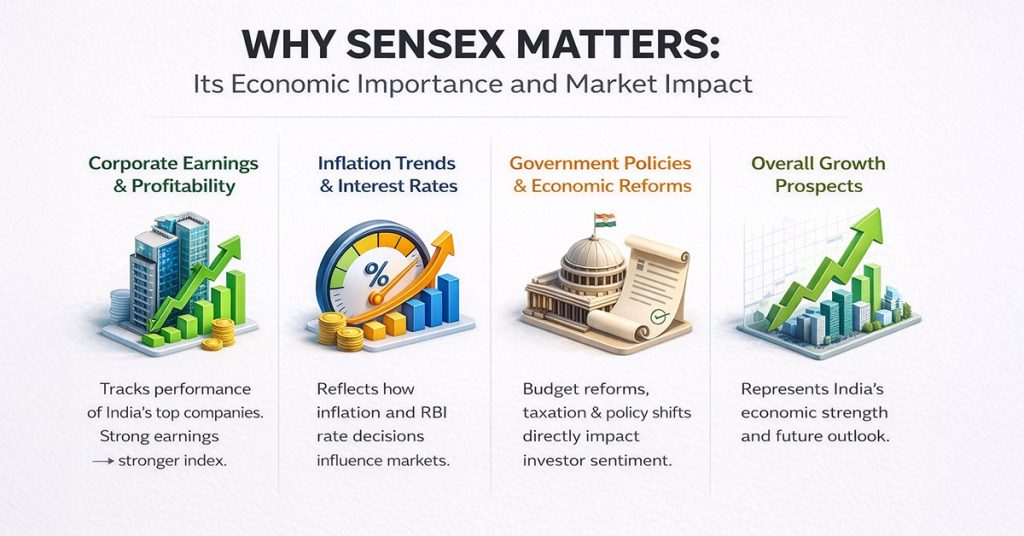
    Why SENSEX Matters: Its Economic Importance and Market Impact

    SENSEX

    The economic impact of SENSEX goes well beyond daily stock price movements. Changes in the index influence investor confidence, market sentiment, and broader financial discussions, often shaping expectations around growth and stability. A consistently rising index is commonly associated with economic optimism, while sustained declines may reflect underlying concerns within the economy.

    The importance of SENSEX also stems from its role as a widely accepted benchmark. Fund managers, analysts, and institutional investors rely on it to assess portfolio performance and compare returns across investment products.

    SENSEX is frequently viewed as a barometer of the Indian economy, as it reflects investor perceptions of key factors such as:

    • Corporate earnings and profitability
    • Inflation trends and interest rate expectations
    • Government policies and economic reforms
    • Overall growth prospects

    When economic conditions are favourable, improved corporate performance is often mirrored in a stronger SENSEX. Conversely, economic uncertainty typically leads to higher volatility in the index.

    Ways to Invest in SENSEX: Investment Options Explained

    Investors cannot directly purchase the SENSEX index, but they can invest in SENSEX through financial products designed to track its performance. These options provide exposure to the broader market without requiring the selection of individual stocks.

    Common ways to invest in SENSEX include:

    • SENSEX ETF: Exchange-traded funds that replicate the index and are bought and sold on stock exchanges like regular shares
    • Index mutual funds: Funds structured to mirror SENSEX returns over the long term by holding the same constituent stocks

    To access these investment options, investors need a trading and demat setup, and many choose to open demat account online for faster onboarding and seamless participation in the equity market. These options are often preferred for their diversification, transparency, and cost efficiency compared to actively managed funds.

    Understanding SENSEX Trends and Market Movements With Findoc

    Monitoring SENSEX market trends allows investors to see how various factors influence the Indian stock market. Key influences include:

    • Changes in interest rates and monetary policy
    • Corporate earnings reports and performance
    • Government regulations and policy announcements
    • Global economic developments and geopolitical events

    Through SENSEX analysis with Findoc, these market movements are broken down in a structured and clear manner. This approach helps investors:

    • Interpret index fluctuations without confusion
    • Identify patterns and trends in the SENSEX share market
    • Make better and more disciplined investment decisions

    By understanding these trends, investors can align their strategies with prevailing market conditions and long-term economic outlooks.

    Conclusion

    SENSEX continues to be a vital indicator of the Indian stock market and investor sentiment. Since its inception in 1986, it has evolved into a benchmark that reflects the performance of major companies across key sectors of the economy. Understanding how SENSEX is constructed, how it responds to market movements, and its broader significance helps investors make better decisions.

    Beyond tracking share prices, it provides insights into economic trends and market confidence, making it an essential reference for both new and experienced participants in India’s equity markets.

    Frequently Asked Questions

    SENSEX companies are reviewed periodically by the BSE to ensure the index reflects the market accurately. Changes are made based on liquidity, market capitalisation, sector representation, and performance of listed firms.

    SENSEX tracks 30 leading companies listed on the Bombay Stock Exchange, whereas NIFTY tracks 50 major companies on the National Stock Exchange, serving as distinct benchmarks for the Indian stock market.

    Investors cannot buy the SENSEX directly. However, exposure is possible through SENSEX ETFs or index mutual funds, which replicate the index’s performance and offer diversified market participation.

    SENSEX movements are influenced by corporate earnings, macroeconomic data, interest rate changes, government policies, and global events, reflecting overall investor sentiment and expectations about the Indian economy.

    While SENSEX comprises large-cap companies, it provides market insights relevant to all investors, helping assess trends, benchmark portfolios, and understand the broader health of the Indian equity market.

    Global developments such as economic trends, geopolitical events, and international market fluctuations impact investor sentiment, often leading to volatility in SENSEX and influencing trading behaviour in the Indian share market.

  • How to Read Intraday Candlestick Chart Patterns?

    How to Read Intraday Candlestick Chart Patterns?

    Intraday analysis requires timely, structured information on price movements. Intraday candlestick patterns provide this by presenting market activity in a clear visual format, showing how prices fluctuate within shorter time intervals. These formations help illustrate shifts in buying and selling pressure throughout the trading day and are an essential part of technical analysis. Findoc explains these concepts in a systematic and accessible manner, enabling readers to understand how intraday patterns contribute to short-term market analysis.

    For beginners looking to participate actively in the markets, learning these patterns becomes even more valuable once they open demat account online, as it helps them make informed intraday decisions from day one.

    What Are Intraday Trading Chart Patterns?

    Intraday trading chart patterns are recognisable formations created by candlesticks on a price chart, showing how the market behaves within shorter time intervals. These patterns reflect shifts in buying and selling activity and help present intraday movement in an organised visual structure.

    Every candlestick shows four things for that time period:

    • Opening price
    • Closing price
    • Highest price
    • Lowest price

    When many candles are viewed together, they form identifiable intraday chart patterns. These patterns help in analysing short-term market behaviour and understanding how price movement develops during the trading day.

    Also Read: What is Intraday Trading?

    Common Intraday Chart Patterns

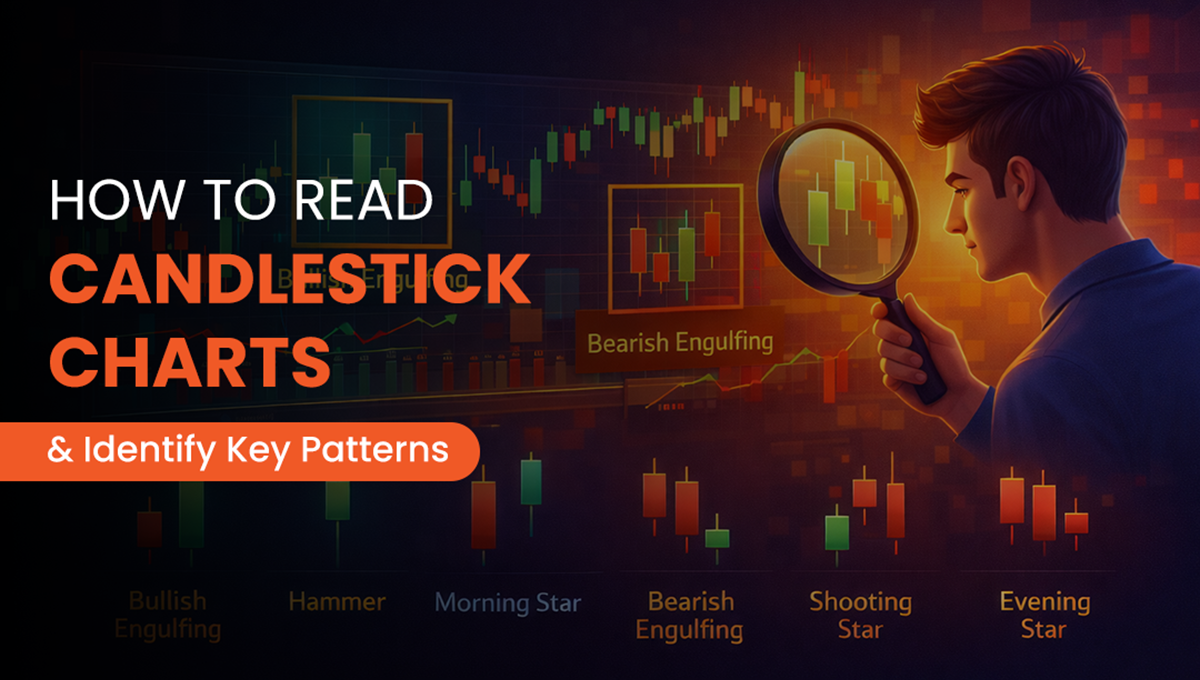
    Intraday chart patterns are recurring candlestick formations observed on short-term price charts. These patterns help analyse how market sentiment evolves during the trading day and offer a structured way to study intraday movement. Individual candles provide immediate price information; multi-candle formations give a broader view of short-term behaviour. Intraday patterns are generally grouped into bullish reversal, bearish reversal and continuation patterns.

    Bullish Patterns

    Bullish patterns suggest that downward momentum may be slowing and that buyers are becoming more active within the intraday timeframe. Common examples include:

    • Hammer: A candle with a small real body and a long lower shadow, indicating that prices moved lower during the period but later recovered.
    • Bullish Engulfing: A larger green candle covers the previous red candle, reflecting a shift in intraday sentiment toward buying pressure.
    • Morning Star: A three-candle formation that appears after a decline, showing a transition from selling pressure to signs of renewed demand.

    Bearish Patterns

    Bearish patterns signal that upward momentum may be weakening and that sellers are beginning to exert more influence on the intraday chart.

    • Hanging Man: Visually similar to a hammer but appears after an upward movement, indicating intraday selling interest at higher levels.
    • Bearish Engulfing: A red candle that completely covers the previous green candle; this reflects increased selling activity within the session.
    • Evening Star: A three-candle pattern that appears after an upmove and reflects a shift from buying strength to emerging selling pressure.

    Continuation Patterns

    This pattern shows that the prevailing intraday trend may remain the same, subject to confirmation from subsequent candles.

    • Doji: A candle with minimal body, this represents indecision. When aligned with the broader context, it may support continuation once the next candle confirms direction.
    • Three White Soldiers: Three consecutive green candles with progressively higher closes, representing sustained intraday buying interest.
    • Three Black Crows: Three successive red candles that close lower each time, reflecting consistent intraday selling momentum.

    Additional Read: How to Start Online Trading?

    Key Components of a Candlestick Chart

    An intraday candlestick chart represents intraday price movement through a set of clearly defined elements. Each candle provides information about how prices behaved within a specific interval. The main components are as follows:

    1. The Real Body

    The real body reflects the difference between the opening and closing prices for the chosen time period.

    • A green body indicates a close above the open.
    • A red body indicates a close below the open.

    The size of the body shows the extent of buying or selling within that interval.

    2. The Wick or Shadow

    The wicks extend above and below the real body and mark the highest and lowest prices reached during the session.

    • The upper wick represents the intraday high.
    • The lower wick represents the intraday low.

    These ranges offer insight into price fluctuations beyond the open and close.

    3. Candle Extremes

    The top and bottom of the candle highlight the key price points for the interval.

    • In a green candle, the bottom of the body marks the open and the top marks the close.
    • In a red candle, the top of the body marks the open and the bottom marks the close.

    These levels help outline the path price has taken within the period.

    4. The Trend

    A sequence of candles forms visible trends on an intraday chart. Several consecutive green candles may indicate sustained buying interest, while repeated red candles may reflect ongoing selling pressure. Trend direction offers essential context when assessing intraday movement.

    5. Pattern Formation

    Patterns emerge in the chart when multiple candles appear in a specific pattern. Their collective structure helps identify reversal or continuation tendencies on an intraday trading chart. Multi-candle formations often provide broader insight than individual candles viewed in isolation.

    You May Also Like: Best Intraday Indicators to Improve Your Trading Strategy

    Steps to Apply Candlestick Patterns in Intraday Trading

    Applying intraday candlestick patterns in trading involves a structured analysis of market conditions rather than just relying on any single formation. The following steps show how these patterns are typically assessed within short-term price analysis

    1. Identify the Market Environment

    Determine whether the price is moving upward, downward, or within a narrow range. Candlestick patterns are more helpful when they are used in the context of an existing trend.

    2. Observe Relevant Patterns

    A sequence of candles is analysed to identify whether any recognised pattern is developing. The surrounding price action helps determine whether the formation aligns with prevailing market conditions.

    3. Refer to Technical Reference Points

    Use tools such as support and resistance levels, moving averages, or volume indicators to better understand market conditions. These references help validate whether the observed pattern aligns with broader market behaviour.

    4. Define Entry and Exit Zones

    Identify the areas on the chart where participation may occur and where positions can be closed. These zones are usually determined by technical levels instead of isolated candles.

    5. Apply Stop-Loss Measures

    Stop-loss levels are essential for effectively managing potential losses. They establish specific points at which a position is deemed no longer valid from a technical standpoint.

    6. Maintain Risk Parameters

    It is advisable to limit exposure to a small percentage of available capital. Implementing a consistent risk management framework is essential for mitigating the potential for disproportionate losses during periods of intraday volatility.

    Also Read: Understanding Trading, Profit and Loss Account

    Conclusion

    Intraday candlestick chart patterns offer a structured way to observe short-term market movement and identify how buying and selling activity develops within the trading day. These formations help present price behaviour in a clear visual format and support a more organised approach to analysing intraday trends. When assessed with confirmation and broader market context, they contribute meaningfully to technical interpretation. Findoc explains these concepts concisely and systematically, enabling readers to understand how intraday patterns fit into overall market analysis.

    Frequently Asked Questions

    The colour of the next candlestick cannot be predicted with certainty. Market participants analyse price structure, support and resistance levels, volume behaviour, and overall trend context to assess potential direction, but outcomes remain probabilistic rather than guaranteed.

    The 3-candle rule involves observing three consecutive candles moving in the same direction before evaluating short-term momentum. This approach helps reduce reliance on isolated candles that may not accurately reflect broader price behaviour.

    Patterns such as Hammer, Engulfing formations, Doji variations, and Morning Star structures are frequently used in intraday analysis. Their effectiveness depends on confirmation, volume support, and alignment with the prevailing market trend.

    The 3-5-7 rule refers to analysing price behaviour over groups of three, five, or seven candles. These groupings help identify short-term momentum shifts and provide a structured way to observe whether strength or weakness is developing in the market.

    The 1% rule is a risk management guideline that limits exposure on a single position to no more than 1% of total trading capital. Its objective is to control downside risk and support long-term consistency.

    Intraday trading carries higher risk due to rapid price movements within short timeframes. Beginners may find these fluctuations challenging without sufficient preparation. A disciplined approach, risk control, and structured analysis are essential in such environments.

    Candlestick patterns tend to be more reliable in stocks with higher liquidity and trading volume. In low-volume stocks, price movements can be erratic, making pattern-based analysis less consistent.

  • Beginner’s Guide to Share Market Basics in India

    Beginner’s Guide to Share Market Basics in India

    If you’re new to investing and curious about what the stock market really is, think of it as a marketplace where people buy and sell units of companies, called shares. In India, most of this action happens on well-known platforms like the Bombay Stock Exchange and the National Stock Exchange. By investing in the stock market, you get a chance to become a part-owner of companies you believe in and potentially grow your money as these companies do well.

    How the Stock Market Works

    Knowing how the stock market world can make investing seem much simpler. Below is how it functions:

    Companies List Shares: Businesses sell a portion of their ownership through shares.

    • Investors Buy & Sell: People trade these shares via stock exchanges.
    • Price Changes: The share prices fluctuate according to demand, supply, and the performance of the company.
    • Profits or Losses: Investors earn through rising prices or dividends.

    The following flowchart will give you a better idea of how the process goes:

    Company Growth Plan → Issues Shares via IPO → Shares Listed on Stock Exchange → Investors Buy/Sell Shares → Share Prices Go Up/Down

    Components of the Stock Market (Exchanges, Instruments, Participants)

    There are various components in the stock market that work together to ensure that you can buy and sell smoothly. Some of the key components are:

    Component Description
    Exchanges Platforms like the National Stock Exchange (NSE) and the Bombay Stock Exchange (BSE) are where shares are listed and traded.
    Instruments It includes stocks, bonds, mutual funds, derivatives, and exchange-traded funds, allowing a wide range of investment and trading.
    Participants Buyers and sellers, including retail investors, institutional investors, brokers, and regulators, ensure smooth market functioning.

    Types of Markets: Primary vs Secondary vs OTC

    Market Type Description
    Primary Market Where new shares are sold for the first time via IPO (Initial Public Offering)
    Secondary Market Where old shares are bought and sold between people (e.g., stock exchanges like NSE)
    OTC (Over-the-Counter) Trading that happens directly between two parties, not on a stock exchange

    Each market plays a unique role in how securities are issued and traded. Together, they ensure companies can raise funds while investors have opportunities to buy, sell, and manage their investments.

    Related Read: What is Online Stock Trading?

    Benefits of the Stock Market

    • Ownership: When you buy shares, you become a part-owner of a company, in turn, having a share in its growth.
    • Earning Potential: When the company performs well, the share has a higher valuation, and you can get profits when it is sold.
    • Dividends: Many companies pay regular dividends, providing a steady income in addition to potential price gains.
    • Liquidity: It is easy to purchase or sell shares and get access to money invested when you need it..
    • Diversification: The share market enables you to invest in various sectors as well as firms, hence minimising risk.
    • Transparency: It is regulated by SEBI, which determines fair trading and investor protection.

    Key Stock Market Terminology Every Beginner Should Know

    By familiarising yourself with the common terms used in the stock market, you can invest more easily. Some of the key terminologies are:

    • Stock: A share in the ownership of a company.
    • Demat Account: An online account to hold shares in digital form.
    • IPO: When a company issues its shares to the public for the very first time..
    • Broker: An individual or company that assists you in buying and selling shares.
    • Bull Market: A time when stock prices are increasing.
    • Bear Market: A time when stock prices are decreasing.
    • Dividend: Money paid to shareholders from company profits.
    • Volatility: How rapidly stock prices increase or decrease.


    Also Read: What is a Demat Account?

    How to Start in the Stock Market in India

    1) Open a Demat and Trading Account: This is required to buy and hold shares.

    2) Choose a Broker: Choose one that is SEBI-registered and has a simple platform.

    3) Conduct Research: About the company, its revenues, projected growth, etc.

    4) Start Small: Start with a small number to learn how the market works.

    5) Use Tools to Assist: Most brokers will have price charts, research, news and feeds.

    6) Monitor Your Investment: Check the share price frequently, as well as the company’s performance.

    You can open a free Demat account online with Findoc and get easy-to-use tools, live updates, and expert research, making it ideal for beginners who wish to invest confidently.

    Additional Blogs

    Frequently Asked Questions

    For trading, you must: open an online Demat and trading account with an SEBI registered broker, deposit money in the account, research stocks, and place the buy/sell orders online via the broker’s website.

    Both are a way to refer to a portion of ownership in a company. “Stock” is the general concept, “shares” is a more specific way to define units of stock. For example, you may have purchased 10 shares of stock from Reliance.

    Equity is another term for shares. When you buy equities, you are purchasing part of the company, which means you could benefit from increased value and profitability of the company.

    Yes, you can invest through the internet with various trading applications and websites. Just open a Demat account, link it to your bank account, and you can invest from any location.

    There are two general types of stock: common stock (which offers voting power and dividends) and preferred stock (which offers preference for dividends but does not have voting power).

    The 5% rule is to put no more than 5% of your money into a single stock. It reduces risk and allows for diversification.

  • What is Muhurat Trading? Meaning, Date and Timing in 2025

    What is Muhurat Trading? Meaning, Date and Timing in 2025

    Muhurat Trading is a special stock market session that happens once a year on Diwali evening. The word “Muhurat” means auspicious time. Investors and traders believe that buying or selling stocks during this time brings good luck and wealth for the new year.

    Even though the stock market is closed for Diwali, exchanges like the National Stock Exchange (NSE)andBombay Stock Exchange (BSE) open for one hour in the evening for Muhurat Trading. For many, it is more about starting the new financial year with positive energy and blessings, rather than chasing profits. It symbolises wealth creation and new beginnings.

    Muhurat Trading 2025 Date and Time

    Muhurat Trading for the year 2025 will be held on Tuesday, October 21, during Laxmi Pujan, one of the most auspicious occasions of Diwali. Both NSE and BSE will conduct this special one-hour session in the evening. Here’s the detailed schedule:

    Session Type Timing
    Pre-Open Session 1:30 PM – 1:45 PM
    Muhurat Trading 1:45 PM to 2:45 PM
    Closing Session 2:55 PM – 3:05 PM

    This symbolic trading session is seen as a way to welcome wealth and prosperity in the new financial year.

    Importance of Muhurat Trading in Indian Stock Markets

    Muhurat Trading holds deep cultural and emotional significance in India. It is more than just a trading session; it marks the beginning of a new financial year with hope, positivity, and blessings. Many investors use this opportunity to buy shares for long-term holding, gift stocks to loved ones, or begin fresh financial planning. Performing Laxmi Pujan, praying for wealth and prosperity, is a common ritual during this time. Stockbrokers often light diyas and wear traditional attire, creating a festive atmosphere. For many, Muhurat Trading is a symbolic act of ushering in good fortune and successful investing.

    Cultural & Astrological Significance of Muhurat Trading

    In Hindu tradition, Diwali signifies the beginning of a new financial year, especially for business communities. It is believed that Goddess Laxmi, the goddess of wealth and prosperity, blesses wealth-related activities during this time. The Muhurat, or auspicious hour, is carefully chosen based on astrological calculations to ensure success and good fortune. Investors and traders participate in Muhurat Trading, even with a small transaction, as a ritual to invite prosperity and positive financial energy for the year ahead.

    Benefits of Muhurat Trading

    Muhurat Trading offers more than just market participation; it blends financial discipline with cultural tradition. Here are some of the key benefits:

    • Auspicious Start: Offers a spiritually and culturally positive way to begin the new financial year.
    • Token Investment: Encourages disciplined investing by making small, meaningful purchases.
    • Long-Term Goals: Investors often choose quality stocks with the intention of holding them long term.
    • Festive Feel: Blends finance with festivity, allowing families to participate in market traditions together.
    • Positive Sentiment: The overall mood is optimistic, reflecting collective hopes for wealth and prosperity.

    These unique aspects make Muhurat Trading a memorable and meaningful experience for investors each year.

    Popular Stocks to Watch During Muhurat Trading 2025

    Here are some popular stock categories to consider during Muhurat Trading 2025, based on past investor preferences and market trends:

    • Blue-Chip Companies: Trusted names like TCS, HDFC Bank, and Reliance are often favoured for long-term stability.
    • Banking & Finance Stocks: Banks and NBFCs are seen as growth enablers in India’s economy.
    • Infrastructure & Power Stocks: Companies in this sector benefit from government spending and reforms.
    • IT Sector Stocks: A preferred choice for global exposure and tech-driven growth.
    • FMCG Companies: Brands like HUL and Nestlé offer consistent returns and low volatility.

    Findoc offers real-time insights and stock recommendations to help you make smart investment choices during this festive season. Additionally, you can easily open a demat account with Findoc to start your investment journey.

    Muhurat Trading Strategies for Beginners

    Here are some beginner-friendly strategies to make the most of Muhurat Trading:

    • Do Your Research: Choose fundamentally strong companies with consistent performance.
    • Keep It Simple: Start with a small, symbolic investment to gain experience.
    • Think Long Term: Focus on stocks you can hold for years, not quick trades.
    • Plan Ahead: Prepare and place your orders early to avoid a last-minute rush.
    • Take Advice: Consult your broker or advisor if you’re unsure where to begin.

    These simple steps can help you start your investment journey on a positive and informed note.

    Things to Avoid During Muhurat Trading

    While Muhurat Trading is festive and symbolic, it’s still important to stay mindful and disciplined. Here are a few things to avoid:

    • Avoid Buying Just Because It’s Trending: Choose stocks with strong fundamentals, not hype.
    • Don’t Follow Unverified Tips: Always cross-check tips or advice before acting on them.
    • Don’t Overinvest: Stick to your budget and risk appetite.
    • Avoid Panic Moves: Remember, this session is more about tradition than aggressive trading.

    By avoiding these mistakes, you can enjoy a more meaningful and mindful trading experience.

    How to Participate in Muhurat Trading?

    Participating in Muhurat Trading is easy if you already have a Demat and trading account. Here’s how to join:

    1. Check the Muhurat timing with your broker.
    2. Log in to your trading account before the session starts.
    3. Do your research and decide what you want to buy or sell.
    4. Place your order during the 1:45 PM to 2:45 PM window.
    5. Confirm the trade and check your account after it settles.

    Even if you’re not an active trader, this is a great time to start investing in the stock market with small steps.

    FAQs

    Muhurat Trading is a special one-hour stock market session held on Diwali evening. It is done to mark the beginning of the Hindu New Year and is believed to bring good luck and prosperity. Investors make small, symbolic investments to seek blessings from Goddess Laxmi, the deity of wealth.

    Muhurat Trading 2025 is scheduled for Tuesday, October 21, 2025. The main trading session will be held between 6:15 PM and 7:15 PM. There are also short sessions before and after for block deals, pre-open, call auction, and closing activities.

    Muhurat Trading is more about tradition and symbolism than quick profits. While some stocks may rise due to festive sentiment, investors mainly use this session to make long-term investments. It’s best not to expect instant profits from this one-hour session.

    Yes, beginners can invest during Muhurat Trading. It’s a great time to start with small, symbolic investments in strong companies, learn market basics, and begin one’s financial journey positively.

    Muhurat Trading is a one-hour special session held on Diwali, marked by cultural significance and symbolic investing, unlike regular trading which follows normal hours and is purely profit-focused.

  • What Is the India Volatility Index and How Is It Calculated?

    What Is the India Volatility Index and How Is It Calculated?

    India Volatility Index reflects the amount that traders believe the stock market will fluctuate in the coming 30 days. It is based on NIFTY index option prices and is used to check market uncertainty. A high India VIX means traders expect big price changes, usually due to uncertain market conditions. A low India VIX means the market is calm and stable. It is commonly referred to as the “fear index” since it reflects how anxious or optimistic investors are. India VIX assists investors and traders in comprehending market risk and making better trade plans.

    What Is India VIX Index?

    India VIX Index is a special index that measures the “volatility” or expected movement in the NIFTY VIX, but it doesn’t predict whether prices will go up or down. A higher value signals nervousness or uncertainty in the market, while a lower value suggests stability and confidence.

    • High Value: Indicates big price swings due to fear or uncertainty.
    • Low Value: Suggests calm conditions with fewer price changes.
    • Helps in Risk Planning: It is Useful for traders and investors to decide on strategies.
    • Short-Term Focus: Represents expectations only for the next 30 days.

    How Is India VIX Calculated?

    The India VIX is calculated using a special formula to show how much market movement is expected in the next 30 days, expressed as an annual percentage. It uses option prices and the Black-Scholes Model to find implied volatility.

    Below is the formula to calculate India VIX:

    India VIX = 100 × √((Sum [Weighted Implied Volatility Squared]) / Total Weight)

    Element Description
    Weighted IV² Squared implied volatilities, each weighted for relevance
    Total Weight Total of all the weights used for calculation.
    Result Gives the expected annual volatility of the NIFTY for the next 30 days.

    This formula is based on the global VIX method but adapted for Indian NIFTY options.

    Interpreting India VIX Levels (Low, Medium, High)

    Understanding VIX levels helps you know how much the market may move.

    VIX Level What It Indicates
    Low (Below 15) The market is calm with less price movement expecteds
    Medium (15 to 25) Normal volatility, typical for most trading sessions
    High (Above 25) Traders are cautious or fearful, expecting big price swings
    • High VIX = More risk and price swings
    • Low VIX = More stability, less movement

    History & Evolution of India VIX

    India VIX was launched in 2008 by the National Stock Exchange (NSE) to help traders and investors understand how much the market prices might move. It was inspired by the U.S.-based CBOE VIX, also called the “fear index.” India VIX uses NIFTY options data to predict how much the market could move in the next 30 days. Over time, it became popular as a way to see market fear or confidence during events like elections, global problems, or financial crises. Today, India VIX is an important tool that helps investors manage risks and plan their trading strategies more easily and clearly.

    Significance of India VIX for Traders and Investors

    India VIX is an important tool for traders and investors because it helps them understand the market conditions and plan their strategies better. It works as an early signal of possible price changes.

    • Measures Market Fear or Confidence: A high VIX means more uncertainty, while a low VIX shows stability.
    • Helps in Risk Management: Traders can adjust their positions when market volatility is expected to rise.
    • Supports Option Pricing: Useful for options traders to price contracts more accurately.
    • Assists in Hedging Decisions: Investors use VIX trends to protect their portfolios.
    • Gives Clarity During Events: Important during elections, budgets, or global news that may impact markets.
    • Guides Long and Short-Term Strategies: Helps in planning trades effectively.

    How to Use India VIX in Trading & Risk Management

    • Track India VIX daily: It helps in understanding the market mood.
    • Adjust position size: Reduce exposure when VIX is high.
    • Options strategies: Use VIX to decide when to buy or sell options.
    • Hedging risk: During high VIX, investors may use put options to protect investments.
    • Avoid overtrading: High VIX often leads to sharp price swings.
    • Set wider stop losses: In high-VIX conditions, give trades more room.

    Findoc offers real-time access to India VIX, helping traders stay updated and manage their risks better.

    India VIX vs CBOE VIX: Global Comparisons

    India VIX and CBOE VIX are both volatility indexes, but are used in different markets. While India VIX is linked to NIFTY 50 options, CBOE VIX is linked to the S&P 500 index in the U.S. These indexes help traders understand market mood and possible price changes.

    Feature India VIX CBOE VIX (US)
    Market Tracked NIFTY 50 (India) S&P 500 Index (USA)
    Volatility Range Typically 15–35 Typically 10–30
    Usage Indian stock & options traders Global risk indicator
    Purpose Shows the expected NIFTY volatility index Shows expected S&P 500 volatility
    Calculation Based on NIFTY options & Black-Scholes Model Based on S&P 500 options & similar model

    India VIX Derivatives: Futures, Options & ETFs

    Apart from using India VIX as an indicator, traders also have access to financial products that let them trade directly on volatility expectations. Some popular instruments include:

    • VIX Futures: Trade on expected future volatility levels
    • VIX Options: Options contracts based on VIX movement
    • VIX ETFs (abroad): Funds that follow volatility indices.

    These tools help advanced traders bet on volatility without needing to guess the market direction.

    Conclusion

    India VIX is a smart way to measure market risk and confidence. Whether you’re a short-term trader or a long-term investor, understanding India VIX helps you make informed decisions. It doesn’t tell you the market’s direction, but it warns you how much prices might move. That alone can make a big difference when planning your trades or managing your portfolio.

    Read Other Interested Blog:

    Frequently Asked Questions

    A “good” VIX level depends on your view. Usually, a level below 20 indicates a stable market and above 25 implies high uncertainty or fear among traders.

    You can trade VIX futures on NSE using your trading account, similar to other derivatives. It requires margin money and understanding of volatility strategies, not direct stock price movement.

    VIX cannot predict crashes directly, but rising VIX often signals growing fear or uncertainty. A sudden spike can indicate higher chances of big price swings, including market declines.

    You can check the live India VIX value on the NSE website, your broker’s trading platform, or financial news apps that show real-time market data and volatility levels.

    Yes, VIX helps everyday traders understand market sentiment and risk. It doesn’t show which way the market will move, but signals how volatile it may be in the short term.