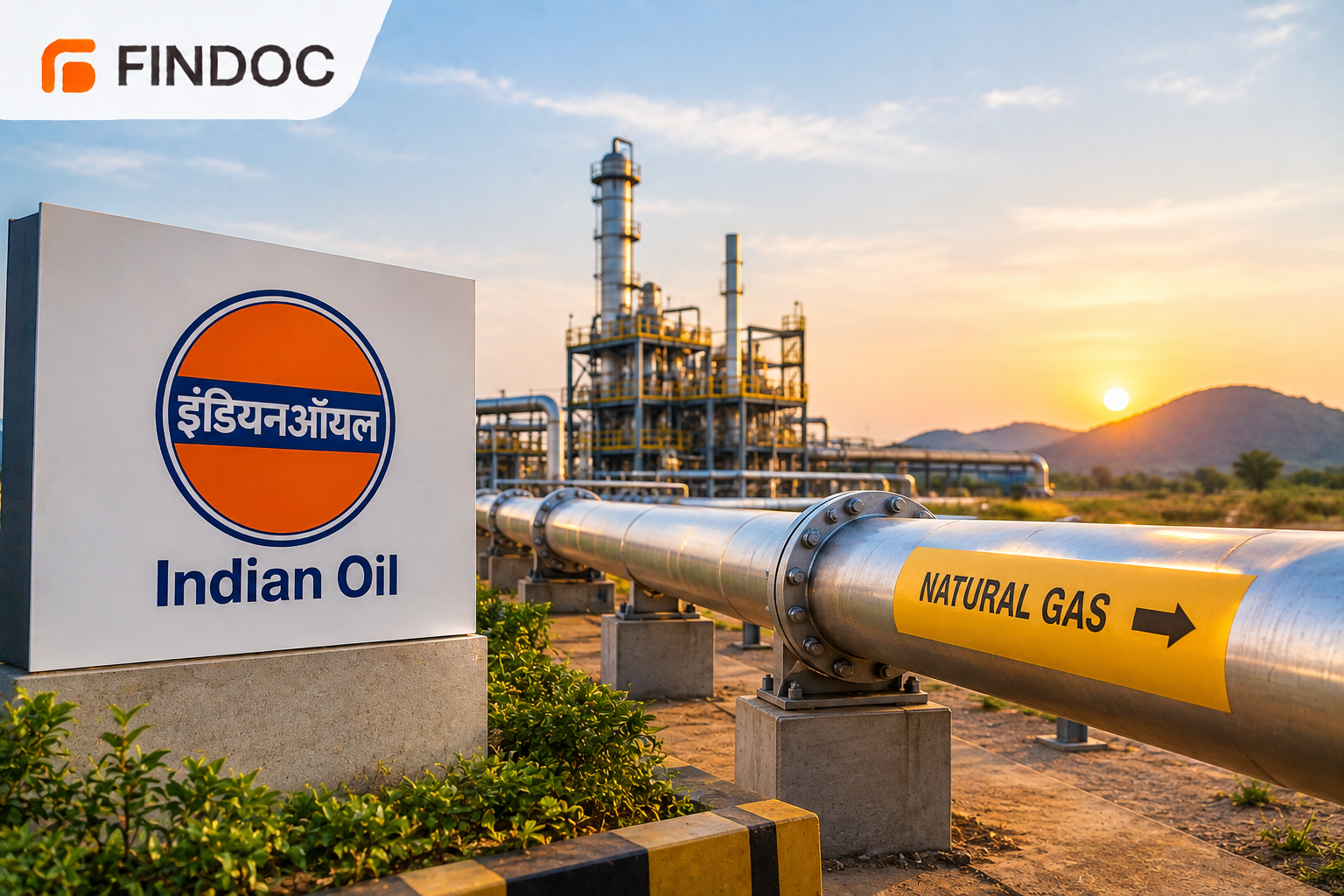
Indian Oil Corporation‘s board has approved a ₹2,448.70-crore investment in a new 424.65-km natural gas pipeline connecting Kochi in Kerala to Thoothukudi in Tamil Nadu, strengthening the company’s gas transmission network in southern India.
The Pipeline: Route And Capacity
| Detail | Value |
|---|---|
| Investment approved | ₹2,448.70 crore |
| Pipeline length | 424.65 km |
| Route | Kochi (Kerala) – Kanyakumari – Thoothukudi (Tamil Nadu) |
| Total system capacity | 6.84 MMSCMD |
| Common-carrier capacity | At least 1.71 MMSCMD |
| Board approval date | 21 September 2026 |
What The Pipeline Is For
The Kochi-Kanyakumari-Thoothukudi Natural Gas Pipeline (KTPL) will originate from the Kochi LNG terminal and extend to Thoothukudi, carrying regasified LNG to demand centres across Kerala and southern Tamil Nadu.
The pipeline is expected to support the expansion of city gas distribution networks and supply natural gas to industrial consumers, power plants and other downstream users in the region, and it will also strengthen connectivity with the existing gas pipeline network in southern India.
The project already has authorisation from the Petroleum and Natural Gas Regulatory Board (PNGRB) to lay, build, operate and expand the line.
Why The Common-Carrier Capacity Matters
Of the pipeline’s total capacity, at least 1.71 MMSCMD is reserved as common-carrier capacity, meaning companies other than Indian Oil will also be able to book space on the line to transport their own gas.
This is a standard regulatory requirement designed to give other gas marketers and shippers fair access to pipeline infrastructure, rather than letting the pipeline owner control all of the capacity.
Context For Indian Oil
The board approved the investment at a meeting on 21 September 2026, as part of the company’s broader push to expand its natural gas transmission infrastructure.
Indian Oil already operates the Ennore-Tuticorin-Bengaluru R-LNG pipeline, and the new KTPL project adds another link in the company’s southern India gas network.
What This Means For Investors
Large pipeline projects like this one take years to build and involve execution risk, including land acquisition and regulatory timelines, so their impact typically shows up in the company’s numbers gradually rather than immediately.
Investors who want to track Indian Oil’s capex announcements and quarterly results need an active demat account and trading account, and can use a trading platform that surfaces corporate filings alongside the stock’s price history.
Investments in the securities market are subject to market risks. This article is for informational purposes only and is not investment advice.
Leave a Reply