findocblog

Author: findocadmin

  • Millworks Technologies IPO Lists at 90% Premium on BSE SME

    Millworks Technologies IPO Lists at 90% Premium on BSE SME

    Millworks Technologies made a striking stock market debut on Tuesday, July 21, 2026. Shares of the company listed on the BSE SME platform at a sharp 90% premium over its issue price. The listing reflects exceptionally strong investor demand during the subscription period.

    What Changed

    The Rs 160.34 crore IPO of Millworks Technologies closed with an overall subscription of more than 219 times. This means investors bid for 219 times the number of shares available. Such overwhelming demand signals intense retail and institutional interest in the offering.

    Metric Details
    Exchange BSE SME
    IPO Size Rs 160.34 crore
    Overall Subscription 219x+
    Listing Premium ~90% over issue price
    Listing Platform BSE SME
    Listing Date July 21, 2026

    The 90% listing premium places Millworks Technologies among the strongest SME IPO debuts in recent memory. However, post-listing price stability will depend on sustained buying interest beyond the initial euphoria.

    Why It Matters for Investors

    A 219x subscription rate is a significant signal. It reflects deep investor appetite for SME-segment technology companies. However, high subscription numbers do not always guarantee long-term price performance. Investors must distinguish between listing-day momentum and fundamental value.

    For those who received allotment, the 90% premium delivers strong short-term returns. For those who missed allotment, chasing the stock at elevated levels carries meaningful risk. Open demat account online platforms have made SME IPO participation more accessible to retail investors, increasing competition for limited allotment lots.

    In addition, SME-listed stocks carry liquidity risks. Trading volumes can be thin on certain days, making it harder to exit positions without significant price impact.

    Potential Financial Impact

    The IPO raised Rs 160.34 crore, which the company is expected to deploy toward growth and operational requirements. Specific fund utilisation details were not disclosed beyond standard IPO filings. Investors should review the company’s Red Herring Prospectus for precise capital allocation plans.

    A successful fundraise of this size provides Millworks Technologies with a meaningful capital runway. However, execution on stated business objectives remains the critical variable for long-term shareholder value creation.

    Expert or Market Reaction

    Market participants reacted positively to the listing. A 90% premium on debut reflects strong grey market expectations that played out in actual trading. Such premiums are typically driven by a combination of low float, high demand, and positive sector sentiment.

    Analysts generally caution that SME IPO listings with extreme premiums can experience sharp corrections in the days that follow. Meanwhile, brokers noted that the technology sector label continues to attract investor interest across market cap segments. Detailed analyst ratings or price targets were not disclosed at the time of writing.

    Broader Context

    The BSE SME platform has witnessed a surge in IPO activity over the past two years. Several small and mid-sized technology companies have used the platform to access public capital. Investor enthusiasm for SME listings has remained elevated, driven partly by strong returns from previous high-subscription IPOs.

    Aspect Observation
    SME IPO Market Trend Continued strong investor participation
    Technology Sector Demand Elevated appetite across market caps
    Retail Investor Access Broadened via digital platforms
    Listing Premium Trend High premiums common in oversubscribed SME IPOs

    Therefore, Millworks Technologies enters the public market at a favorable time for SME technology listings. However, broader macroeconomic conditions, including interest rate movements and liquidity shifts, could affect sentiment going forward.

    Key Risks and Factors to Consider

    Investors should weigh several risks carefully before making decisions based on listing-day performance.

    • Valuation risk: A 90% premium significantly re-rates the stock above its issue price. Sustaining that valuation requires consistent earnings growth.
    • Liquidity risk: SME-listed stocks can see thin trading volumes, increasing exit risk for large holders.
    • Execution risk: The company must deploy raised capital efficiently to justify investor confidence.
    • Competitive pressure: The technology services segment is highly competitive, with pricing pressure from larger players.
    • Regulatory risk: SME-listed companies face evolving SEBI compliance requirements, which may increase operational costs.
    • Macroeconomic headwinds: A slowdown in technology spending by clients could impact revenue visibility.

    What Investors Should Watch Next

    • Monitor post-listing trading volumes over the first two weeks for signs of sustained interest or selling pressure.
    • Watch for the company’s first quarterly earnings disclosure after listing to assess revenue and margin performance.
    • Track fund utilisation updates from management, particularly on capital expenditure and growth investments.
    • Observe broader BSE SME index trends, as sector-wide sentiment shifts can impact individual SME stock prices.
    • Investors using a top stock market trading and investing platform should set alerts for any regulatory filings or announcements from Millworks Technologies post-listing.

    Conclusion

    Millworks Technologies has delivered one of the more notable SME IPO debuts in recent market history. A 90% listing premium on the back of 219x subscription reflects powerful near-term demand. As a result, allottees have benefited significantly from listing-day gains.

    However, the real test begins now. Sustaining premium valuations requires consistent financial performance and transparent communication with shareholders. Investors should focus on fundamentals rather than listing momentum when evaluating long-term positioning in this stock.

    • The IPO was oversubscribed 219 times, reflecting exceptional investor demand for the Rs 160.34 crore offering on BSE SME.
    • The 90% listing premium rewards allottees but introduces valuation risk for new buyers at elevated prices.
    • Post-listing earnings performance and capital deployment will be the key determinants of long-term shareholder value.

    Also Check Market Data
    Penny Stocks Penny Stocks Under ₹1
    Penny Stocks Under ₹10 Penny Stocks Under ₹5
    Stocks Under ₹20 FMCG Stocks
    Automobile Stocks Information Technology Stocks
    Bank Stocks High Return Penny Stocks
  • Laser Power & Infra Surges 26% on Market Debut

    Laser Power & Infra Surges 26% on Market Debut

    Laser Power & Infra made a strong entry on the Indian stock exchanges on July 16, 2026, listing at a 26% premium over its IPO issue price. The listing rewarded investors who participated in the initial public offering and immediately drew attention from the broader market. The debut signals solid demand for infrastructure-linked companies in India’s current investment climate.

    What Changed

    The company’s shares opened significantly above their IPO price on debut day. This kind of listing premium reflects robust subscription interest and investor confidence heading into the listing session. Below is a summary of key listing metrics.

    Metric Detail
    Listing Premium 26% above IPO issue price
    Listing Date July 16, 2026
    Sector Power Infrastructure / Wires & Cables
    Deal Value (IPO size) Not disclosed
    Post-listing Analyst Stance Hold for long term

    The listing outcome places Laser Power & Infra among the stronger recent IPO debutants. However, listing-day performance alone does not determine a stock’s long-term trajectory. Investors must assess whether the company’s fundamentals support the premium valuation.

    Why It Matters for Investors

    A 26% listing gain is meaningful. It indicates that the market assigned a higher value to the company than the IPO price suggested. For investors who received allotment, this translates into immediate book gains. For those who missed the IPO, the stock now trades at an elevated entry price.

    The company operates in two structurally important segments: power infrastructure and wires & cables. Both sectors benefit directly from India’s ongoing push to expand and modernise its energy grid. Open demat account online platforms have seen increased retail participation in infrastructure IPOs, reflecting growing interest in this space. This demand trend provides a tailwind for companies like Laser Power & Infra.

    Potential Financial Impact

    Analysts point to the company’s strong order book as a key earnings visibility driver. A healthy order pipeline typically supports predictable revenue over the near to medium term. In addition, management’s stated plans to reduce debt could improve margins and return ratios over time.

    Debt reduction is particularly relevant in capital-intensive infrastructure businesses. Lower interest costs directly enhance net profitability. If the company executes on this plan, it could generate better free cash flows and strengthen its balance sheet over the next few years.

    Expert or Market Reaction

    Market analysts are broadly recommending that allotted investors hold their positions rather than book profits immediately after listing. The rationale centres on the company’s long-term growth potential rather than short-term price targets. Analysts cite three core reasons: a strong order book, a debt reduction roadmap, and favourable sectoral tailwinds.

    Meanwhile, the 26% premium itself validates pre-listing demand. High subscription numbers ahead of listing day had signalled strong institutional and retail appetite. Therefore, the listing price was largely in line with market expectations. Analysts appear cautious about projecting near-term upside from current levels, given the gap from the IPO price.

    Broader Context

    India’s power sector is undergoing a significant transformation. Government investments in grid expansion, renewable energy integration, and rural electrification are driving demand for cables, transformers, and infrastructure services. Laser Power & Infra is positioned to benefit from this structural shift.

    Growth Driver Relevance to Laser Power & Infra
    Grid Expansion Increases demand for power infrastructure
    Renewable Energy Rollout Drives cables and connectivity demand
    Urban Electrification Expands wires & cables market
    Government Capex Supports order book growth

    The wires and cables market in India is also growing rapidly. Rising construction activity, data centre expansion, and industrial demand are adding layers of growth opportunity beyond the traditional power sector. This diversification in end markets adds resilience to the company’s revenue base.

    Key Risks and Factors to Consider

    Despite the positive debut, investors must remain aware of several risks. Execution risk is significant in infrastructure businesses, where project delays can impact revenue recognition and cash flows. Furthermore, rising input costs such as copper and aluminium can pressure margins in the cables segment.

    Competitive pressure from larger, established players is another concern. The wires and cables market has well-entrenched incumbents with stronger brand recognition and distribution networks. In addition, any slowdown in government infrastructure spending could directly affect Laser Power & Infra’s order inflows. Valuation concerns also emerge post-listing, as the stock now trades well above its IPO price, leaving limited margin of safety for new buyers.

    What Investors Should Watch Next

    • Order book updates and new contract announcements in the coming quarters to assess revenue visibility.
    • Progress on debt reduction plans and quarterly balance sheet disclosures to track financial health improvements.
    • Quarterly earnings results, especially revenue growth rates and EBITDA margin trends.
    • Management commentary on raw material cost management and pricing strategies.
    • Investors using a top stock market trading and investing platform should monitor trading volumes and price stabilisation levels in the weeks following listing to identify sustainable entry or exit points.

    Conclusion

    Laser Power & Infra’s 26% listing premium is a positive signal for the IPO market and for India’s infrastructure investment theme. The debut reflects genuine investor confidence in the company’s sectoral positioning and growth prospects. However, strong listing performance does not eliminate the need for continued fundamental scrutiny.

    Allotted investors who hold long-term convictions about India’s power sector buildout may find merit in maintaining their positions, as analysts suggest. New investors, however, should evaluate entry points carefully given the valuation reset post-listing. Execution on order book conversion and debt reduction will be the true test of the company’s long-term investment case.

    • Laser Power & Infra listed at a 26% premium, reflecting strong IPO demand and investor confidence in India’s power infrastructure growth story.
    • Analysts recommend holding for the long term, citing order book strength, debt reduction plans, and favourable sectoral tailwinds.
    • Key risks include execution delays, input cost pressures, and competitive intensity in the wires and cables segment that investors must monitor closely.
    Explore Construction Stocks
    Larsen & Toubro Share Price Rail Vikas Nigam Share Price
    Cemindia Projects Share Price IRB Infra.&Developer Share Price
    Engineers India Share Price Ircon International Share Price
    Techno Electric &Eng Share Price Afcons Infrastruct. Share Price
    Waaree Renewables Share Price GR Infraprojects Share Price
  • ICICI Lombard Stock Crashes 15% After Q1 Earnings Miss

    ICICI Lombard Stock Crashes 15% After Q1 Earnings Miss

    ICICI Lombard General Insurance shares suffered their steepest single-day decline since the COVID-19 market crash on Thursday, July 16, 2026. The stock hit a fresh 52-week low after its June-quarter earnings fell well short of analyst expectations. The sharp selloff reflects growing investor anxiety over the company’s near-term profitability trajectory.

    What Changed

    The stock tumbled approximately 15% in a single session, triggering significant concern across the insurance sector. Brokerages responded swiftly by slashing target prices and downgrading their ratings on the stock. The magnitude of the move signals that the earnings miss was not marginal, it was broad-based and alarming to the market.

    Metric Detail
    Stock Decline (Single Day) ~15%
    52-Week Low Hit on July 16, 2026
    Earnings Period Q1 FY27 (June Quarter)
    Brokerage Action Multiple downgrades and target price cuts
    Last Comparable Decline COVID-19 market crash


    Why It Matters for Investors

    ICICI Lombard is one of India’s largest private general insurers. Therefore, its performance is closely watched as a bellwether for the broader non-life insurance sector. A 15% single-day drop is extraordinary and signals deep structural concerns, not just a temporary earnings blip.

    Analysts highlighted four key pressure points: weak underwriting performance, higher-than-expected claims, regulatory headwinds, and slower premium growth. Together, these factors paint a challenging picture for the company’s ability to generate consistent profits in the near term. For investors who open demat account online to access insurance sector stocks, understanding these dynamics is critical before taking positions.

    Potential Financial Impact

    Weak underwriting directly erodes the insurer’s combined ratio, a key measure of profitability. Higher claims inflate costs and compress margins simultaneously. Slower premium growth limits the company’s ability to offset these cost pressures through revenue expansion. As a result, return on equity and earnings per share estimates for FY27 are likely to face meaningful downward revisions across the Street.

    Regulatory headwinds add another layer of uncertainty. Changes in pricing norms or product structures imposed by IRDAI can affect revenue visibility. This makes near-term earnings forecasting particularly difficult for both analysts and investors.

    Expert or Market Reaction

    Multiple brokerages moved quickly to reassess their views. Downgrades and target price reductions were broad-based, suggesting that analyst consensus had shifted meaningfully in a single session. This type of coordinated negative reaction from the institutional community typically amplifies selling pressure beyond the initial shock.

    Market participants also flagged that the claims environment has been deteriorating across the general insurance industry. However, ICICI Lombard’s miss was sharper than peers, indicating company-specific execution challenges may also be at play. Investor confidence, once shaken at this scale, typically takes multiple quarters of consistent delivery to rebuild.

    Broader Context

    India’s general insurance sector has faced a complex operating environment in recent periods. Motor and health insurance, two large segments for ICICI Lombard, have seen rising claims frequency. In addition, regulatory changes around product pricing and commission structures have added cost unpredictability for insurers.

    Challenge Sector Impact
    Rising Claims Margin compression across motor and health
    Regulatory Changes Pricing and product structure uncertainty
    Slower Premium Growth Limits revenue offset against cost pressures
    Weak Underwriting Deteriorating combined ratio

    Meanwhile, competition from public sector insurers and newer digital-first players continues to intensify. This structural pressure limits pricing power and makes it harder for established players to pass on cost increases to customers.

    Key Risks and Factors to Consider

    Investors should weigh several risks carefully before reassessing positions in ICICI Lombard. The near-term earnings recovery path is unclear. Claims trends and regulatory dynamics remain fluid, and premium growth revival will require time to materialize.

    • Claims environment: Sustained high claims in motor and health could keep margins under pressure through FY27.
    • Regulatory risk: Further IRDAI policy changes may create additional revenue and cost headwinds.
    • Underwriting discipline: Management must demonstrate improvement in the combined ratio over coming quarters.
    • Valuation reset: Post-correction valuations may look more attractive, but a rerating requires earnings stabilization first.
    • Competitive pressure: Market share defense against aggressive peers adds execution complexity.

    What Investors Should Watch Next

    • Management commentary on claims trends and whether corrective underwriting actions are already underway.
    • Q2 FY27 premium growth data, which will indicate whether the top-line slowdown is reversing.
    • IRDAI regulatory announcements that could affect pricing structures or product guidelines.
    • Revised brokerage consensus targets and whether further downgrades emerge in the coming weeks.
    • Investors using a top stock market trading and investing platform should monitor sector-wide claims data to distinguish ICICI Lombard-specific issues from broader industry trends.

    Conclusion

    ICICI Lombard’s 15% single-day crash marks a significant reset in market expectations. Weak underwriting, higher claims, regulatory headwinds, and slower premium growth have collectively undermined the near-term earnings outlook. The scale of brokerage downgrades confirms this is a material development, not a minor miss.

    However, the company remains one of India’s leading private general insurers with an established franchise and distribution network. A recovery is possible, but it will require consistent execution over multiple quarters. Until earnings visibility improves, the stock is likely to remain under pressure. Investors should prioritize fundamental analysis over price-driven decisions in this environment.

    • Key Takeaway 1: The 15% fall reflects a fundamental miss, weak underwriting and rising claims have damaged near-term earnings visibility significantly.
    • Key Takeaway 2: Regulatory headwinds and slower premium growth add layers of uncertainty that make a quick earnings recovery unlikely.
    • Key Takeaway 3: Monitoring management guidance and Q2 claims data will be essential before drawing conclusions about the stock’s recovery timeline.
    Explore Life Insurance Sector Stocks
    Life Insurance Corp. Share Price HDFC Life Insurance Share Price
    SBI Life Insurance Share Price PNB Met Life India Share Price
    General Ins. Corpn. Share Price Niva Bupa Health Ins Share Price
    Star Health & Allied Share Price Canara HSBC Life Ins Share Price
    Go Digit General Ins Share Price ICICI PrudentialLife Share Price
  • Aastha Spintex IPO Reaches 2x Subscription on Final Day

    Aastha Spintex IPO Reaches 2x Subscription on Final Day

    Aastha Spintex’s initial public offering has been subscribed approximately 2 times on Day 3 of its subscription window, with non-institutional investors (NII) and retail individual investors emerging as the primary drivers of demand. The IPO has attracted meaningful participation from the broader investor base as the subscription period draws to a close, reflecting moderate market interest in the textile sector offering.

    Deal Highlights

    • Total Subscription: Approximately 2 times oversubscribed as of Day 3
    • Leading Categories: NII and retail investors are leading subscription activity
    • Grey Market Premium (GMP): Current GMP figures indicate a modest premium in the unofficial market, though specific figures were not disclosed in available data
    • Issue Size and Price Band: Not disclosed in available reporting
    • Listing Exchange: Not disclosed

    Why It Matters

    The IPO performance of Aastha Spintex provides a relevant data point for investors tracking small and mid-cap textile sector listings. A 2x subscription level signals adequate but not exceptional demand, suggesting cautious optimism among retail participants.

    Potential Business Impact

    A successful listing would provide Aastha Spintex with capital for business expansion and operational scaling within the textile manufacturing segment. Proceeds utilization details were not disclosed. The company’s ability to deploy raised capital efficiently will be a key determinant of post-listing performance.

    Market Reaction

    Grey market premium activity suggests some anticipation of listing gains, though specific GMP values were not disclosed. The relatively stronger participation from retail and NII categories compared to qualified institutional buyers, if applicable, may influence post-listing price stability.

    Industry Context

    India’s textile and spinning sector continues to attract investor interest amid ongoing domestic manufacturing growth and export opportunities. Small-cap IPOs in this segment have seen variable subscription levels in recent months, making Aastha Spintex’s 2x subscription a moderate benchmark within the current market environment.

    What Investors Should Watch Next

    • Final subscription figures across all investor categories upon close of the bidding window
    • Qualified Institutional Buyer (QIB) participation levels, which were not fully disclosed
    • Official GMP trends leading up to the listing date
    • Allotment and listing date announcements from the registrar
    • Post-listing price performance relative to issue price in early trading sessions

    Conclusion

    Aastha Spintex’s IPO has achieved a 2x subscription rate by Day 3, led by retail and NII investor segments. While the oversubscription indicates satisfactory market interest, investors should await final subscription data and listing performance before drawing broader conclusions.

    Investor Takeaways:

    • The 2x subscription figure reflects moderate demand; investors should monitor final allotment ratios before assessing listing prospects
    • Retail and NII category dominance warrants attention to post-listing liquidity and price volatility
    • Key financial and operational details regarding Aastha Spintex remain not disclosed and should be reviewed in the official prospectus prior to any investment decision


    Also Check Market Data
    Penny Stocks Penny Stocks Under ₹1
    Penny Stocks Under ₹10 Penny Stocks Under ₹5
    Stocks Under ₹20 FMCG Stocks
    Automobile Stocks Information Technology Stocks
    Bank Stocks High Return Penny Stocks
  • Fibe Files IPO Papers With Rs 750 Crore Fresh Issue, Backed

    Fibe Files IPO Papers With Rs 750 Crore Fresh Issue, Backed

    Consumer lending fintech Fibe has filed its Draft Red Herring Prospectus (DRHP) with market regulators, seeking to raise Rs 750 crore through a fresh issue of shares as part of its initial public offering. The company, which operates a digital lending platform targeting salaried professionals and young working adults, counts prominent institutional backers including TPG, Fidelity, and Norwest Capital among its investors. The offer-for-sale component and total deal valuation remain not disclosed at this time.

    Deal Highlights

    • Fresh Issue Size: Rs 750 crore
    • Key Investors: TPG, Fidelity, Norwest Capital
    • Filing Type: Draft Red Herring Prospectus (DRHP)
    • Offer-for-Sale Details: Not disclosed
    • Listing Exchange: Not disclosed
    • IPO Timeline: Not disclosed

    Why It Matters

    Fibe’s IPO filing represents a significant milestone for the digital consumer lending space in India, signaling that fintech platforms with institutional-grade backing are moving toward public markets despite a mixed broader IPO environment.

    Potential Business Impact

    The Rs 750 crore raised through the fresh issue is expected to strengthen Fibe’s balance sheet and potentially fund loan book expansion, technology infrastructure, and customer acquisition. Specific use-of-proceeds allocation has not been disclosed in publicly available information at this stage.

    Market Reaction

    Market reaction to the filing has not been disclosed, as Fibe is a privately held company ahead of its public listing. Broader investor sentiment toward fintech IPOs in India has been cautious but selective, particularly for platforms demonstrating clear paths to profitability.

    Industry Context

    India’s digital lending sector has experienced rapid growth, driven by increased smartphone penetration, a large underserved salaried workforce, and regulatory frameworks evolving under the Reserve Bank of India. Several fintech lenders have faced heightened regulatory scrutiny in recent periods, making institutional backing and compliance posture increasingly important factors for investor confidence.

    What Investors Should Watch Next

    • Final IPO pricing and valuation: Total deal size and implied valuation remain key metrics pending full prospectus disclosure
    • Use of fresh issue proceeds: Allocation toward loan book growth versus operational expenses will signal strategic priorities
    • Asset quality metrics: Non-performing asset ratios and credit loss data will be critical for investor due diligence
    • Regulatory standing: Any outstanding observations from SEBI or RBI regarding lending operations
    • Anchor investor interest: Early institutional demand will serve as a barometer for overall IPO reception

    Conclusion

    Fibe’s DRHP filing marks a notable development in India’s fintech IPO pipeline, with high-profile institutional sponsors lending credibility to the offering. Investors will require greater financial and operational disclosure before forming a complete picture of the opportunity.

    Investor Takeaways:

    • The Rs 750 crore fresh issue indicates a capital raise focused on growth, though deployment strategy requires further clarity
    • Backing from TPG, Fidelity, and Norwest Capital provides institutional validation but does not substitute for independent due diligence
    • Full financial disclosures pending SEBI review will be essential before assessing risk-adjusted return potential

    Read More Helpful Blogs

  • National Stock Exchange Files for Landmark IPO; Market

    National Stock Exchange Files for Landmark IPO; Market

    India’s National Stock Exchange (NSE), the country’s largest stock exchange by trading volume, has moved forward with plans to go public in what is expected to be one of the most significant listings in Indian capital market history. The IPO carries several distinctive structural features that set it apart from conventional public offerings, drawing considerable attention from domestic and international investors.

    Deal Highlights

    • No fresh issue of shares: The NSE IPO will be structured entirely as an offer for sale (OFS), meaning no new capital will be raised by the exchange itself
    • No identifiable promoter: NSE does not have a traditional promoter entity, making it a rare promoter-free IPO in the Indian market
    • Listing venue: NSE will list its shares on the Bombay Stock Exchange (BSE), its primary competitor, as regulatory norms prohibit a company from listing on its own exchange
    • IPO size and valuation: Not disclosed
    • Date of listing: Not disclosed

    Why It Matters

    Potential Business Impact

    The IPO will allow existing shareholders, including institutional investors and strategic stakeholders, to partially exit their positions through the OFS mechanism. Because no fresh capital is being raised, the proceeds will flow directly to selling shareholders rather than to NSE’s balance sheet. The absence of a promoter structure means corporate governance frameworks and institutional shareholder oversight will play a central role in guiding the company post-listing.

    Market Reaction

    Market reaction details are not disclosed at this stage, as the IPO timeline and pricing have not been formally announced. However, the listing is broadly anticipated to generate significant investor interest given NSE’s dominant market position and consistent financial performance.

    Industry Context

    NSE operates as the backbone of Indian equity, derivatives, and debt markets, processing the majority of the country’s securities transactions daily. Its planned public listing follows a global trend of stock exchanges seeking public market access to enhance transparency and unlock shareholder value. BSE, itself a listed entity, will serve as the hosting exchange for the listing, a regulatory requirement under Indian securities law.

    What Investors Should Watch Next

    • Formal filing and regulatory approval from the Securities and Exchange Board of India (SEBI)
    • Announcement of the IPO price band and total OFS size
    • Identity and allocation details of selling shareholders participating in the OFS
    • Corporate governance disclosures given the absence of a traditional promoter
    • Timeline confirmation for the subscription period and listing date

    Conclusion

    The NSE IPO represents a structurally unique market event with no fresh issue, no promoter, and a cross-listing on its chief rival exchange. As further details emerge, investors will need to evaluate the offering based on financials, governance frameworks, and regulatory clearances.

    Investor Takeaways:

    • This is a pure OFS; no capital infusion into NSE means proceeds benefit selling shareholders only
    • Governance scrutiny will be heightened given the promoter-free structure
    • Regulatory approvals remain a key milestone before any investment decision can be made

    Read More Helpful Blogs

  • India’s Pre-IPO Unlisted Shares Market Draws Renewed

    India’s Pre-IPO Unlisted Shares Market Draws Renewed

    India’s unlisted shares segment is witnessing a surge in investor attention as platforms facilitating access to pre-IPO equity continue to expand their offerings, enabling retail and institutional participants to position themselves ahead of public market listings. This growing market provides investors with the opportunity to acquire stakes in private companies before they formally debut on recognized stock exchanges.

    Deal Highlights

    • Platform: Unlisted pre-IPO investment platform (operator name not disclosed)
    • Offering: Access to top-tier unlisted Indian companies ahead of IPO
    • Transaction Terms: Not disclosed
    • Participating Companies: Not disclosed
    • Valuation Metrics: Not disclosed

    Why It Matters

    Access to pre-IPO shares has traditionally been restricted to institutional investors, high-net-worth individuals, and venture capital firms. Platforms offering structured entry into unlisted equity are broadening participation across a wider investor base.

    Potential Business Impact

    Early-stage equity access can allow investors to benefit from valuation appreciation between private pricing and eventual public listing. However, specific return projections, company financials, and liquidity timelines remain not disclosed, making independent due diligence essential before committing capital.

    Market Reaction

    Broader market sentiment toward India’s IPO pipeline remains active, with domestic equity markets continuing to attract both retail and institutional flows. Specific investor or market reactions to this particular platform’s activity are not disclosed.

    Industry Context

    India’s primary market ecosystem has seen consistent IPO activity across sectors including technology, financial services, and manufacturing. The unlisted or grey market for shares has grown as a parallel channel, though it operates outside formal regulatory frameworks in many instances, carrying distinct risk profiles compared to exchange-listed securities.

    What Investors Should Watch Next

    • Regulatory developments from SEBI regarding unlisted share trading platforms and disclosure norms
    • IPO timelines for companies currently available in the unlisted segment
    • Liquidity conditions specific to unlisted shares, which differ materially from listed equity
    • Valuation gaps between unlisted pricing and eventual IPO price bands
    • Platform credibility and compliance standards for operators facilitating pre-IPO transactions

    Conclusion

    The pre-IPO and unlisted shares space in India represents a developing investment category with distinct risk-reward characteristics. Investors considering participation should conduct thorough due diligence given limited public disclosure, regulatory nuances, and liquidity constraints inherent to this market segment.

    Investor Takeaways:

    • Pre-IPO investing can offer early entry advantages, but key financial details for available opportunities remain not disclosed, requiring careful independent research
    • Liquidity in unlisted shares is significantly lower than in exchange-traded securities, and exit options may be limited prior to a company’s IPO
    • Investors should verify the regulatory standing and operational transparency of any platform facilitating unlisted share transactions before committing funds

    Trading & Investment Guides

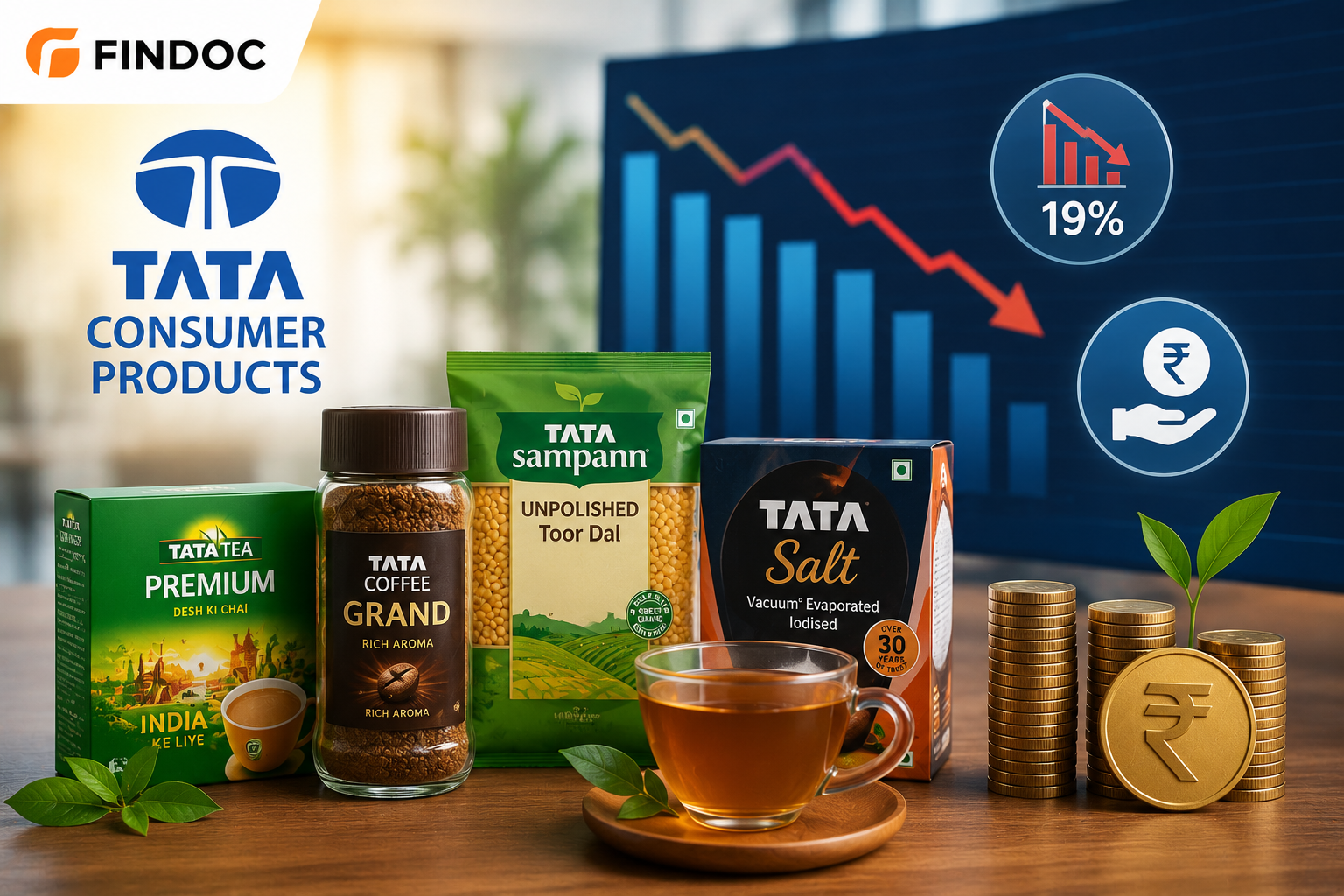
  • Tata Consumer Products Reports Q4 Net Profit Decline of 19%; Declares Dividend for Shareholders

    Tata Consumer Products Reports Q4 Net Profit Decline of 19%; Declares Dividend for Shareholders

    Tata Consumer Products Limited released its financial results for the fourth quarter ending March 31, 2024, revealing a 19 percent year-on-year decline in net profit. Despite the earnings dip, the company announced a dividend payout, signaling continued commitment to shareholder returns. The results present a mixed picture for investors weighing near-term profitability against top-line revenue growth.

    Deal Highlights

    • Net Profit: Rs 217 crore for Q4 FY2024, down 19 percent year-on-year
    • Revenue: Rs 3,927 crore, reflecting an 8.5 percent increase for the quarter ended March 31, 2024
    • Dividend Declared: Rs 7.75 per share
    • Reporting Period: Q4 FY2024 (January–March 2024)

    Why It Matters

    The divergence between revenue growth and profit contraction raises questions about cost pressures and margin management within the business. While the company demonstrated solid top-line momentum with 8.5 percent revenue growth, the sharper fall in net profit suggests elevated operating or input costs during the quarter.

    Potential Business Impact

    The declared dividend of Rs 7.75 per share reflects the company’s intent to reward shareholders despite reduced profitability. However, sustaining dividend payouts alongside compressed margins will require close monitoring in upcoming quarters. Specific drivers behind the profit decline were not disclosed in available reporting.

    Market Reaction

    Market reaction details beyond the earnings announcement were not disclosed at the time of reporting. Investors typically respond cautiously to earnings misses paired with revenue growth, as the combination may indicate structural cost challenges requiring resolution.

    Industry Context

    Tata Consumer Products operates across branded food and beverage segments, including tea, coffee, salt, and packaged foods. The consumer staples sector in India has broadly faced input cost volatility and competitive pricing pressures, factors that have affected margins across multiple players in the industry during FY2024.

    What Investors Should Watch Next

    • Margin Recovery: Whether operating margins stabilize or continue to compress in Q1 FY2025
    • Cost Management: Management commentary on input cost trends and mitigation strategies
    • Revenue Trajectory: Sustainability of the 8.5 percent revenue growth rate going forward
    • Dividend Continuity: The company’s ability to maintain dividend payouts amid profit pressure
    • Segment Performance: Breakdown of performance across individual business verticals, details of which were not disclosed

    Conclusion

    Tata Consumer Products delivered a quarter of contrasting signals — healthy revenue growth alongside a notable profit decline. The Rs 7.75 per share dividend offers some reassurance to income-focused investors, but the 19 percent earnings drop warrants continued scrutiny.

    Investor Takeaways:

    • Revenue growth of 8.5 percent reflects demand resilience, but profitability pressures remain a concern
    • The dividend declaration indicates management confidence in cash generation capacity
    • Investors should await further management guidance on cost structures and margin outlook before reassessing positions


    Explore FMCG Sector Stocks
    Hindustan Unilever Ltd. ITC Ltd.
    Nestle India Ltd. Patanjali Foods Ltd.
    Britannia Industries Ltd. Godrej Consumer Products Ltd.
    Dabur India Ltd. Marico Ltd.
    Colgate-Palmolive (India) Ltd. Procter & Gamble (P&G) Ltd.
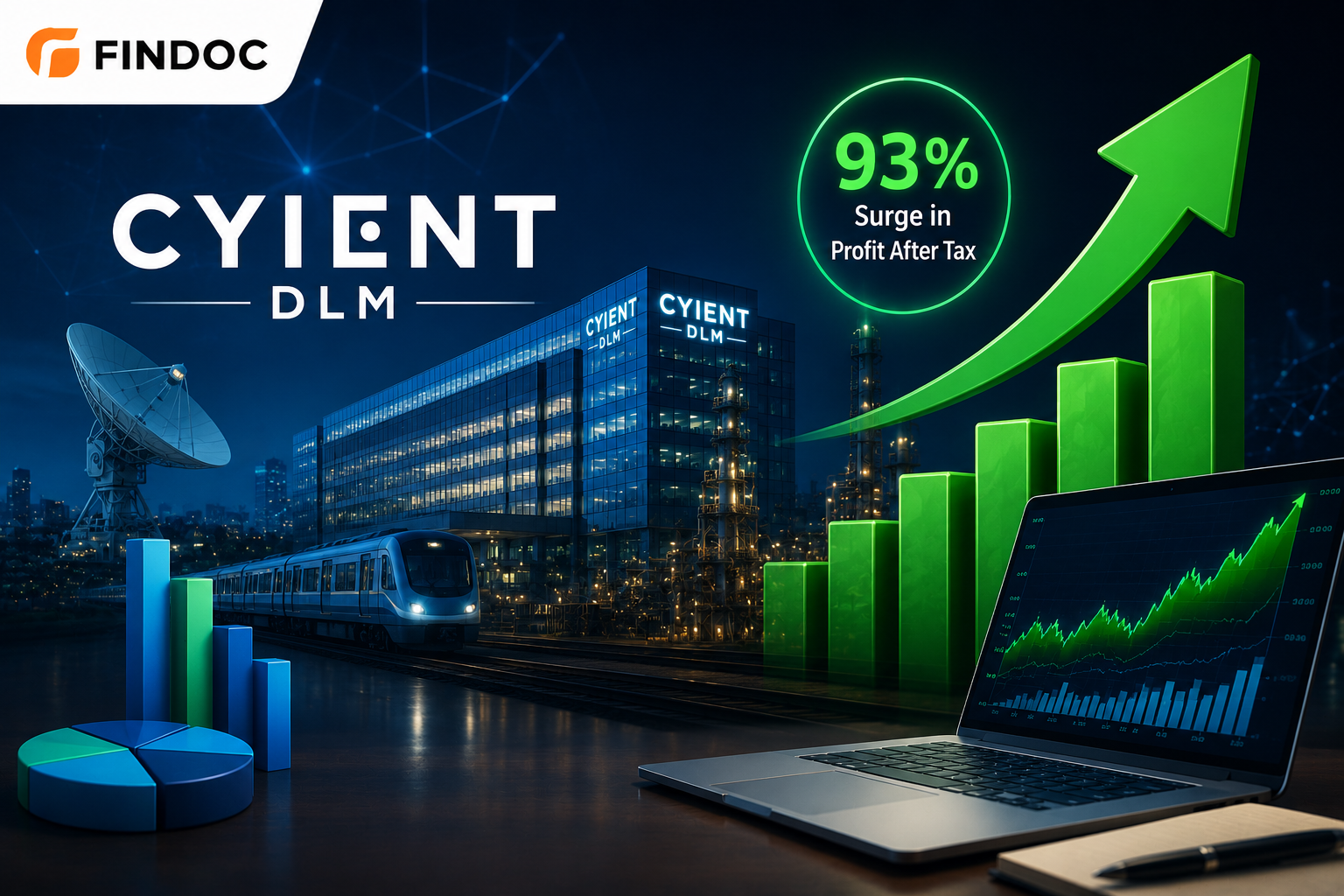
  • Cyient DLM Reports 93% Surge in Profit After Tax for FY24; Investors Take Note

    Cyient DLM Reports 93% Surge in Profit After Tax for FY24; Investors Take Note

    Cyient DLM, the electronics manufacturing services arm of Cyient Limited, has reported a significant financial milestone for the fiscal year ending March 2024. The company’s profit after tax surged 93% year-over-year, signaling robust operational performance and growing investor confidence in the firm’s growth trajectory.

    Deal Highlights

    • Profit After Tax Growth: 93% increase compared to FY23
    • Full-Year Revenue: Rs 1,192 crore for FY24
    • Revenue Growth: 43.2% higher compared to the same period in the prior financial year
    • Transaction or Partnership Details: Not disclosed
    • Specific Profit Figures: Not disclosed in available reporting

    Why It Matters

    The dual acceleration in both revenue and profitability underscores that Cyient DLM is not merely growing its top line but is also improving operational efficiency and margin management simultaneously.

    Potential Business Impact

    The company’s ability to nearly double its profit while growing revenue by over 43% suggests strong cost controls and potentially improved product mix or higher-value contract wins. This positions Cyient DLM as a notable player within India’s expanding electronics manufacturing services sector, which continues to benefit from government-backed production-linked incentive schemes and global supply chain diversification trends.

    Market Reaction

    Specific market reaction data, including stock price movements following this announcement, are not disclosed. However, results of this magnitude typically attract attention from institutional investors and analysts tracking the mid-cap manufacturing space in India.

    Industry Context

    India’s electronics manufacturing services industry is experiencing accelerated growth as global companies seek alternatives to traditional manufacturing hubs. Cyient DLM operates within this favorable tailwind, serving sectors including aerospace, defense, and industrial electronics — all areas seeing increased domestic and international demand.

    What Investors Should Watch Next

    • Margin Sustainability: Whether the company can maintain or improve profit margins in FY25 amid potential input cost pressures
    • Order Book Growth: Updates on new contract wins and order pipeline disclosures
    • Sector Diversification: Expansion into new verticals beyond current served markets
    • Capital Allocation: Management’s strategy regarding reinvestment, debt management, or potential dividends
    • Guidance for FY25: Forward-looking revenue and profitability targets from company leadership

    Conclusion

    Cyient DLM’s FY24 results represent a strong financial performance, with 93% profit after tax growth and 43.2% revenue expansion demonstrating meaningful business momentum. For investors evaluating exposure to India’s electronics manufacturing sector, these results merit close attention.

    Investor Takeaways:

    • The 93% surge in profit after tax reflects improved operational efficiency alongside strong top-line growth
    • Revenue crossing Rs 1,192 crore marks a significant scale milestone for the company
    • Investors should monitor upcoming quarterly disclosures for confirmation of sustained growth trends


    Explore Electronics Components Sector Stocks
    Syrma SGS Technology Share Price Kaynes Technology Share Price
    Avalon Technologies Share Price Vikram Solar Share Price
    Saatvik Green Energy Share Price Centrum Electronics Share Price
    Websol Energy System Share Price Kernex Microsystems Share Price
    Insolation Energy Share Price Indosolar Share Price
  • ICICI Prudential Life Insurance Reports Q4 Profit Decline of 26%; Dividend Announced as Premium Income Rises

    ICICI Prudential Life Insurance Reports Q4 Profit Decline of 26%; Dividend Announced as Premium Income Rises

    ICICI Prudential Life Insurance Company (ICICI Pru Life) has released its financial results for the fourth quarter of the fiscal year, revealing a significant decline in net profit alongside a notable rise in net premium income. The insurer also announced a dividend for shareholders, offering a measure of reassurance amid the earnings dip. The results have drawn close attention from institutional and retail investors tracking India’s private life insurance sector.

    Deal Highlights

    • Net profit fell 26% year-over-year to Rs 174 crore for Q4
    • Net premium income rose to Rs 14,788 crore, signaling continued top-line business growth
    • The company announced a dividend, with specific per-share details not disclosed
    • Results were reported for the quarter ending March 2024

    Why It Matters

    The divergence between a declining bottom line and rising premium income raises important questions about cost structures, claims experience, and investment income performance during the quarter.

    Potential Business Impact

    The increase in net premium income to Rs 14,788 crore demonstrates that ICICI Pru Life continues to attract policyholders and grow its core insurance business. However, the 26% drop in net profit suggests that operational expenses, policy reserves, or other cost-side pressures may have offset top-line gains. The dividend announcement signals that management retains confidence in the company’s financial position despite the quarterly earnings decline.

    Market Reaction

    Specific stock price movement and trading volume data following the earnings announcement were not disclosed at the time of reporting. Investor sentiment regarding the results is not confirmed.

    Industry Context

    India’s life insurance sector remains one of the fastest-growing financial services segments in the country, supported by a large underinsured population and rising awareness of financial planning. ICICI Pru Life is one of the leading private life insurers in India and operates in a competitive landscape alongside peers such as HDFC Life and SBI Life. Regulatory oversight from the Insurance Regulatory and Development Authority of India (IRDAI) continues to shape product structures and pricing across the sector.

    What Investors Should Watch Next

    • Profitability drivers: Understanding what specifically caused the 26% net profit decline
    • Value of New Business (VNB) margins: A key metric for insurance company quality
    • Dividend yield: Final per-share dividend amount once officially disclosed
    • Premium income sustainability: Whether top-line growth momentum continues into FY2025
    • Expense ratio trends: Monitoring cost management efficiency in coming quarters

    Conclusion

    ICICI Prudential Life Insurance’s Q4 results present a mixed picture — strong premium income growth paired with a meaningful profit decline. The declared dividend provides some investor comfort, but the earnings contraction warrants careful monitoring.

    Investor Takeaways:

    • Rising net premium income reflects healthy business volume, though profit compression requires further scrutiny
    • The dividend announcement indicates management’s commitment to shareholder returns despite earnings pressure
    • Investors should await full annual disclosures and management commentary for a clearer FY2025 outlook


    Explore Life Insurance Sector Stocks
    Life Insurance Corp. Share Price HDFC Life Insurance Share Price
    SBI Life Insurance Share Price PNB Met Life India Share Price
    General Ins. Corpn. Share Price Niva Bupa Health Ins Share Price
    Star Health & Allied Share Price Canara HSBC Life Ins Share Price
    Go Digit General Ins Share Price ICICI Lombard Gen. Share Price

WPS电脑版

telegram中文

telegram中文

Telegram中文

搜狗五笔输入法

网易有道翻译

Telegram电脑版

Telegram电脑版

Telegram手机版

有道音视频翻译

有道音视频翻译

汽水音乐播放器

Telegram电脑版

rar压缩包

Telegram电脑版

Telegram电脑版