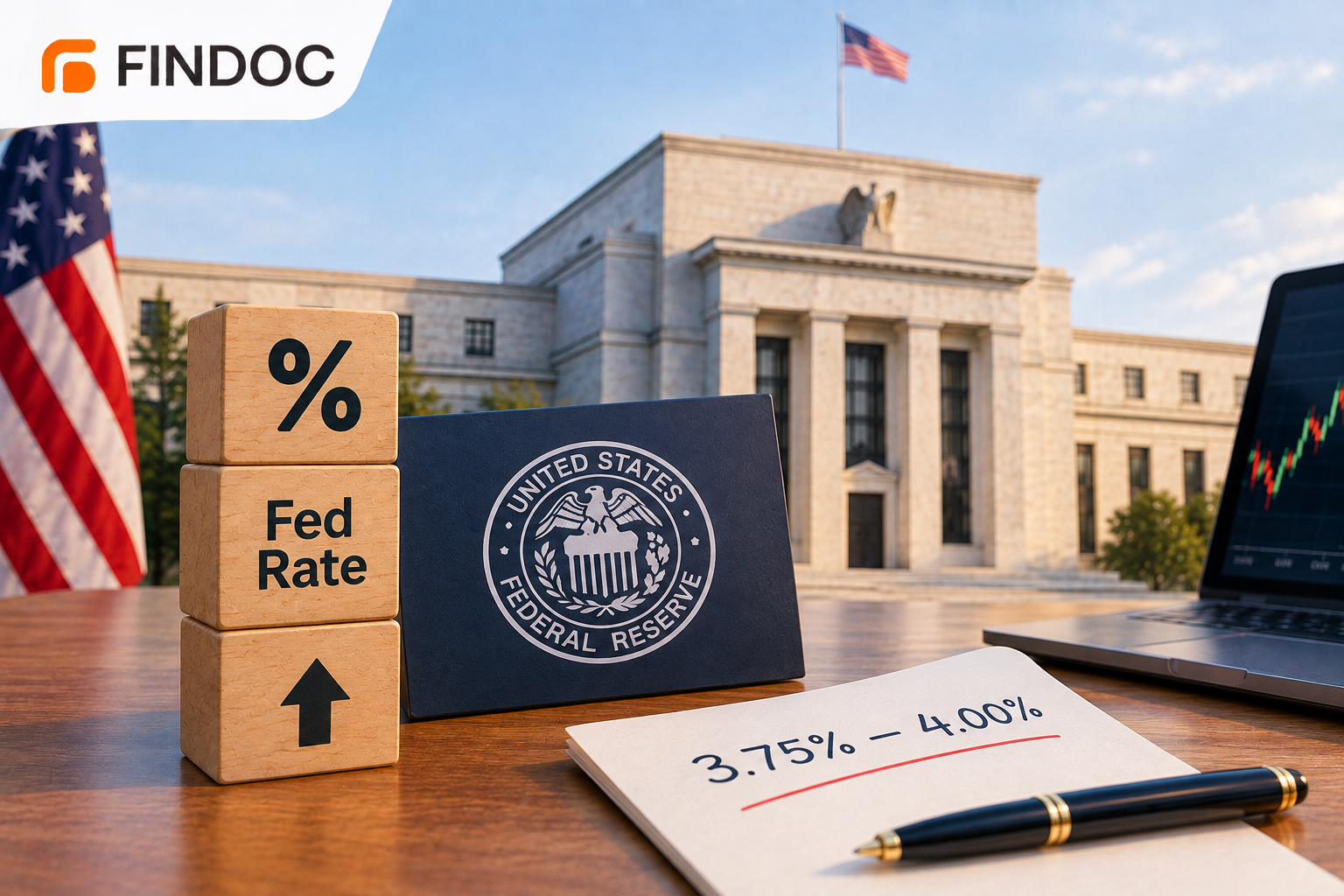
The US Federal Reserve raised its benchmark rate by 25 basis points to 3.75%–4.00% on 16 September 2026, its first hike since 2023. The move rattled global markets and pushed the rupee past ₹96 against the dollar.
What the Fed Decided and Why
The Federal Open Market Committee (FOMC) raised the federal funds target range by 25 basis points to 3.75%–4.00% at its meeting on 15–16 September 2026. This is the first US rate hike since July 2023, and the vote was unanimous at 12-0.
The Fed had held rates steady at 3.50%–3.75% at its July meeting, with three members dissenting in favour of an immediate hike. Seven weeks later, the rest of the committee agreed.
Fed Chair Kevin Warsh gave three reasons for the hike: inflation was not cooling fast enough, with August headline PCE inflation running near 3.6% and core PCE near 3.2%; the US economy kept strengthening with steady hiring and business investment; and rising energy and commodity costs threatened to spread into broader prices.
The Fed’s Dot Plot Signals More Hikes Ahead
Alongside the rate decision, the Fed released its updated Summary of Economic Projections, commonly called the “dot plot” a chart showing where each policymaker expects rates to be in future years, not a fixed promise.
The dot plot showed the median projected rate holding at 4.1% through the end of both 2026 and 2027. In June, most officials had expected rates to fall to about 3.6% by the end of 2027. That is a meaningful shift: instead of just one hike now, most policymakers see one more hike this year and no rate cuts next year either.
Of the 18 officials who submitted projections, 16 expect at least one more 25 bps hike in 2026. Chair Warsh, as in June, chose not to submit his own projection.
The next Fed meeting is scheduled for 27–28 October 2026, followed by a projection meeting on 8–9 December.
Wall Street’s Reaction: Stocks Fall, Dollar and Yields Rise
US markets reacted more to the “higher for longer” signal than to the hike itself, which had been widely expected. The Dow Jones fell around 1.2%, the S&P 500 slipped about 0.4-0.5%, while the Nasdaq ended the session almost unchanged.
The two-year US Treasury yield, which tracks near-term Fed expectations, jumped toward 4.7%. The ten-year yield, which reflects longer-term growth and inflation expectations, moved close to the psychologically important 5% level.
The US dollar strengthened to a seven-week high after the decision. Gold slipped initially on the stronger dollar before recovering some ground on safe-haven demand, while Brent crude fell more than 2%, also pressured by reports of additional oil supply from Saudi Arabia.
Impact on Indian Markets: Rupee, Sensex and Nifty
For Indian investors, the story reaches home through the currency market first. On 17 September, the rupee weakened past ₹96 per US dollar, as a stronger dollar and firm crude oil prices combined to pressure the currency.
Indian benchmark indices opened lower in early trade, reacting to the global mood, with Nifty IT down around 0.5% on concerns that higher-for-longer US rates could make American companies more cautious about technology spending. Both the Sensex and Nifty recovered as the session progressed, helped by domestic buying and stock-specific activity.
A weaker rupee and firmer crude oil prices matter for India because the country imports the bulk of its oil. Together, they can add pressure to inflation and the current account, even when domestic stock markets hold up on any given day.
Will the RBI Follow the Fed’s Lead in October?
The Reserve Bank of India’s Monetary Policy Committee has kept the repo rate unchanged at 5.25% since its last cut in October 2025, holding steady through five consecutive reviews, including the August 2026 meeting. The RBI’s next policy review is scheduled for 5–7 October 2026, ahead of the Fed’s own October meeting.
A rate hike in the US does not automatically mean the RBI will follow suit. The RBI’s decisions are driven largely by domestic inflation, growth and monsoon-linked food price trends rather than by moves in Washington. Still, a stronger dollar and costlier crude oil add to the list of factors the MPC will weigh in October.
For retail investors tracking these swings across Indian and global markets, having a demat account set up in advance makes it easier to act when opportunities or volatility show up. Many also prefer a reliable online trading platform to watch currency-sensitive stocks, such as IT, oil marketing companies and banks, in real time.
What to Watch Next
The next signals for Indian markets are unlikely to come only from the Fed’s October meeting. Crude oil prices, the rupee’s trajectory, foreign investor flows, and the RBI’s own tone in early October will matter just as much.
Investments in the securities market are subject to market risks. This article is for informational purposes only and is not investment advice.
| Check Indices | |
|---|---|
| BSE BANKEX Companies | BSE Largecap Comapnies |
| FINNIFTY Companies | Nifty Midcap 50 Companies |
| NIFTY MIDCAP 150 Companies | Nifty Pharma Companies |
| BSE 500 Companies | Nifty Smallcap 100 Companies |
Leave a Reply