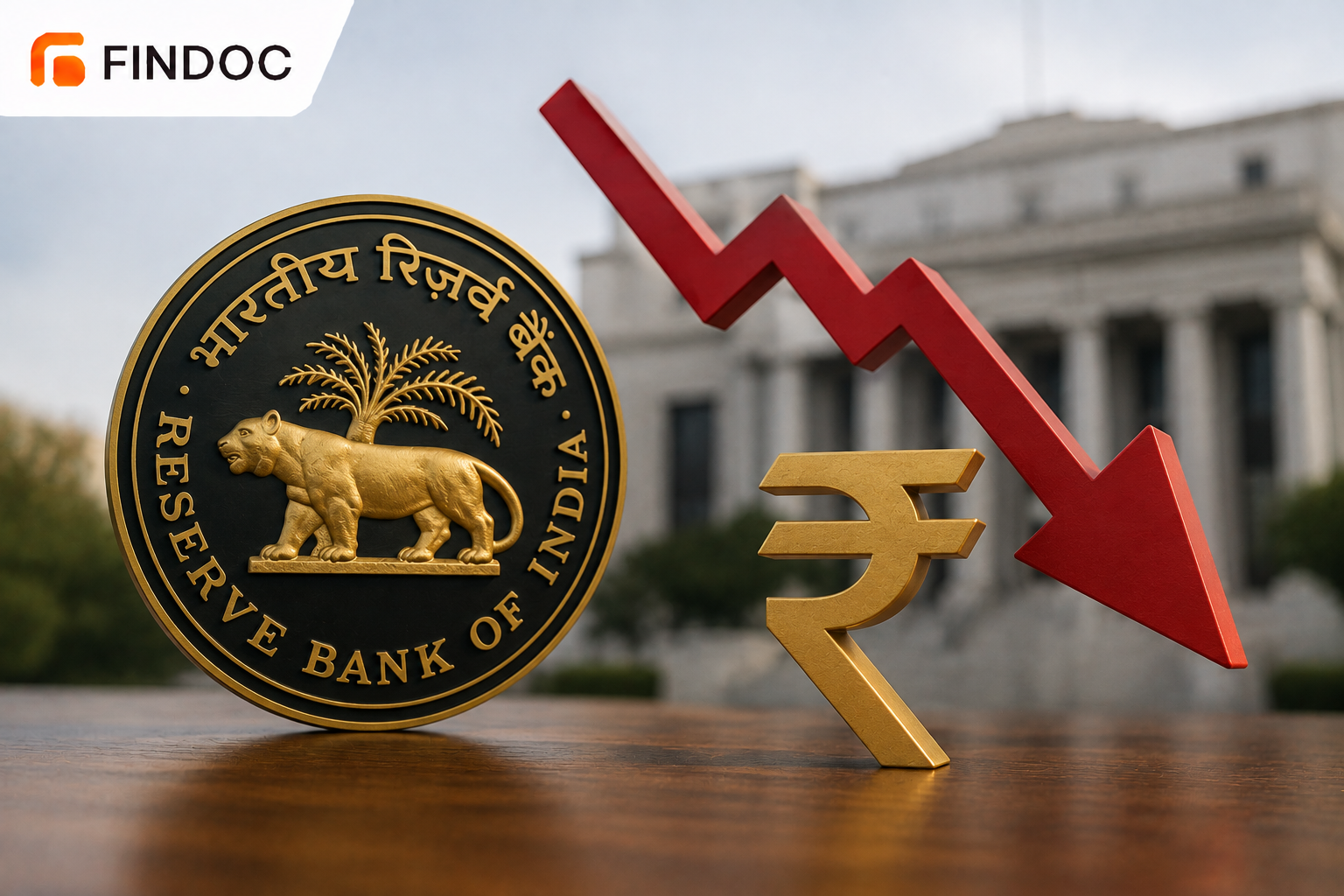
Indian government bonds came under heavy selling pressure after minutes from the Reserve Bank of India’s latest Monetary Policy Committee meeting signalled that interest rates could rise if inflation risks materialise. The development reflected a sharper focus on inflation in the central bank’s internal discussions and pushed bond prices lower across the session.
The yield on the benchmark 6.94% 2036 bond rose to 6.8382% at 10:25 am IST, compared with a close of 6.8170% on Wednesday. The uptick in yield indicated the immediate market response to the RBI’s more cautious stance as reflected in the published minutes.
Governor Flags Shift in Inflation Trajectory
RBI Governor Sanjay Malhotra noted that price pressures had not yet broadened significantly across the economy but acknowledged that headline inflation was beginning to move up from the unusually subdued levels seen earlier in the year. That observation added to market caution, as it pointed to a change in the inflation backdrop. Bond market participants interpreted the comments as less supportive for fixed-income securities than the policy tone seen in prior months.
The tone of the MPC discussion was widely characterised as surprisingly hawkish by market observers, marking a notable shift from the earlier accommodative signals that had supported bond demand.
Retail Inflation Above RBI’s Medium-Term Target
Retail inflation rose to 4.45% in July. While the reading remained within the RBI’s 2% to 6% tolerance band, it was above the central bank’s medium-term target of 4%. That gap added to concerns that inflation may be drifting away from the RBI’s preferred anchor level.
The combination of the published minutes and the July inflation data supported the selling observed in government securities. Market participants adjusted their positions following the RBI’s more guarded assessment of the price outlook.
Deputy Governor Signals Limited Room for Further Easing
Deputy Governor Poonam Gupta stated that there was limited room remaining for additional monetary easing. She also noted that depending on how macroeconomic conditions evolve, the case for a rate increase could emerge later in the fiscal year.
These comments reinforced the broader market reading that the RBI was not leaning toward looser policy in the near term. For those tracking opportunities in stock investment or fixed-income markets, the prospect of a potential rate adjustment later in the fiscal year introduced fresh uncertainty into rate-sensitive asset classes.
STCI Primary Dealer indicated it still expected no rate hikes over the next two policy meetings. However, the firm placed a greater likelihood on the December policy meeting being a live event meaning the outcome would not be considered a foregone conclusion.
Oil Prices and Swap Rates Add to Pressure
Inflation concerns were further amplified by elevated global crude oil prices. Brent crude was holding near $92 a barrel amid an unresolved geopolitical standoff between the United States and Iran, with markets pricing in the possibility of sustained higher energy costs.
Rising crude prices pose several specific risks for India, which is the world’s third-largest oil importer. These include downward pressure on the rupee, a deteriorating inflation outlook, and strain on both the current account balance and government finances.
India’s overnight indexed swap rates also moved sharply higher in opening deals, reflecting the change in rate expectations across the curve.
| Swap Tenor | Change (Basis Points) | Rate |
|---|---|---|
| 1-Year | +10 bps | 5.90% |
| 2-Year | +8 bps | 6.13% |
| 5-Year | +2 bps | 6.43% |
Market Context for Investors
The session’s developments underline how sensitive Indian fixed-income markets remain to central bank communication. Investors and traders who use an active trading platform to monitor government securities and interest rate derivatives saw notable intraday moves driven entirely by the language in the RBI’s published minutes.
Those who wish to participate in debt or equity markets in India are advised to open demat account with a registered broker and consult a qualified financial adviser before making any decisions, particularly in a period of evolving monetary policy signals.
Summary: Indian government bond yields rose after RBI’s MPC minutes adopted a hawkish tone on inflation. Deputy Governor flagged limited easing room, while swap rates and crude prices added further pressure.
Leave a Reply