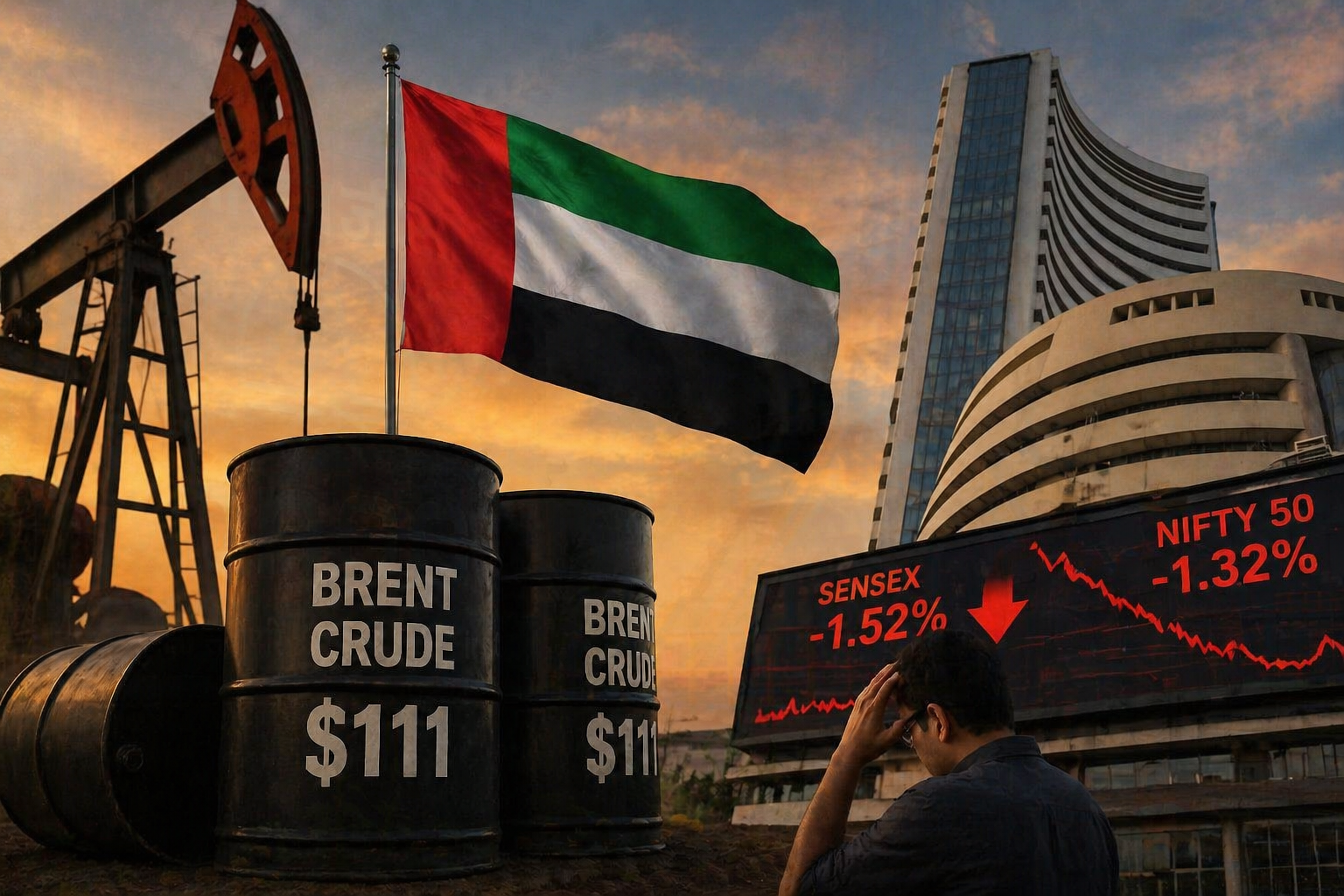
Brent crude oil has surged past $111 per barrel amid reports of the UAE quitting OPEC and escalating tensions from Iran’s reported state of collapse, sending shockwaves through global energy markets. Indian oil marketing companies (OMCs) like BPCL, IOC, and HPCL face immediate pressure as higher input costs threaten refining margins and fuel inflation risks. This breakdown examines the event’s origins, market data, and implications for NSE-listed energy stocks, offering clarity for investors navigating volatility on April 29, 2026.
- Brent crude oil price breaks above $111 per barrel following UAE’s exit from OPEC
- Iran reports state of collapse, escalating Middle East supply risks
- Event tied to US market close on April 28, 2026, with broader market pressures in background
- Indian OMCs like BPCL, IOC face near-term margin pressure from higher crude costs
- Nifty Energy Index under drag as sector reacts to cost escalation
What Happened? Event Breakdown
The UAE’s decision to exit OPEC marks a pivotal shift in global oil supply dynamics. As a key producer, its departure could disrupt coordinated production quotas, potentially tightening supply if other members fail to compensate. This move raises concerns over fragmented OPEC+ strategies, amplifying price volatility in an already tense geopolitical environment.
Reports of Iran’s state collapse add fuel to the fire, with potential disruptions to its oil exports heightening supply risks from the Middle East. Iran, despite sanctions, remains a significant player, and any internal instability could curtail output, pushing crude prices higher amid fears of broader regional conflict.
The developments gained traction following the US market close on April 28, 2026, coinciding with global equity selloffs linked to technology sectors. Indian markets opened to these headlines on April 29, with energy stocks leading declines as traders priced in elevated crude costs.
Price Data and Market Impact
| Metric | Value | Change | Source |
|---|---|---|---|
| Brent Crude | >$111/bbl | Breakout | Market reports |
| Indian OMC Stocks (e.g., BPCL) | -2-5% intraday | Down on cost fears | Sector trends |
| Nifty Energy Index | -1.5% | Sector drag | Index movement |
This data captures the immediate reaction, with Brent’s breakout driving downside in Indian OMCs. BPCL, IOC, and HPCL shares reflected fears of squeezed margins, while the Nifty Energy Index highlighted broader sectoral weakness. Such moves align with historical patterns where crude spikes pressure downstream players.
Investor Impact on Indian Energy Sector
Higher crude prices directly squeeze refining margins for OMCs like BPCL, IOC, and HPCL, which rely on imported oil for processing into petrol, diesel, and aviation fuel. With India importing over 85% of its crude needs, elevated input costs outpace regulated retail price hikes, eroding profitability in the near term.
Sector trends show short-term downside for downstream OMCs, contrasted by potential upside for upstream firms like ONGC, which benefit from higher realizations on domestic production. This bifurcation is evident in NSE trading, where explorers hold firmer amid the rout.
Historical comparisons underscore the pattern: during 2022 oil spikes above $100, OMCs faced 10-15% corrections as margins compressed before partial recovery via dynamic pricing adjustments. Current dynamics mirror this, with added inflation pressures.
Macro linkages amplify risks, as higher fuel prices feed into headline inflation, influencing RBI policy outlook. SEBI-regulated disclosures from OMCs already flag crude volatility as a key risk factor, urging investors to assess balance sheets amid sustained high prices.
Actionable Guidance for Investors
Monitor technical levels on BPCL, with support near Rs 550 and resistance at Rs 620, as these zones guide short-term trading on BSE and NSE. Similar levels apply to IOC and HPCL, reflecting intraday volatility.
Consider hedging exposure via energy ETFs for diversified risk management if holding OMC positions, aligning with SEBI guidelines on portfolio protection. Open demat account online via certified brokers for real-time tracking of these developments, ensuring seamless access to NSE data.
The best stock trading and investing platform in India offers tools for monitoring crude-linked volatility without direct futures exposure. Avoid panic selling; observe OPEC+ responses in the next 24-48 hours, as coordinated output hikes could temper the surge.
Expert Analysis: Outlook and Risks
Short-term, Brent could test $115 if Iran tensions escalate further, tightening supply amid UAE’s OPEC exit. This scenario pressures OMC earnings, with quarterly results sensitive to sustained high crude.
Long-term, India’s 85% import reliance limits consumer upside but exposes the economy to global shocks, capping benefits for downstream firms. Upstream players like ONGC may see steadier gains from higher prices.
Risks include prolonged Middle East instability disrupting 20% of global supply, alongside RBI’s inflation vigilance potentially delaying rate cuts. Balanced against this, non-OPEC production ramps could ease pressures.
Beginner Explanation: Why Oil Prices Matter to You
Higher oil prices mean costlier petrol and diesel at pumps, directly hitting household budgets through elevated fuel and transport costs. This flows into stock portfolios, as energy firms like BPCL and IOC pass on some costs but suffer margin hits, dragging sector indices.
Indirectly, it stokes inflation, influencing RBI decisions on interest rates that affect loans and savings. For novices, tracking crude via NSE apps reveals why energy stocks move with global events.
Forward pressures on Brent persist if supply fears mount, with Indian energy sector bifurcated between OMC downside and upstream resilience. Investors should weigh inflation pass-through against geopolitical resolutions, maintaining diversified exposure per SEBI norms.
This Brent surge underscores oil’s role in Indian markets, demanding vigilant monitoring of OMC margins and policy responses. Stay informed on NSE updates, balance risks with hedges, and focus on fundamentals amid volatility for informed positioning.
Leave a Reply