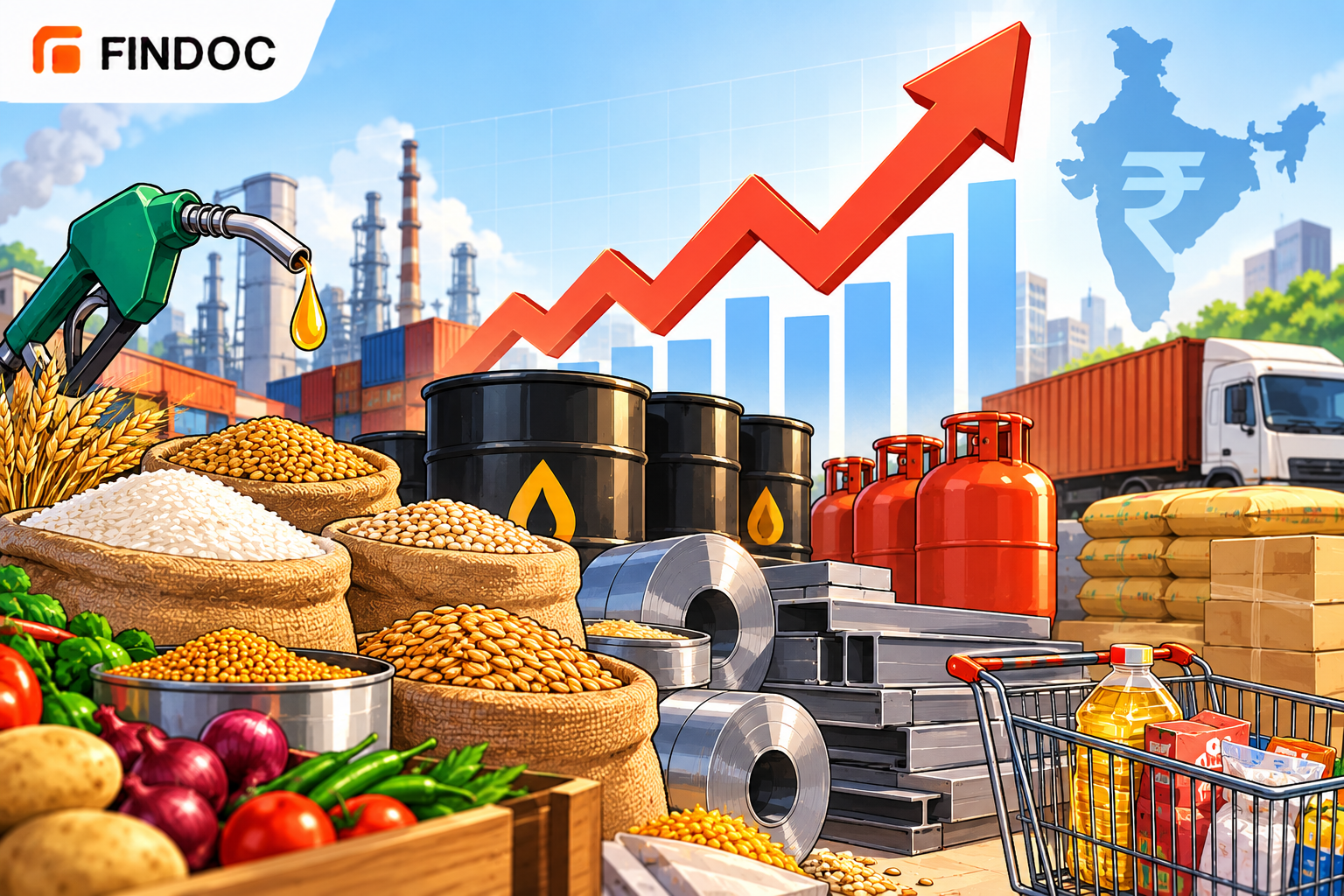
India’s WPI inflation rose to 11.39% in September 2026, up from 9.92% in August, the government said on 14 October. Fuel and power, food and factory goods all got dearer. Retail inflation also reached a 23-month high of 5.54%. Wholesale prices show what firms pay before goods reach shoppers.
The Latest WPI Inflation Data
The Ministry of Commerce and Industry released the numbers on Wednesday, 14 October 2026. WPI stands for Wholesale Price Index. It tracks how much prices change at the wholesale level.
The rate is a year-on-year number. It compares prices in September 2026 with prices in September 2025. An 11.39% rate means wholesale prices are about 11% higher than a year ago.
The all-commodities index rose to 112.5 in September from 110.8 in August. That is a rise of 1.7 points in one month. Business Standard calls 11.39% a series high for the 2022-23 base year.
| Group | September 2026 (%) | August 2026 (%) |
|---|---|---|
| All commodities | 11.39 | 9.92 |
| Fuel and power | 25.85 | 22.93 |
| Manufactured products | 9.76 | 8.37 |
| Food index | 8.66 | 7.05 |
Primary articles, such as farm and mineral goods, rose 8.67% over the year. Every main group in the table moved up from August.
Items That Pushed WPI Inflation Higher
The ministry named a long list of items. The price rise was wide and not limited to one product. The main drivers were:
- Mineral oils, which include petroleum products
- Food articles
- Crude petroleum and natural gas
- Coal and lignite
- Basic metals
- Chemicals and chemical products
- Textiles
- Rubber and plastic products
- Electrical equipment
Manufactured products rose 9.76%, the highest in this series. The fuel and power index rose to 110.5 from 108.3 in the same month.
Why Wholesale Prices Are Rising So Fast
Reports link the rise to the West Asia conflict. The conflict has disrupted ships that pass through the Strait of Hormuz. That has pushed up the cost of crude oil and fertiliser.
Fuel costs spread to other goods. A truck that carries goods needs diesel. A factory that makes plastic needs oil-based raw material. When these costs rise, the price of many goods can rise too.
Fertiliser works in a similar way. Farmers pay more to grow crops when fertiliser gets dearer. That cost can reach food prices after some time.
For the first half of this financial year, from April to September, the WPI index rose 9.85% over the same months a year ago. Fuel and power rose 25.31% in that period. Manufactured products rose 8.08%, and primary articles rose 6.89%.
How WPI Differs From CPI
CPI means Consumer Price Index. It tracks prices that families pay in shops. WPI tracks prices at an earlier stage, such as what traders and firms pay.
Retail inflation based on CPI rose to 5.54% in September. That is a 23-month high. Food and fuel pushed it up.
The Reserve Bank of India mainly looks at CPI when it sets interest rates. The government asked the RBI to keep CPI inflation at 4%, with a 2% margin on each side. At 5.54%, CPI is still inside that band. It is closer to the top than before, since it was 3.93% in May and 4.38% in June.
How Long WPI Inflation Has Stayed High
WPI inflation has been above 9% for five months in a row, counting September. It has now crossed 11%.
| Month in 2026 | WPI inflation (%) |
|---|---|
| May | 9.68 |
| June (revised) | 9.97 |
| July | 9.78 |
| August | 9.92 |
| September | 11.39 |
Fuel and power inflation was 27.41% in June and eased to 20.05% in July. It then rose to 22.93% in August and 25.85% in September. So fuel inflation has now risen for two months in a row.
April was the last month below 9%. WPI inflation was 8.26% then.
What It Means for Companies and Investors
Higher input costs can squeeze company profits. A firm can pass costs on to buyers or accept lower margins. Which path it takes depends on its market and its pricing power.
Firms that buy oil, metals or chemicals as raw material can feel the rise more. These items sit on the list of drivers above. Each company reports its own numbers, so read the results to see the real effect.
Households feel this in their monthly budgets. The September CPI data shows that food and fuel were the main push behind retail inflation. Both are items that every family buys.
Wholesale prices do not turn into shop prices at once. CPI often follows WPI after some time, but the link is not exact. This article does not predict where prices will go next.
One month of data does not set a trend. It is better to look at several months before you draw a view. Official data can also be revised later, as the June figure was.
For savers, rising prices lower what each rupee can buy. Many people then look at stocks and funds. If you start, compare costs first.
Many brokers advertise a free demat account, but you should read the other charges before you open one. Check the fees on your trading account too, because costs add up over time.
Please remember that investing carries risk. This article gives facts and does not tell you what to buy or sell.
What to Watch Next
Here are three things to watch:
- The next monthly WPI and CPI releases, which will show if prices keep rising or begin to ease.
- Crude oil prices, because fuel is the biggest driver in the data.
- Shipping through the Strait of Hormuz, which reports link to higher costs.
Also watch what the RBI says. It looks at inflation when it sets interest rates. Any change in rates can affect loan costs and savings returns.
Related Stock Market Insights
- What is a Demat Account?
- How to Open a Demat Account?
- What is Trading Account?
- What is Algo Trading?
- Algo Trading Platform in India
Leave a Reply