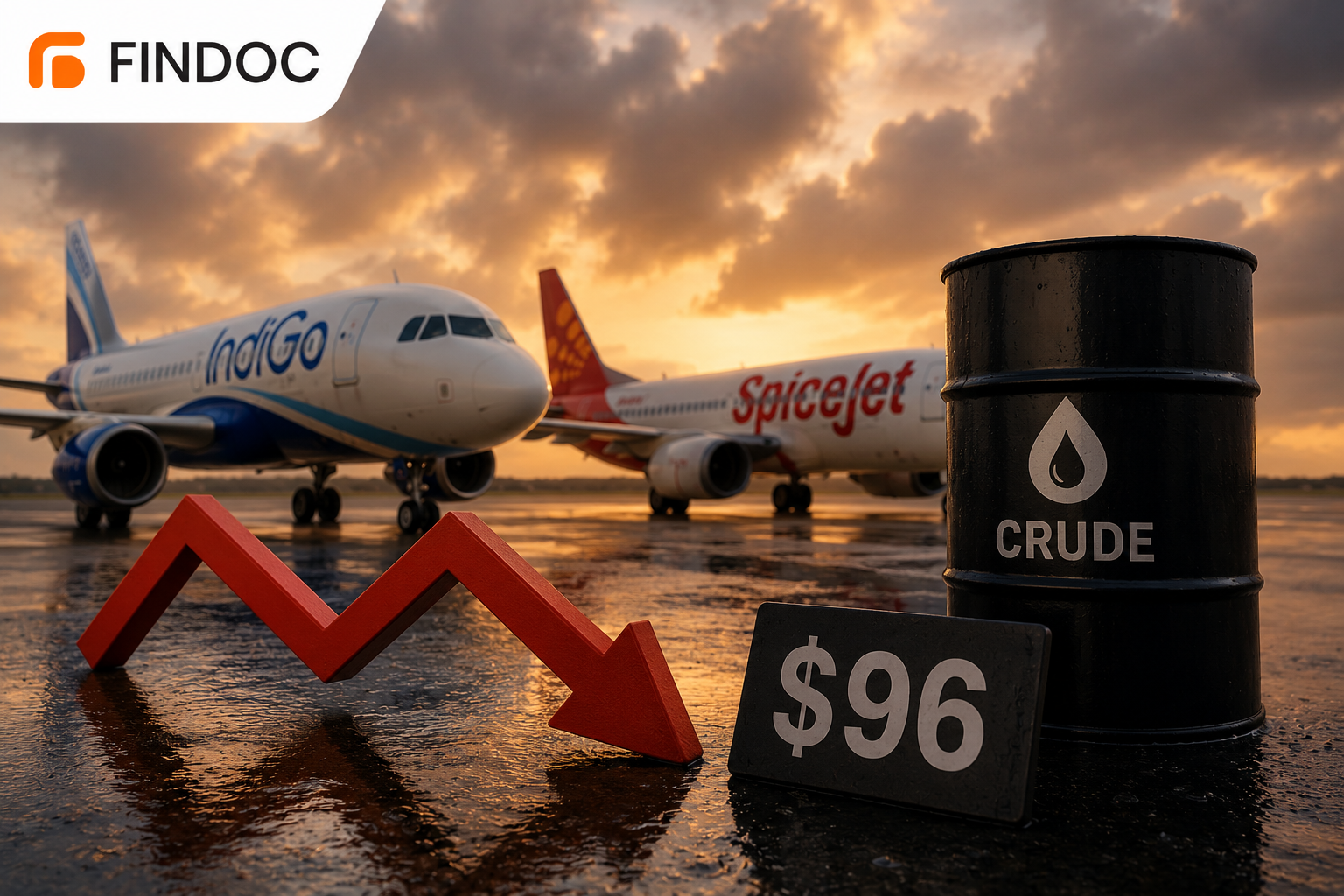
Shares of IndiGo parent InterGlobe Aviation and SpiceJet fell for a second straight session on Wednesday, 2 September 2026, as Brent crude climbed towards $96 a barrel a day after jet fuel prices were raised by 5.46%.
How the two stocks traded on Wednesday
InterGlobe Aviation, which runs IndiGo, was quoting ₹4,925 on the NSE at 10:07 AM IST, down 2.52% from its previous close. SpiceJet was trading at ₹9.69 on the BSE, lower by 3%.
Both counters had already dropped sharply on Tuesday, 1 September the day the higher jet fuel rates took effect.
| Stock | Close, 1 Sep 2026 | Change | Price at ~10:07 AM IST, 2 Sep | Change |
|---|---|---|---|---|
| InterGlobe Aviation (IndiGo), NSE | ₹5,052 | –3.48% | ₹4,925 | –2.52% |
| SpiceJet, BSE | ₹9.99 | –3.20% | ₹9.69 | –3.00% |
Taken together, that is a fall of close to 6% for both stocks across two sessions.
Brent crude at a six-week high
Brent crude, the global oil benchmark, was trading around $95 a barrel on Wednesday. It was the third straight session of gains and the highest level in nearly six weeks. At an exchange rate of about ₹95 to the dollar, that works out to roughly ₹9,000 per barrel.
The rally follows fresh US military strikes on Iranian targets around the Strait of Hormuz, the narrow sea route through which a large share of the world’s oil moves. Traders are pricing in the risk that shipments through the waterway get disrupted again.
Brent is now up about 14% over the past month.
Jet fuel costlier for the second month running
Oil marketing companies raised the price of aviation turbine fuel (ATF), the fuel that aircraft run on by ₹6.28 per litre for domestic airlines, taking it to ₹121.28 per litre from ₹115. That is an increase of 5.46%, effective 1 September 2026.
ATF rates are revised on the 1st of every month, based on international benchmark prices and the rupee-dollar exchange rate. This was the second monthly increase in a row, after a hike on 1 August.
Because ATF pricing tracks crude with a lag, the current run-up in Brent also raises the chance of another increase at the next revision.
Why fuel decides airline profits in India
Fuel is the single biggest line item in an Indian airline’s cost structure, accounting for roughly 35% to 40% of total operating expenses on industry estimates.
Airlines cannot cut fuel use in the short term. A flight burns what it burns, so a higher ATF price feeds almost directly into operating costs.
That leaves carriers with two broad choices. They can absorb the extra cost, which squeezes operating margins, or they can push fares up. In a market where several airlines compete on price and demand is sensitive to fares, passing on the full increase is rarely straightforward.
The rupee adds a second squeeze
Cost pressure is not coming from fuel alone. Ratings agency ICRA has kept a negative outlook on the Indian aviation industry, pointing to a weakening RASK–CASK spread the gap between what an airline earns per seat-kilometre flown and what it costs to fly that seat-kilometre. When that gap narrows, profitability thins out.
ICRA has flagged that 35% to 50% of airline costs are dollar-denominated, including fuel, aircraft lease rentals and maintenance. With the rupee hovering near ₹95 to the dollar, those bills get heavier in rupee terms even before crude moves.
The agency has also noted disruptions to the availability of certain international airspaces since 28 February 2026, following the escalation of the West Asia conflict. It expects domestic air passenger traffic to grow 3–6% in FY 2026-27, while international traffic for Indian carriers is projected to decline 3–6% this financial year.
What investors will be tracking next
The near-term direction for airline stocks is tied less to company announcements and more to energy prices and the currency. The specific things worth watching:
- Where Brent settles, and whether Hormuz-related supply worries ease
- The next monthly ATF revision, due on 1 October 2026
- Whether airlines raise base fares or fuel surcharges to recover costs
- The rupee’s level against the dollar
- September-quarter (Q2 FY 2026-27) results, which will show how much of the fuel increase actually hit margins
Both stocks are listed on the NSE and BSE, so a demat account and trading account are needed to buy or hold them. Investors following the story can track crude prices, the rupee and these two counters live through an online trading platform during market hours, 9:15 AM to 3:30 PM IST.
Leave a Reply