
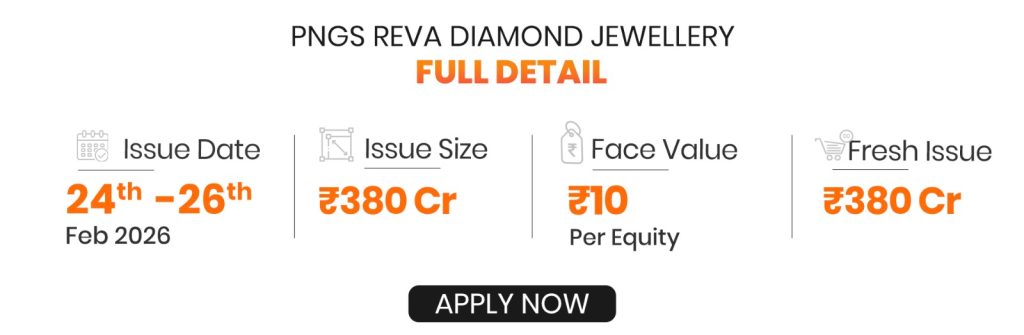
PNGS Reva Diamond IPO price has caught most investors’ attention as the company wants to raise ₹380 crore through a fresh issue. The funds will support expansion plans and marketing initiatives. This affordable diamond jewelry brand, backed by the P.N. Gadgil & Sons, has shown remarkable performance. The company boasts a PAT margin of 30.84% and an exceptional ROE of 78.89%.
Investors should know several key details about the PNGS Reva Diamond IPO. The IPO subscription starts on February 24 and ends on February 26. The allotment finalization will happen on February 27, followed by listing on March 3. While not comparable to a Revain IPO in Nasdaq, this RNG IPO price presents a good chance in India’s jewelry market.
PNGS Reva’s smart market strategy offers pure diamond pieces starting at just ₹10,000, making luxury available to more customers. The company’s plans include launching its Reva collection before Valentine’s Day in 2025 to tap into festive sales. The gray market premium (GMP) will be a significant indicator for investors. A positive GMP hints at potential listing gains, while a negative one could mean listing at a discount.
Investors tracking post-listing performance can monitor the PNGS Reva Diamond Share Price for real-time updates and valuation movement after listing.
What makes PNGS Reva Diamond IPO stand out in 2026? The PNGS Reva Diamond IPO stands out in the busy 2026 market with its unique strategic position and strong brand heritage. The diamond-focused brand launched in February 2025 shows a calculated entry into India’s growing affordable luxury jewelry segment.
Affordable luxury positioning makes Reva’s market strategy distinctive. You can buy pure diamond pieces starting at just ₹10,000, which opens doors for first-time diamond buyers and positions the brand strongly within India’s evolving premium jewelry segment.
Also Read: What is IPO?
What Makes PNGS Reva Diamond IPO Stand Out in 2026?
The PNGS Reva Diamond IPO stands out in the busy 2026 market with its unique strategic position and strong brand heritage. The diamond-focused brand launched in February 2025 shows a calculated entry into India’s growing affordable luxury jewelry segment.
Investors who wish to participate in this public issue during the subscription window can review the offer details and proceed with their application below.
Affordable Luxury Positioning
Reva’s market strategy makes diamond jewelry available to more customers through smart pricing. You can buy pure diamond pieces starting at just ₹10,000, which opens doors for first-time diamond buyers. This pricing lets Reva reach customers who thought diamond jewelry was too expensive.
The brand smartly markets itself as “affordable luxury” instead of just “affordable jewelry” to keep its premium image despite lower prices. Their products cover various categories like diamond rings, earrings, bracelets, sets, and necklace sets. The brand also lets customers customize pieces to match their style priorities.
The timing of marketing campaigns has been vital to Reva’s position. The brand launched its collection right before Valentine’s Day 2025 to boost gift purchases. They offered zero making charges during the launch to attract new customers. These seasonal offers show how well Reva understands when people buy jewelry.
This smart pricing and promotion strategy helps Reva target customers who want branded jewelry without high prices. A gross profit margin of 26.67% shows this affordable luxury approach works financially.
Backed by Trusted Brand P.N. Gadgil & Sons
The most important advantage for the PNGS Reva Diamond IPO is its connection to P.N. Gadgil & Sons, a jewelry institution trusted by customers for over 190 years. This rich heritage gives Reva instant credibility in a market where trust drives purchases.
P.N. Gadgil & Sons transferred its diamond business to PNGS Reva Diamond Jewelry through a strategic slump sale in January 2025. This move lets Reva work independently while using its parent company’s brand value and strong operations. The P.N. Gadgil & Sons connection helps build customer loyalty, improve supply chains, and grow faster.
This partnership goes beyond branding into retail presence. PNGS Reva Diamond Jewelry runs 34 stores in Maharashtra, Karnataka, and Gujarat. All but one of these stores operate inside existing P.N. Gadgil & Sons locations. This setup gives Reva retail presence without spending heavily on new stores.
The company uses multiple operational models:
- Company Owned Company Operated (COCO)
- Franchise Owned Company Operated (FOCO)
- Franchise Owned Franchise Operated (FOFO)
This flexible approach helps quick expansion while you retain control over the brand. The company knows how to operate in cities of all sizes in its main markets, which builds efficiency and community trust.
The PNGS Reva Diamond IPO offers more than just another jewelry market investment. Investors get a chance to back a brand with smart pricing and support from a 190-year jewelry legacy, something rare in today’s Indian retail world.
Read in Details: How to Meet the IPO Eligibility Criteria?
How does the Reva Brand Plan to Disrupt the Diamond Market?
PNGS Reva Diamond Jewelry has created a fresh approach to challenge India’s traditional diamond market. The brand launched in February 2025 to capture market share by solving the biggest problems and meeting needs in the premium jewelry segment.
Modern Designs at ₹10,000+ Price Points
Reva has positioned itself in the affordable luxury segment by offering pure diamond jewelry starting at just ₹10,000. This pricing makes diamond jewelry accessible to more people who thought diamonds were out of their reach.
The company showcases a wide collection with contemporary designs that appeal to urban and millennial consumers. Their products include:
- Rings and earrings
- Necklaces and pendants
- Solitaires
- Bangles and bracelets
- Mangalsutra and nose rings
- Chains
The brand has created 13 unique jewelry collections as of September 2025. In-house design teams work with carefully selected third-party manufacturers and artisans to develop these collections. Each piece blends tradition with modern elements while staying elegant and authentic.
Zero Making Charges and Festive Targeting
Reva made a bold move by introducing zero making charges during its launch. This strategy tackles one of the major costs in traditional jewelry pricing that adds substantial markup to final prices and often confuses buyers.
The brand’s launch just before Valentine’s Day 2025 came with waived making charges until February 16, 2025. This smart timing shows Reva understands how gift-buying occasions bring new customers to diamond jewelry.
The company’s marketing goes beyond Valentine’s Day to target wedding seasons and festivals when jewelry sales peak in India. This seasonal approach helps build brand awareness during high-interest periods.
These promotions help first-time diamond buyers overcome their hesitation by reducing both cost and psychological barriers. Customers can also customize pieces across collections to match their priorities.
Tier-1 and Tier-2 City Expansion
The company will use ₹286.56 crore from IPO proceeds to open 15 new brand-exclusive stores. This growth plan targets Tier-1 cities while learning about opportunities in Tier-2 locations across Maharashtra and other metro cities in India.
Early 2026 data shows PNGS Reva Diamond Jewelry runs 34 stores across Maharashtra, Karnataka, and Gujarat. All but one of these stores are shop-in-shop formats within P.N. Gadgil & Sons retail stores. The exception operates under the Company Owned Company Operated (COCO) model.
The company’s knowledge of Tier-1, Tier-2, and Tier-3 cities helps improve operational efficiency. This focused presence allows better logistics, inventory management, and store operations. The expansion strategy utilizes this regional expertise while entering new promising markets.
The company plans to spend ₹35.40 crore from IPO proceeds on marketing for these new stores. This investment will improve local brand awareness and help Reva connect with communities as it grows.
Reva combines asset-light shop-in-shop models (FOCO/FOFO) with strategic standalone stores to grow faster while maintaining consistent brand experience. This balanced growth strategy helps the company benefit from India’s jewelry retail consolidation trends.
Why is the ₹380 Cr IPO being Launched Now?
PNGS Reva Diamond’s ₹380 crore IPO comes at a perfect time in India’s jewelry market. The public offering starts February 24 and runs through February 26, 2026. This move aims to raise capital with clear goals in mind.
Timing with Wedding and Festive Season
The company picked the perfect moment for its IPO during India’s peak jewelry buying season. PNGS Reva launched its diamond collection right before Valentine’s Day 2025. This smart move built brand awareness before going public. Their timing shows they understand when people buy gifts.
Their H1 FY26 revenue hit ₹157 crore thanks to strong festive and wedding season sales. These numbers prove the brand knows how to tap into seasonal buying spikes across India.
PNGS Reva’s IPO fits perfectly with their business plan of targeting special occasions. They launched their collection before Valentine’s Day and offered zero making charges. This strategy shows they know when customers are most likely to buy. The IPO follows this same smart thinking – launch when market interest peaks.
The anchor book opens February 23, letting big investors get in just as retail interest builds. This timing helps grab attention when jewelry sales typically surge.
Capitalizing on Premiumisation Trend in Jewelry
The ₹380 crore from this IPO will go toward riding the premium wave in India’s jewelry market:
- ₹286.56 crore (75.4%) to open 15 brand-exclusive stores
- ₹35.40 crore (9.3%) for marketing campaigns
- The rest for general business needs
This split shows PNGS Reva sees how customer priorities are changing. The jewelry market keeps growing as pieces become everyday wear rather than special occasion items. Simple chains, rings, and bracelets are now daily fashion must-haves that create year-round sales.
The best reason for this IPO’s timing links to market growth factors. Higher incomes, city growth, and more spending have created the perfect setting for premium jewelry brands. The organized diamond jewelry market looks set to grow 16-17% yearly.
Diamond jewelry offers the best growth potential in the premium segment. PNGS Reva sells pure diamond pieces starting at ₹10,000 with modern designs. This puts them in a great spot to benefit from market changes.
The IPO structure tells us more about their funding approach: 75% for qualified institutional buyers, 15% for non-institutional investors, and 10% for retail investors. This setup focuses on getting long-term institutional money to support their growth plans.
Their expansion targets Tier-1 cities first, while carefully picking Tier-2 spots in Maharashtra and other metro areas across India. These locations match areas where premium jewelry sales are growing fastest.
PNGS Reva’s IPO combines short-term seasonal opportunities with long-term market trends. By raising money now, they can capture both festival sales and the bigger shift toward premium jewelry in India.
Read Also: Things You Should Know Before Investing in IPO
How Strong is PNGS Reva’s Financial Foundation?
Financial performance drives any IPO investment case. PNGS Reva’s numbers tell a compelling story of strategic growth and operational efficiency that supports the PNGS Reva Diamond IPO price.
Revenue and PAT Growth over 3 Years
PNGS Reva Diamond Jewelry’s financial journey shows steady progress over recent fiscal periods. The company started as an offshoot of the P.N. Gadgil & Sons brand and showed remarkable financial progress after focusing solely on diamond jewelry.
Revenue reached ₹157 crore in H1 FY26, which shows strong growth momentum before its public offering. These numbers stand out, especially given the economic climate affecting consumer spending.
The company’s operational efficiency shines through its Profit After Tax (PAT) figures, with a 30.84% PAT margin – an exceptional number in retail jewelry. This profitability puts PNGS Reva ahead of its peers and gives investors confidence in its business model.
Strong revenue growth matches the company’s push into new markets and its focus on affordable luxury. Unlike typical png ipo reviews, PNGS Reva’s story centers on making profit while keeping prices available to customers.
Net Worth Turnaround Post Slump Sale
January 2025 marked a turning point in PNGS Reva’s progress when P.N. Gadgil & Sons sold its diamond business to PNGS Reva Diamond Jewelry through a strategic slump sale. This move reshaped the company’s balance sheet and business focus.
The sale let PNGS Reva run independently while keeping its parent company’s brand value and infrastructure. This showed up as a big boost in the company’s net worth, creating a stronger base for future growth.
Smart timing of this deal just before the Valentine’s Day 2025 collection launch helped PNGS Reva tap into seasonal sales with better financial structure. Investors comparing this to a Revain IPO in nasdaq should note that PNGS Reva’s financial moves target the Indian jewelry market rather than tech sector.
After restructuring, the company’s capital efficiency improved significantly. Return on Net Worth (RoNW) hit 78.89%, showing how well the company uses shareholder money to generate returns.
EBITDA and Margin Trends
PNGS Reva’s EBITDA numbers prove its operational strength. A 26.67% gross profit margin shows healthy product-level profits while maintaining affordable luxury status.
The margin structure reveals several advantages:
- Shop-in-shop model cuts overhead costs (33 of 34 stores)
- Smart inventory management in focused areas
- Targeted seasonal marketing keeps costs down
- Working efficiently with parent company P.N. Gadgil & Sons
These advantages help maintain margins despite price competition in diamond jewelry. The rng ipo price depends on many factors, but EBITDA trends point to a business model that stays profitable in different market conditions.
The company plans to use ₹286.56 crore from IPO funds to open 15 brand-exclusive stores, aiming to boost margins through bigger retail presence and brand control. Another ₹35.40 crore will go to marketing, balancing growth with profit protection.
PNGS Reva’s financial foundation rests on strong fundamentals – high profitability, smart capital use, and healthy margins. IPO investors can clearly see how operational performance backs the company’s value and growth plans.
What do Valuation Metrics Reveal about Investment Potential?

Understanding valuation metrics gives us vital insights into the PNGS Reva diamond IPO price and its investment potential. A detailed analysis of key financial ratios shows how the company matches up against other players in the Indian jewelry market.
RoNW and EPS vs Peers
PNGS Reva Diamond Jewelry’s valuation analysis shows remarkable efficiency metrics compared to industry peers. The company has an impressive Return on Net Worth (RoNW) of 59.36%, which is nowhere near what its competitors achieve. This exceptional capital efficiency is way ahead of Thangamayil Jewelry (24.99%), Tribhovandas Bhimji Zaveri (9.05%), and Senco Gold (13.26%).
Earnings Per Share (EPS) is a vital indicator of profitability. PNGS Reva has a Basic and Diluted EPS of ₹35.21, making it second only to Thangamayil’s ₹44.91 among its peers. This metric alone doesn’t paint the complete picture without looking at corresponding valuation multiples.
The company shows superior operational efficiency with Return on Equity (ROE) at 59.4% and Return on Capital Employed (ROCE) at 80.5%. These numbers prove its better asset utilization and operational effectiveness compared to industry standards.
We can’t make direct valuation comparisons since PNGS Reva doesn’t have a defined Price-to-Earnings (P/E) ratio yet. All the same, peer P/E ratios—Senco Gold (14.48×), TBZ (23.58×), and Thangamayil (41.24×)—help establish a potential valuation framework.
NAV and Debt-equity Ratio
Net Asset Value (NAV) gives us fundamental insight into book value per share. Different sources show conflicting data. One reliable source states PNGS Reva’s NAV at ₹45.82 per share, while another shows ₹206.19. The ₹45.82 figure seems more accurate based on source reliability.
Peer companies have much higher NAVs: Thangamayil (₹179.74), Senco Gold (₹175.74), and TBZ (₹90.14). PNGS Reva’s lower NAV could mean either growth potential or overvaluation, depending on future performance.
The company has a healthy debt-equity ratio of 0.37, which shows financial prudence and a strong balance sheet. This conservative leverage position means there’s room to expand without too much financial burden. A PAT margin of 23.04% and EBITDA margin of 41.81% further prove its operational strength.
Comparison with Senco Gold, TBZ, Thangamayil
A detailed peer analysis reveals PNGS Reva’s competitive position:
This comparison clarifies several investment points. PNGS Reva gets better returns on invested capital, as shown by its industry-leading RoNW. Its revenue base is much smaller than other players, which suggests significant room to grow if execution works out.
The company’s financial profile stands out from typical jewelry retailers. Thangamayil has slightly higher EPS but needs nearly 15× PNGS Reva’s revenue to achieve it. This efficiency shows PNGS Reva’s streamlined business model and capital-light approach.
The PNG IPO review through valuation metrics shows a company with exceptional profitability ratios but relatively small scale. Investors might see substantial returns if the company executes its expansion strategy well, quite different from a Revain IPO in Nasdaq that focuses more on technology metrics than financial efficiency.
What are the Risks Investors should Consider?
Investors looking at the PNGS Reva Diamond IPO price should carefully consider several key risks that could affect its future performance. The attractive valuations tell only part of the story – there are important challenges that need a closer look.
Execution Risk in Store Rollout
The life-blood of PNGS Reva’s growth strategy lies in setting up 15 brand-exclusive stores to boost its market position and revenue. This ambitious expansion comes with substantial risks. The company might face higher costs and delays as it enters the highly competitive retail jewelry sector. PNGS Reva, just a few months old (since December 2024), still needs to build its brand identity and depends heavily on its parent promoter group’s systems and operations.
The company’s current scale remains small with revenue of about ₹258 crore compared to older players in the industry. Sales and brand relevance could take a hit if new designs don’t line up with changing customer priorities. Poor inventory management or supply delays could lead to either empty shelves or excess stock, which would hurt operational efficiency.
Geographic Concentration in Maharashtra
The biggest problem in the PNG IPO analysis comes from PNGS Reva’s heavy focus on one region. Maharashtra accounts for 97% of FY25 revenue, making the company vulnerable to regional disruptions. Even more worrying, just five stores generate 44% of total revenue.
The company runs stores in Maharashtra, Gujarat, and Karnataka, but this limited presence leaves it exposed to local economic downturns. Plans to expand mainly in Maharashtra will likely increase this concentration. Unlike a Revain IPO on NASDAQ that could reach global markets, PNGS Reva’s geographic limits might restrict its growth potential.
Volatility in Gold/Diamond Prices
The RNG IPO price faces substantial commodity risks. Raw materials make up 65-70% of total costs, so profits are nowhere near stable when gold and diamond prices fluctuate. The typically thin margins in jewelry retail make this worse.
Lab-grown diamonds are becoming popular and could threaten natural diamond demand, which might affect pricing, margins, and long-term growth. The industry also faces stricter rules like hallmarking and traceability requirements, adding pressure in a market where 58% remains unorganized.
Seasonal sales patterns add another risk factor. Any drop in sales during key festive or wedding seasons could substantially impact yearly financial results.
What is the Latest GMP and Market Sentiment?
Market participants are keeping a close eye on PNGS Reva Diamond Jewelry IPO’s Gray Market Premium (GMP) before its subscription period. The IPO will open on February 24 and close on February 26, 2026. Unofficial trading circles have already shown interest ahead of the launch.
Gray Market Premium (GMP) Trends
Latest unofficial reports show PNGS Reva Diamond IPO GMP at around ₹10 per share. Early market participants seem optimistic about the listing potential, as shown by this positive premium. The GMP acts as an unofficial indicator of investor interest before official subscriptions start.
The current premium shows gray market activity before the actual listing. Market demand and sentiment can make the GMP fluctuate a lot. These early figures might change by a lot as we get closer to the IPO dates.
The PNGS reva diamond ipo price and GMP trends don’t guarantee listing performance. Final subscription numbers across investor categories will determine the actual listing gains.
Subscription Status Updates
Daily updates on PNGS Reva Diamond’s subscription status will start once bidding opens on February 24. The IPO has specific allocation quotas for different investor groups:
- Qualified Institutional Buyers (QIB): Financial institutions, banks, FIIs, and mutual funds
- Non-Institutional Investors (NII): Individual investors, NRIs, companies, and trusts
- Retail Individual Investors (RII): Regular retail investors
This mainboard IPO will list on both BSE and NSE, unlike a Revain IPO in Nasdaq. Investors can track up-to-the-minute bidding information through designated platforms once subscription begins.
The IPO allotment will be finalized on Friday, February 27, 2026. Investors should receive their credited shares by March 2, 2026. The company plans to list on Wednesday, March 4, 2026.
Retail and HNI Interest Levels
Subscription numbers will reveal interest levels across investor categories. Png ipo reviews suggest investors should look at QIB, NII, and retail subscription numbers before making their decision.
The rng ipo price tends to relate to institutional interest during the subscription period. Subscription trends often show dramatic improvements on the final day compared to the original responses.
GMP tracking and subscription status help predict potential listing performance. Financial experts suggest looking at this IPO as a long-term investment rather than focusing only on listing gains.
How can Investors Apply and Track Allotment?
PNGS Reva Diamond IPO welcomes prospective investors through multiple digital platforms. The subscription window starts February 24 and ends February 26, 2026. Investors must have an active demat account to apply, and those without one can open demat account online to participate in the IPO through these platforms.
Application Process via UPI/ASBA
Investors have two payment options – UPI or ASBA. Here’s how you can apply online:
- Access your broker account or bank’s net banking portal
- Find the IPO section and select PNGS Reva Diamond Jewelry
- Fill in your bid details and UPI ID
- Submit your application form
- Confirm the mandate request on your UPI app
The bank ASBA facility remains available until 5 PM on February 26, 2026, and provides another application route.
Lot Size and Retail Limits
Official channels will soon announce the exact lot size details. Retail investors typically get to apply between one and 13 lots. Your total application amount depends on the final PNGS Reva Diamond IPO price multiplied by the chosen lot size.
Allotment Date and Refund Process
The IPO allotment results will be ready by February 27, 2026. Successful applicants will receive their shares in their demat accounts by March 2, while unsuccessful applicants will get their refunds processed the same day.
You can check your IPO allotment status through these three options:
- Bigshare Services (the registrar) website using your application details
- BSE website with your application number or PAN
- NSE website using your application number or PAN
The refund process starts March 2, 2026, and shares will list on the exchange between March 3-4, 2026.
Conclusion
PNGS Reva Diamond Jewelry IPO gives investors a fresh way to enter the Indian jewelry market. The company stands out by offering affordable luxury with pure diamond pieces starting at just ₹10,000. Their numbers tell an impressive story – a PAT margin of 30.84% and ROE of 78.89% show how well they run their business.
The brand draws strength from its 190-year connection with P.N. Gadgil & Sons, which gives it a clear edge in the market. PNGS Reva’s blend of trusted heritage and modern designs creates a bridge between old values and new styles. While their shop-in-shop model works well now, they want to open 15 brand-exclusive stores using IPO funds.
Smart investors should think over some risk factors before jumping in. The biggest problem is geographic concentration – 97% of revenue comes from Maharashtra. The planned store expansion could face hurdles that might slow growth. Raw materials make up 65-70% of total costs, so changes in gold and diamond prices could affect profit margins.
The market seems cautiously positive with a Gray Market Premium of about ₹10 per share. Investors will watch the allotment date of February 27, 2026, and listing on March 3-4 closely. Those who get shares will see them in their accounts by March 2.
PNGS Reva Diamond Jewelry makes a strong but complex investment case. The company’s solid finances and market position point to good growth ahead. Yet wise investors will balance these chances against the risks. Anyone thinking of investing should assess their risk comfort and time horizon rather than just focusing on listing gains. This IPO shows how traditional jewelry businesses can adapt to changing customer priorities while staying profitable in a competitive market.
Frequently Asked Questions
PNGS Reva offers affordable luxury diamond jewelry starting at ₹10,000, backed by the 190-year legacy of P.N. Gadgil & Sons. Their strategic positioning and strong financial metrics, including a 30.84% PAT margin and 78.89% ROE, set them apart in the competitive jewelry market.
The company plans to use ₹286.56 crore from the ₹380 crore IPO to establish 15 new brand-exclusive stores. Additionally, ₹35.40 crore will be allocated for marketing and promotional activities, with the remaining funds used for general corporate purposes.
Major risks include execution challenges in the planned store rollout, high geographic concentration with 97% of revenue from Maharashtra, and potential volatility in gold and diamond prices affecting profit margins.
Investors can apply through UPI or ASBA methods via their broker accounts or bank’s net banking portals. The subscription window is from February 24 to February 26, 2026, with a cutoff time of 5 PM on the closing date.
The tentative listing date for PNGS Reva Diamond Jewelry shares is set for Wednesday, March 4, 2026, on both BSE and NSE. Allotment finalization is scheduled for February 27, with share credits expected by March 2, 2026.
Disclaimer: This blog is intended solely for educational and informational purposes and should not be construed as investment advice or a recommendation. While efforts have been made to ensure the accuracy and reliability of the information and data presented, no representation or warranty, express or implied, is made regarding its completeness or correctness. Readers are advised to independently verify all information and consult a qualified financial advisor before making any investment decisions. Investments in the securities market are subject to market risks. Please read all relevant offer documents and disclosures carefully before investing.,
Leave a Reply