findocblog

Category: Finance

  • Union Budget 2026-27: Hidden Tax Benefits You Need to Know Today

    Union Budget 2026-27: Hidden Tax Benefits You Need to Know Today

    The India Union Budget 2026 explains the government’s plan to spend Rs 53,47,315 crore in 2026-27, a 7.7% increase from last year’s revised estimate. Most taxpayers pay attention to headline announcements, yet we found some of the most valuable benefits tucked away in the fine print.

    Nirmala Sitharaman’s Union Budget keeps the existing tax slabs unchanged, which means your tax structure stays the same for the assessment year 2026-27. The tax budget has brought welcome changes in other areas. TCS on education remittances will change from 5% to just 2% for transactions above Rs 10 lakh. Foreign companies providing cloud services through Indian data centers will enjoy a complete tax holiday until 2047. The fiscal deficit target stands at 4.3% of GDP, and public capital expenditure rises to ₹12.2 lakh crore. These hidden tax benefits could affect your financial planning significantly.

    This piece will reveal eight hidden tax advantages from today’s budget that most analysts haven’t noticed—benefits that could save you money and create new opportunities next financial year.

    What Stayed the Same in the Tax Budget

    The 2026-27 union budget shows remarkable stability in core tax structures, contrary to what many expected. Finance Minister Nirmala Sitharaman’s fiscal roadmap managed to keep continuity in critical areas. Taxpayers can now predict their obligations better, though immediate relief remains elusive.

    No change in tax slab in new budget

    Tax structures for assessment year 2026-27 mirror the previous year completely. Both old and new tax regimes stick to their existing frameworks. Many taxpayers predicted revisions to income tax slabs, but no changes materialized. The new regime still fully exempts income up to Rs 4 lakh. Tax rates then increase step by step—5% on Rs 4–8 lakh, 10% on Rs 8–12 lakh, 15% on Rs 12–16 lakh, 20% on Rs 16–20 lakh, 25% on Rs 20–24 lakh, and 30% on income above Rs 24 lakh.

    The standard deduction remains Rs 50,000 for those under the old regime and Rs 75,000 for new regime taxpayers. The Section 87A tax rebate stays unchanged too. Residents with net taxable income up to Rs 12 lakh can claim a maximum rebate of Rs 60,000. This effectively eliminates their tax liability on regular income up to that threshold.

    Capital gains rules remain unchanged

    The government kept the existing capital gains framework intact for FY 2026–27. This consistency supports their push toward an economical and uniform tax structure for assets of all types. Listed shares and equity mutual funds still attract 12.5% long-term capital gains (LTCG) tax after 12 months. The annual exemption limit stays at Rs 1.25 lakh. Short-term capital gains (STCG) continue with 20% taxation.

    Gold investment taxation rules remain steady. Physical and digital gold face 12.5% LTCG taxation after 24 months. Gold ETFs reach the long-term threshold after just 12 months. Short-term gold gains still follow applicable income slab rates. Debt funds purchased after April 1, 2023, continue without LTCG benefits or indexation advantages. All gains face taxation as short-term at individual income tax slab rates.

    Why this matters for salaried taxpayers

    Middle-class taxpayers feel let down by unchanged income tax slabs. The Budget skips higher exemption limits or increased standard deductions despite recent inflation pressures. Salaried individuals see little immediate relief. The government chose long-term fiscal stability over addressing near-term household financial pressures.

    This stability-first approach affects your financial planning in two ways. You can plan with greater confidence since rules aren’t changing. However, your effective tax burden might increase as your nominal income adjusts to rising living costs.

    The new Income Tax Act starts from April 1, 2026. It promises clearer language and fewer disputes. These structural improvements might help long-term, but they don’t solve immediate financial challenges. This especially affects the many taxpayers who still use the old tax regime.

    1. Buyback Tax Shift: What It Means for Investors

    Finance Minister Nirmala Sitharaman’s bold overhaul of share buyback taxation emerges as one of the most important changes in the union budget 2026-27. This reform reverses the 2024 approach and brings back capital gains treatment for buybacks. The new system creates a two-tier tax structure that treats promoters and retail investors differently.

    From dividend to capital gains

    The policy now taxes buyback proceeds as capital gains instead of dividend income. This change takes India’s buyback taxation framework back to its pre-2013 approach, which originally taxed buybacks under the capital gains regime.

    The system that started October 1, 2024, treated the entire buyback amount as dividend income taxable at individual income slab rates. Companies had to withhold 10% TDS for resident investors (on payouts exceeding Rs 5,000) and 20% TDS for non-residents.

    Shareholders will now see their buyback consideration charged under the “Capital Gains” head rather than as dividend income. This change resolves a major investor concern—the “phantom loss” trap—where they couldn’t offset acquisition costs against dividend income.

    Shareholders can now balance their acquisition costs against buyback proceeds. Any resulting losses get classified as short-term or long-term capital losses, which they can carry forward for up to eight years.

    Effective tax rates for promoters

    The budget introduces an “Additional Income Tax” for promoters to prevent tax arbitrage. This creates a dual-tier system with different tax implications based on investor status:

    • Corporate promoters: Face an effective tax rate of 22%
    • For short-term gains: 20% normal rate plus 2% additional tax
    • For long-term gains: 12.5% normal rate plus 9.5% additional tax
    • Non-corporate promoters (individuals/trusts): Face an effective tax rate of 30%
    • For short-term gains: 20% normal rate plus 10% additional tax
    • For long-term gains: 12.5% normal rate plus 17.5% additional tax

    The promoter definition goes beyond traditional classifications. It includes any shareholder owning more than 10% of a company’s equity (directly or indirectly). This broad definition prevents significant shareholders from avoiding the higher tax rate.

    Impact on retail shareholders

    Retail investors received good news in today’s budget. Non-promoter shareholders will pay only standard capital gains tax rates without extra levies. The rates are:

    • 20% for short-term capital gains
    • 5% for long-term capital gains

    This is a big deal as it means that rates dropped from the previous system where buyback proceeds faced taxation as dividends at individual income tax slab rates (up to 35.88% for individuals). Retail shareholders with long-term investments will pay just 12.5% tax instead of their marginal income tax rate.

    Small retail investors might pay no tax in certain cases. Their long-term capital gains from listed shares below Rs. 1.25 lakh annually remain tax-free.

    Sitharaman presented this change as a way to protect minority shareholders while discouraging tax arbitrage. The new approach creates a balanced system where companies conduct buybacks for legitimate business reasons rather than tax advantages. This ended up promoting better corporate governance.

    2. Foreign Asset Amnesty Scheme Explained

    The 2026-27 budget brings hope to thousands of people with undisclosed foreign assets through a special amnesty scheme. Finance Minister Nirmala Sitharaman’s india union budget 2026 emphasizes a new initiative called “Foreign Assets of Small Taxpayers – Disclosure Scheme, 2026” (FAST-DS 2026). This scheme gives taxpayers another chance to declare their overseas holdings without facing harsh penalties.

    Who can apply and what to disclose

    FAST-DS 2026 focuses on specific groups who might have missed foreign asset disclosure requirements unintentionally. Students who studied abroad, young professionals, tech employees with overseas assignments, and relocated NRIs who struggled with strict foreign-asset reporting can apply. The scheme creates a clear path for two types of taxpayers:

    Category A: Those who never declared foreign assets or income

    • You can apply if your undisclosed foreign income or assets are worth up to ₹1 crore
    • You must declare all previously unreported foreign income and assets from the applicable period
    • You need to provide accurate fair market valuation of all assets being disclosed

    Category B: Those who paid tax on income but missed declaring the asset

    • You qualify if your asset value doesn’t exceed ₹5 crore
    • You should declare foreign assets acquired as a non-resident or from already-taxed income
    • You must show that you paid tax on the income used for acquisition

    The scheme recognizes that many compliance issues come from lack of awareness or complex reporting rules rather than intentional tax evasion.

    One-time relief and compliance window

    The budget announces a six-month amnesty window. This careful change in India’s tax enforcement approach acknowledges the real challenges taxpayers with limited foreign exposure face.

    Category A taxpayers will pay:

    • 30% tax on the fair market value of the asset or undisclosed income
    • An extra 30% as tax instead of penalty
    • This means a total rate of 60% of asset value or undisclosed income

    Category B taxpayers have a lighter burden:

    • A simple fee of ₹1 lakh to regularize
    • No extra tax or penalty

    The Central Board of Direct Taxes (CBDT) laid groundwork for this scheme. They ran “Nudge” campaigns in November 2024 and 2025, reaching out to taxpayers through emails and messages to update returns with undeclared foreign assets.

    Avoiding penalties and prosecution

    This tax budget provision gives complete protection from prosecution under the Black Money (Undisclosed Foreign Income and Assets) Act. Without this amnesty, non-disclosure can lead to:

    • Fines up to ₹10 lakh
    • Criminal charges whatever the asset’s value
    • Tax assessments and demands with interest

    The scheme comes with a lasting change in prosecution rules. Today’s budget also protects you from prosecution for not disclosing non-immovable foreign assets worth less than ₹20 lakh, applied back to October 1, 2024.

    Regular compliance options still exist if you miss this window. You can fix omissions through revised returns until December 31, 2025, but without the immunity this scheme offers.

    This budget shows a balanced approach. It helps people comply voluntarily while keeping strict rules for big or intentional tax evasion. Many Indians working globally can now fix their past reporting mistakes and start fresh with their tax duties.

    3. IFSC and Cloud Services: Long-Term Tax Holidays

    The India union budget 2026 brings sweeping fiscal changes. Tax holidays for International Financial Services Centers (IFSC) and cloud services emerge as game-changers that will help India become a global hub for financial services and data infrastructure. Finance Minister Nirmala Sitharaman has doubled these sectors’ benefits through unprecedented tax incentives.

    20-year tax holiday for IFSC units

    India’s competitiveness in global financial services will improve with the union budget’s bold move to double the tax holiday period for IFSC units from 10 to 20 years. IFSC units can now operate tax-free for two full decades instead of just one. These entities will pay only 15% tax on profits after this extended period, down from the earlier 25-35% rates.

    This budget announcement comes at a perfect time for existing IFSC operations. Units in their ninth year at GIFT IFSC will get 11 more tax-free years. New entities registering in GIFT City will automatically get the full 20-year tax holiday.

    IFSC companies could earlier claim a 10-year tax holiday from when they started operations. The new budget makes this deal more attractive by offering a one-time, uninterrupted 20-year exemption without repeated approvals. Both IFSC units and Offshore Banking Units can claim this deduction for 20 consecutive years within a 25-year period.

    Cloud services tax-free till 2047

    The budget introduces an exceptional tax holiday until 2047 for foreign companies that provide cloud services through Indian data centers. This creates a window of over two decades for tax exemption to attract global tech giants to build strong data infrastructure in India.

    Foreign companies must meet two conditions to qualify:

    • All services to Indian customers must be routed through an Indian reseller entity
    • Related-entity arrangements can have a margin up to 15% over cost under safe harbor rules

    Major tech companies have already announced big investments in India. Google plans to invest ₹1265.71 billion in an AI data-center campus in Andhra Pradesh. OpenAI is looking to build a 1 GW data center while Reliance Industries has announced a ₹928.18 billion joint venture for AI data capacity. Amazon Web Services plans to invest ₹700.36 billion in cloud infrastructure in Maharashtra.

    Boost to fintech and data economy

    The budget’s dual tax holiday strategy shows a clear plan to reshape India’s role in the digital world. India creates nearly 20% of the world’s data but hosts only about 3% of data center capacity—showing huge room for growth.

    These tax incentives could speed up investment in India’s data economy. Experts predict India’s total data center capacity will reach over 8 GW by 2030, up from just over 1 GW now. Capital investments could rise to over ₹16876.09 billion, much higher than the current ₹5906.63 billion being spent.

    Companies at GIFT IFSC get powerful benefits from the union budget. They can cut overall operating costs by 50-70% compared to other major international financial centers. This cost advantage and extended tax holiday help India compete with other global financial hubs.

    Industry experts see these changes as revolutionary for India’s digital sovereignty. Arundhati Bhattacharya, CEO at Salesforce South Asia, called the cloud services tax holiday “a masterstroke in data sovereignty, attracting an estimated INR 4219.02 billion in data center investments by 2030 while positioning India as the cloud hub for emerging markets”.

    4. TDS and TCS Simplifications You Might Have Missed

    The India Union Budget 2026 has some hidden gems that could save you time and money through simplified procedures. Finance Minister Sitharaman quietly introduced several tax reforms that make compliance easier. These changes will affect your financial operations, though they didn’t make big headlines in the media.

    No TAN needed for NRI property buyers

    Good news awaits resident individuals and Hindu Undivided Families buying property from non-resident Indians starting October 1, 2026. Buyers previously needed to get a Tax Deduction Account Number (TAN) to handle TDS for NRI property purchases. This created extra paperwork for what most people do just once in their lives.

    The new rules let buyers use their existing PAN-based challan to deduct and deposit TDS. NRI property deals now work just like domestic property transactions, which removes a major compliance barrier. Real estate experts believe this streamlining will cut transaction time from 12-14 weeks to 8-10 weeks.

    The TDS rate stays at 20% (plus applicable surcharge and cess) on the sale amount. The rules just make everything simpler.

    Lower TCS on overseas education and health

    The budget brings practical relief through reduced Tax Collected at Source (TCS) rates for specific overseas remittances. TCS rates for education and medical expenses under the Liberalized Remittance Scheme (LRS) drop from 5% to 2% when transactions exceed ₹10 lakh.

    The Finance Minister also simplified TCS on overseas tour packages. A flat 2% rate now applies without any threshold limits. This replaces the old two-tier structure of 5% up to ₹10 lakh and 20% beyond that.

    Recent data shows this change comes at the right time. Education remittances fell sharply in November 2025 to USD 120.94 million – 26% lower than October and 54% below September figures. Students and families will see better cash flow since TCS money stays locked until tax filing season.

    Form 15G/15H now fully digital

    The tax budget quietly transformed Form 15G/15H submission into a meaningful digital upgrade. These vital self-declaration forms that stop TDS deduction on interest income now live entirely online.

    You need a Digital Signature Certificate (DSC) to file these forms online. Submit them when the financial year starts to avoid unnecessary TDS cuts on bank interest, dividends, rent, and pension income.

    Senior citizens using Form 15H and taxpayers under 60 using Form 15G will find life easier with this digital shift. The paperwork disappears while keeping all compliance needs intact.

    5. Mutual Fund and Dividend Income: New Restrictions

    The India union budget 2026 brings an unexpected change that affects how investors can offset costs against their investment income. Finance Minister Nirmala Sitharaman has eliminated interest deductions for dividend and mutual fund income. This radical alteration changes investment mathematics for those who use borrowed funds.

    No interest deduction on dividend income

    The original rules allowed investors to claim interest expenses for earning dividend income as a deduction. They could claim up to 20% of the gross dividend or mutual fund income. This benefit disappears from April 1, 2026. The union budget wants to amend section 93 of the Income-tax Act, 2025. The amendment will not allow any interest expenditure deduction for dividend income or income from mutual fund units.

    Here’s what this means: You borrowed ₹25,000 to invest in dividend-paying stocks that yielded ₹1,00,000. You could deduct up to ₹20,000 as interest expense. Now, your entire dividend income becomes taxable without any offset for borrowing costs. This change fits the government’s goal to simplify the tax framework by removing specialized deductions.

    Impact on high-net-worth individuals

    This tax budget revision hits high-net-worth individuals the hardest. HNIs used borrowed funds to build income-generating portfolios. This strategy no longer looks attractive. The amendment affects discretionary trusts that Indian promoters and wealthy individuals use to hold shares. These entities already face potential taxation at maximum marginal rates of 42.74%.

    Varun Gupta, CEO of Groww Mutual Fund, said this change “largely affects leveraged investment strategies, while unlevered, long-term mutual fund investing remains unchanged”. Legal experts suggest this amendment points to “a stricter approach towards leveraging interest deductions against passive investment income”.

    What investors should do now

    These union budget changes mean investors should rethink their portfolio financing strategies:

    1. Think over alternative deduction paths – See if you can add interest to the “cost of acquisition” of shares/units and claim it during capital gain calculation
    2. Rethink leverage ratios – Change borrowing levels for dividend-yielding investments based on new after-tax returns
    3. Move toward growth-oriented investments – Choose capital appreciation over dividend income where it makes sense

    Corporate taxpayers need to redesign their treasury strategies. Tax computation will now handle dividend and mutual fund income without allowing deductions for interest expense. This applies even when borrowings link directly to such income. This technical change will increase the tax burden on passive portfolios.

    6. Sector-Specific Deductions and Exemptions

    The latest India Union Budget 2026 reveals tax incentives that target growing sectors. Finance Minister Sitharaman has rolled out several sector-specific deductions. These deductions will boost rural and agricultural economies while strengthening women entrepreneurs.

    Agriculture: coconut, sandalwood, cashew

    The union budget gives special attention to high-value agricultural crops through specialized programs. A new Coconut Promotion Scheme will breathe new life into production across major coconut-growing states. The scheme focuses on replacing non-productive trees with high-yielding varieties. Nearly 10 million farmers and about 30 million people who rely on coconut cultivation for their livelihood will benefit directly from this initiative.

    The tax budget now has dedicated programs for Indian cashew and cocoa. These programs will boost self-reliance in production and processing. Indian cashew and cocoa are expected to become premium global brands by 2030. State governments will partner to support scientific farming and post-harvest processing of sandalwood. This partnership aims to restore traditional ecosystems.

    Primary cooperative societies can now claim tax deductions on cotton seed and cattle feed supply. This brings substantial relief to agricultural cooperatives.

    Animal husbandry: capital subsidy

    Nirmala Sitharaman’s budget features a credit-linked capital subsidy scheme. This scheme will establish private veterinary and para-veterinary colleges, animal hospitals, diagnostic laboratories, and breeding facilities. The number of veterinary professionals is expected to grow by over 20,000.

    A credit-linked subsidy program will work alongside the educational initiative. The program promotes entrepreneurship and modernization in livestock, dairy, and poultry enterprises. This integrated approach scales up value chains and supports Livestock Farmer Producer Organizations.

    The budget brings good news for cooperative structures. Dividend income earned between cooperatives now qualifies for deduction under the New Tax Regime. This change will strengthen financial flows within dairy and livestock cooperatives.

    Women entrepreneurs: Lakhpati Didi expansion

    Self-Help Entrepreneur (SHE) Marts are being introduced as community-owned retail outlets within cluster-level federations. Women can now move from credit-linked livelihoods to becoming enterprise owners.

    These outlets will receive support through improved and innovative financing instruments. This marks a big step forward from the original Lakhpati Didi concept. Success in this program means SHG members earn annual household incomes above Rs. 1,00,000.

    The budget also reveals Bharat-VISTAAR, a multilingual AI tool. This tool merges AgriStack portals with AI systems to provide customized agricultural advisory support.

    7. MSME and Startup Tax Benefits

    The India union budget 2026 expresses a three-pronged MSME strategy by the Finance Minister that changes traditional credit guarantees into future-ready enterprises through targeted equity, liquidity support, and professional guidance.

    Champion SME scheme and equity support

    Nirmala Sitharaman’s budget introduces a dedicated ₹10,000 crore SME Growth Fund to create “Champion SMEs” based on defined performance criteria. A ₹2,000 crore top-up for the Self-Reliant India Fund, 5 years old now, will give continued support to micro enterprises and maintain their access to risk capital. These funds don’t deal very well with the ongoing “funding winter” for early-stage startups and smaller enterprises. The SME Growth Fund specifically targets high-potential tech MSMEs.

    TReDS integration with GeM

    The union budget reshapes the scene of MSME liquidity access by making Trade Receivables Discounting System (TReDS) mandatory for all MSME purchases by Central Public Sector Enterprises. TReDS has made over ₹7 lakh crore available to MSMEs. GeM’s integration with TReDS makes shared financing of government procurement receivables faster and cheaper. Credit guarantee support through CGTMSE for invoice discounting improves working capital access fundamentally.

    Tax-friendly compliance for small businesses

    The tax budget ended up extending timelines for filing revised and updated tax returns. MSMEs can now correct errors without facing penalties. Labor-intensive sectors benefit from simpler TDS rules for manpower supply that reduce administrative work. The budget also introduces “Corporate Mitras” – accredited para-professionals in Tier-II and Tier-III towns. Professional bodies like ICAI and ICSI train these professionals to help MSMEs meet compliance requirements at affordable costs.

    8. Planning Ahead: How to Use These Benefits Wisely

    The India Union Budget 2026 brings new provisions that require strategic planning to maximize benefits. A methodical approach will help you direct your financial decisions through the changing tax landscape.

    Arrange your income sources with exemptions

    The New Income Tax Act’s implementation in April 2026 creates opportunities to restructure income sources for better benefits. Interest on Motor Accident Claims Tribunal compensation now enjoys complete tax exemption without TDS requirements. The old regime still offers certain exclusive exemptions, so you should review which tax structure best matches your income profile. You can file updated returns for previously undisclosed income by paying 10% additional tax, which waives penalties on that income.

    Use digital tools for tax filing

    AI-powered tax platforms now blend compliance with automation. You can choose from options like TaxCloud (registered as an e-return intermediary with the Income Tax department) or Tax Hub that supports complete Indian tax laws. Small taxpayers can now electronically apply for nil or lower TDS certificates without visiting tax offices. Senior citizens can submit Form 15H through a fully digital process that requires Digital Signature Certificates.

    Stay updated with future budget changes

    The government will soon notify simplified Income Tax rules and redesigned forms. The Joint Committee of Corporate Affairs and CBDT plans to blend Income Computation and Disclosure Standards with Indian Accounting Standards. This change will remove separate ICDS requirements from 2027-28. The nirmala sitharaman budget focuses on making the tax regime more predictable and transparent. New measures reduce litigation through rationalized penalties and decriminalized minor offenses.

    Conclusion

    The Union Budget 2026-27 has more to offer than what you see at first glance. Tax rates stay the same on the surface, but many hidden benefits await taxpayers who look deeper into the details. The change in buyback taxation to capital gains treatment is a big win for retail investors. It could reduce their tax burden by a lot compared to the old dividend-based system.

    The Foreign Assets amnesty scheme gives a rare chance to people with undisclosed overseas holdings. They can now fix their tax status without harsh penalties. This six-month window is worth thinking about, especially for students and professionals who missed reporting requirements by mistake.

    The government shows its long-term vision through extended tax holidays. IFSC units get a 20-year exemption, while cloud services enjoy tax breaks until 2047. These moves show India’s goal to become a global financial and data hub. Such policies will bring in foreign investment and create local opportunities.

    The budget brings practical benefits through simpler procedures. NRIs no longer need separate TAN registration for property transactions. Families sending students abroad will pay less with education remittance TCS rates down to 2%. Seniors and eligible taxpayers can now submit Form 15G/15H digitally.

    Some changes aren’t great for taxpayers. High-net-worth individuals can’t deduct interest against dividend income anymore. They used to tap into borrowed funds for investment.

    The budget promotes economic growth through targeted tax benefits for agriculture, animal husbandry, and women entrepreneurs. The government helps MSMEs with equity funding and easier compliance rules to support new businesses.

    Smart tax planning is crucial now. You should analyze your income sources against available exemptions. Use digital tools for compliance and watch out for future changes. Even though some predicted relief didn’t come through, these hidden benefits are great ways to optimize your tax planning.

    Frequently asked questions

    No, the 2026-27 Union Budget maintains the existing income tax slabs and rates for both the old and new tax regimes. However, there are some changes to TCS and TDS rates, and a new deadline for filing revised returns has been announced.

    Under the new tax regime for FY 2026-27, income up to Rs. 4 lakh is exempt from tax. This maintains the exemption limit from the previous year.

    The budget continues the provision that allows resident individuals with net taxable income up to Rs. 12 lakh to claim a maximum rebate of Rs. 60,000, effectively making their regular income up to that threshold tax-free.

    The budget introduces a Rs. 10,000 crore SME Growth Fund, integrates TReDS with GeM for improved liquidity, and offers simplified compliance measures including extended timelines for filing revised returns and the introduction of “Corporate Mitras” for affordable compliance assistance.

    The Foreign Assets of Small Taxpayers – Disclosure Scheme, 2026 (FAST-DS 2026) offers a six-month window for eligible taxpayers to disclose previously unreported foreign assets. It includes two categories: those who never declared foreign assets (up to Rs. 1 crore) face a 60% tax, while those who paid tax but forgot to declare assets (up to Rs. 5 crore) pay a flat fee of Rs. 1 lakh for regularization.

    Disclaimer: This blog is intended solely for educational and informational purposes and should not be construed as investment advice or a recommendation. While efforts have been made to ensure the accuracy and reliability of the information and data presented, no representation or warranty, express or implied, is made regarding its completeness or correctness. Readers are advised to independently verify all information and consult a qualified financial advisor before making any investment decisions. Investments in the securities market are subject to market risks. Please read all relevant offer documents and disclosures carefully before investing.,
  • How Gen Z Is Redefining Money in India?

    How Gen Z Is Redefining Money in India?

    India’s 377 million Gen Z population drives 43% of consumer spending, which adds up to about $860 billion. This economic force will likely hit $2 trillion by 2035 and reshape how money flows through our economy.

    Gen Z shows remarkable discipline in building wealth – 93% keep saving money and set aside 20-30% of their income. They differ from earlier generations as 58% choose stock investments over traditional options like mutual funds or fixed deposits. Their approach aligns with FIRE (Financial Independence Retire Early) principles, and 65% aim to achieve financial independence before turning 25.

    These ambitious goals come with real challenges – 40% of Gen Z struggle to stretch their salary until month-end. They find smart solutions through fintech and spend 1.8 times more time on financial education features than millennials. On top of that, 64% prefer financial apps that match their personal values, such as ethical investing.

    This piece dives into Gen Z’s unique money mindset, their digital-first approach, and what they want from financial services. Their values have altered the map of India’s fintech space. Their push for financial independence creates new money patterns that reflect their generation’s needs and aspirations.

    The digital-first generation and their financial habits

    Gen Z views money through smartphone screens instead of bank counters. This generation, born between 1997-2012, has changed India’s financial world with their digital-first mindset that shows what matters to them.

    Why Gen Z prefers digital over traditional banking

    Gen Z makes banking choices based on convenience, and 63% choose online or mobile banking rather than visiting branches. They want their banking experience to feel like their favorite apps—with an accessible interface that’s always available and tailored to their needs. Traditional banking features like reputation or legacy barely matter, as only 3% of young Indians consider these important.

    Neo-banks have emerged as popular choices, with 67% of Gen Z and millennials using these digital-only platforms. These platforms help users avoid long queues, paperwork, and restricted hours while offering round-the-clock service.

    Multiple accounts, UPI, and instant payments

    About 48% of Gen Z keeps multiple bank accounts and splits their money for different uses. UPI has become essential to their financial lives—68% use it because it’s easy and offers cashback benefits. PhonePe leads with 40% users, followed by Google Pay at 35%, and Paytm at 20%.

    UPI usage keeps growing rapidly, with monthly transactions crossing 10 billion in 2023. Gen Z shows almost complete UPI adoption and uses these apps not just to pay but also to monitor their spending.

    Saving and spending patterns of Gen Z

    In stark comparison to what people think, 93% of Gen Z keeps saving money regularly, setting aside 20–30% of their income. Their approach is different from earlier generations—they value experiences as much as building wealth. A financial advisor points out, “Gen-Z is not careless with money. They are disciplined savers and bold investors – but unlike 90s kids, they refuse to postpone life”.

    This generation practices what experts call “soft saving”—they enjoy the present while staying financially responsible. More than 70% prefer a better quality of life over extra savings, showing their calculated response to economic uncertainty.

    Credit cards have caught Gen Z’s attention, with 46% choosing them for rewards and 36% for convenience. However, 35% admit to overspending or making impulse purchases because UPI makes transactions so easy, showing both benefits and risks of digital finance.

    What Gen Z expects from financial services

    Gen Z wants more than just basic banking services – they look for experiences that match their values and digital lifestyle. These smartphone-era consumers expect their banking to work just as smoothly as their favorite apps.

    Personalization and real-time insights

    Personalization stands at the core of Gen Z’s banking expectations. The numbers tell an interesting story – 71% have at least one fintech account, while only 53% of Millennials do. They want their financial services to be as user-friendly as ordering food delivery, and they expect pages to load in under 3 seconds. On top of that, 42% place high importance on getting personalized recommendations.

    These tech-savvy users gravitate toward platforms that offer:

    • Clear pricing with instant notifications
    • Quick payments and account updates
    • Simple connections with other digital tools

    About half of Gen Z keeps multiple accounts to separate money for different goals. This explains why they like AI-powered platforms that give tailored recommendations, analyze spending, and help track goals.

    Transparency and ethical practices

    Gen Z cares about more than just convenience – they value honesty and social impact. A remarkable 73% will spend extra on eco-friendly products, and 64% would switch banks if their current one doesn’t meet ethical standards.

    The numbers speak volumes – 95% of Gen Z investors factor in ethical considerations when making decisions. They look for banks that:

    • Put money in ethical funds
    • Back diversity and inclusion programs
    • Reduce carbon footprints
    • Show exactly how they use customer money

    Money serves as a tool for change in this generation’s hands, drawing them toward finance apps that share their values.

    Gamification and emotional design

    Banking becomes memorable when it creates an emotional connection. Gen Z spends roughly 7 hours each day gaming, which makes game-like financial experiences highly effective. Research shows these experiences boost user participation by almost 50%.

    Financial brands that use gaming elements – like challenges, rewards, and progress tracking – build stronger customer relationships. The addition of emotional design touches, such as friendly wording, relatable comparisons, and attractive interfaces, helps make finance less scary.

    Game-like features help bridge Gen Z’s knowledge gaps in finance, since they scored lowest among all generations, getting only 43% of financial literacy questions right.

    How Gen Z is reshaping fintech in India

    Gen Z’s fresh expectations and behaviors are reshaping India’s fintech world. They do more than just use financial technology—they actively shape its future.

    Fintechs adapting to Gen Z behavior

    Fintech companies now prioritize emotional connection over utility to catch Gen Z’s attention. These users dedicate 1.8 times more time to financial education features than millennials. This trend has pushed platforms to weave learning into their core experience. Companies have reimagined their interfaces with:

    • AI-powered dashboards that boost user involvement
    • Clear pricing without hidden fees
    • Features that let users connect with peers through shared financial goals

    Traditional banks have noticed this change. Grip Invest, backed by Stride Ventures, added a “sell anytime” option that lets investors exit bonds after two months. This move cut customer acquisition costs by 25%. Super.money launched direct cashback rewards on UPI payments, which made user engagement jump 2.5 times.

    Rise of value-based and sustainable finance

    ESG factors shape Gen Z’s money decisions. About 64% of them choose fintech apps that match their personal values, particularly sustainability and ethical investing.

    Wealth management firms have adapted to this generation’s focus on purpose-driven finance. They now offer sustainable investing options and put ethical considerations at the heart of their strategy. ESG-focused portfolios and thematic ETFs grow more popular as young investors build wealth.

    Social investing and creator-led platforms

    Financial creators like Rachana Ranade, Sharan Hegde, and Anushka Rathod have changed how people learn about finance through short videos. They break down complex financial ideas and help bridge the gap between theory and ground application.

    Reddit hosts communities where users share investment strategies and market trends, which promotes group learning. Creator-led financial platforms represent the next step—trusted personalities now build their own financial services based on authenticity rather than institutional backing.

    The future of money: Built by and for Gen Z

    The next decade will see Gen Z not just using financial products—they will design their own financial ecosystems. Gen Z stands to become the wealthiest generation by approximately 2035, thanks to wealth transfer from Baby Boomers.

    Gen Z-led startups and financial ecosystems

    Young founders now create startups that reflect their generation’s values—transparent, inclusive, and purpose-driven. Pune-based Deciml App, to name just one example, turns spare change from everyday digital transactions into mutual fund investments. Users can start investing with as little as ₹5. This change shows Gen Z’s broader vision of financial services that combine technology with authentic connection.

    FIRE financial independence and early planning

    Gen Z professionals have embraced the FIRE (Financial Independence, Retire Early) movement enthusiastically. About 67% of Indians now think about early retirement, and some want to retire as young as 33. Gen Z members want to retire by 40. They live frugally and start investments early to reach this goal. A Gen Z TikTok influencer put it well: “I tell people I want to retire at 40, they laugh, but I have a plan”.

    Bridging the gap between freedom and foresight

    Three in four Gen Zers started serious financial planning between ages 18-25. Yet only 46% feel confident about their financial knowledge. This generation combines early action with technology-driven tools to create new wealth-building opportunities. Gen Z’s financial revolution goes beyond wealth accumulation—it designs financial systems that enable autonomy, purpose, and balance.

    Conclusion

    Gen Z is pioneering India’s financial development through their digital-native behaviors. Their approach merges contrasting elements – they save with discipline yet spend on experiences. They blend tech-savvy practices with human connections and balance instant rewards with future planning.

    This generation charts their own path to wealth instead of following traditional financial advice. Gen Z shows remarkable financial maturity despite economic hurdles. Most save 20-30% of their income and embrace the FIRE philosophy.

    Financial institutions must evolve or become obsolete. Success depends on offering customized services, ethical practices, emotional design, and complete transparency. Platforms that see money beyond wealth creation will thrive. Money serves as a tool to express values and build meaningful lives.

    Gen Z demonstrates better financial literacy than previous generations at their age, but knowledge gaps still exist. These gaps create room for innovative education through platforms that speak their language – visual, interactive, and community-driven.

    The changes go deeper than new spending habits or investment priorities. India’s financial ecosystem is being rebuilt by a generation that connects purpose with profit. Their approach combines innovative technology with human values to create systems that deliver both freedom and security.

    Gen Z’s financial revolution shows something hopeful – when money arranges with personal values and flows through thoughtful technology, it becomes more than wealth. It creates lives worth living.

    FAQs

    Gen Z in India is taking a digital-first approach to money management. They prefer online and mobile banking, use multiple accounts for different purposes, and heavily rely on UPI for instant payments. Despite being tech-savvy, they’re also disciplined savers, often setting aside 20-30% of their income.

    Gen Z in India is drawn to financial services that offer personalization, real-time insights, and align with their values. They prefer platforms with transparent pricing, instant payments, and easy integration with other digital tools. Many are also interested in ethical investing and sustainable finance options.

    Gen Z is reshaping India’s fintech landscape by demanding more engaging and value-driven services. This has led to the rise of gamified financial experiences, social investing platforms, and creator-led financial content. Fintech companies are adapting by offering more personalized, transparent, and ethically-aligned services.

    FIRE (Financial Independence, Retire Early) is a movement gaining traction among Gen Z in India. Many are aiming to retire by 40, living frugally and investing early to achieve this goal. This reflects their desire for financial autonomy and work-life balance, with some starting serious financial planning as early as 18-25 years old.

    While Gen Z shows impressive financial discipline, they face challenges such as overspending due to the ease of digital transactions. Additionally, only 46% feel confident in their financial knowledge, indicating a need for more accessible financial education. Balancing their desire for experiences with long-term financial goals is another ongoing challenge for this generation.

  • Tax Collected at Source (TCS): Meaning, Rates and Exemptions

    Tax Collected at Source (TCS): Meaning, Rates and Exemptions

    TCS or Tax Collected at Source refers to the tax payable by the seller to the government, but is collected from the buyer.

    Transactions  involving specific goods, including alcohol, timber, minerals, and motor vehicles are liable for TCS.

    Tax Collected at Source [TCS]

    TCS which stands for Tax Collected at Source refers to the tax payable by the seller to the government, but is collected from the buyer. This system primarily targets business and trading transactions and helps in tracking and managing tax liabilities effectively.

    What is Tax Collected at Source

    Sellers collect TCS or Tax Collected at Source from buyers at the time of sale. It should be noted that TCS is applicable on the sale of specific goods such as timber, scrap, mineral wood and more, excluding production or manufacturing materials. When a seller sells such goods to a buyer, they collect a certain percentage of tax from the buyer and remit it to the government.

    Let’s say Mr. Vivek sold goods worth Rs 200 on which 1% TCS is applicable. So he will collect Rs. 202 from the buyer and return Rs. 2 to the government with the stipulated period.

    TCS Applicability

    As a seller, it’s important to know if you are subject to TCS obligations. If your business comes under any of the following, you are subject to TCS

    Seller Classifications of TCS

    • Central Government
    • State Government
    • Local Authority
    • Statutory Corporation or Authority
    • Company registered under the Companies Act
    • Partnership firms
    • Co-operative Society
    • Any person or HUF whose accounts are being audited under the Income Tax Act for a specific financial year

    Buyer Classifications of TCS

    The following buyers are liable to pay the tax at source to the seller:

    • Public sector companies
    • Central Government
    • State Government
    • Embassy of High Commission
    • Consulate and other Trade Representation of a Foreign Nation
    • Clubs such as sports clubs and social clubs

    Goods Covered under Tax Collected at Source (TCS)

    TCS is applicable to many sectors. Transactions  involving specific goods, including alcohol, timber, minerals, and motor vehicles are liable for TCS. The tax percentage depends on the type of commodities and the specific regulations mentioned in the Income Tax Act.

    Type of Goods and Rate of TCS

    Here’s a look at type of goods and their TCS rate:

    Type of Goods Rate of TCS
    Liquor of alcoholic nature, made for consumption by humans 1%
    Scrap 1%
    Minerals like lignite, coal, and iron ore 1%
    Bullion that exceeds over Rs. 2 lakhs/ Jewellery that exceeds over Rs. 5 lakhs 1%
    Purchase of Motor vehicle exceeding Rs. 10 Lakhs 1%
    Purchase of Motor vehicle exceeding Rs. 10 Lakhs 2%
    Timber wood under a forest leased 2.5%
    Timber wood by any other mode than forest leased 2.5%
    A forest produce other than Tendu leaves and timber 2.5%
    Tendu Leaves 5%

    TCS Return Due Dates

    Quarter Ending Due date to file TCS return in Form 27EQ Date for Generating Form 27D
    30th June 15th July 30th July
    30th September 15th October 30th October
    31st December 15th January 30th January
    31st March 15th May 30th May

    Certificate of Tax Collected at Source

    When a tax collector files his quarterly TCS return which is  Form 27EQ, he has to provide a TCS certificate to the purchaser of the goods. Form 27D is the certificate issued for TCS returns filed. The certificate contains the following details:

    1. Name of the seller and buyer
    2. TAN of the seller i.e. who is filing the TCS return quarterly
    3. PAN of both seller and buyer
    4. Total tax collected by the seller
    5. Date of collection
    6. The rate of tax applied

    Interest Chargeable on Non-payment

    If the seller who is accountable to collect the tax and give it to the government fails to do so, he/she is liable to pay interest at 1% per month or part thereof.

    Penalty for Incorrect Filing of the TCS Return

    A penalty can be levied if the tax collector files an inaccurate TCS return under section 271H. Additionally, a minimum penalty of Rs 10,000 and a maximum penalty of up to Rs 1,00,000 can be levied if the collector files a wrong TCS return.

    TCS Exemptions

    When the eligible goods are utilised completely for personal consumption, TCS is exempted. It is also exempted when the purchaser buys the goods for manufacturing, processing or production and not for trading.

    e-TCS

    As the name suggests, the method of filing TCS returns by electronic media is referred to as e-TCS. Government and corporate collectors are required to file TCS returns in electronic format beginning with the 2004-2005 fiscal year. Other collectors can file the TCS returns in either paper or electronic format.

    Difference Between TDS and TCS

    Tax Deducted at Source (TDS) is the amount deducted from a taxpayer’s salary by another taxpayer. It is then compensated to the central government. It is tax deducted at source like salaries, rents etc. On the other hand, TCS (Tax Collected at Source) applies to the selling of specific products like scrap, wood, tendu leaves, minerals, and other similar products. It is collected by the seller from the buyer and paid to the government.

    FAQs

    TCS is mainly used for boosting society, infrastructural development, education, and many more sectors. It also helps avoid tax evasion.

    Yes, sellers have the option of filing TCS returns electronically.

    Yes. If the amount of Tax Collected at Source exceeds your tax liability, you can ask for a refund through the income return filing process.

    Inaccurate TCS returns may result in fines under Section 271H of the Income Tax Act. The fines can range from from Rs 10,000 to Rs 1,00,000.

  • Gold Hits Record High Amid Tariff Uncertainty – Can It Reach ₹1 Lakh Soon?

    Gold Hits Record High Amid Tariff Uncertainty – Can It Reach ₹1 Lakh Soon?

    Gold prices have surged to record highs, driven by economic uncertainty and geopolitical risks, raising speculation about whether the precious metal can touch the ₹1,00,000 per 10 grams milestone in the near future. The latest rally in gold prices has been fueled by growing concerns over global trade policies, particularly the tariff measures announced by the United States, as well as the impact of central bank decisions and inflationary pressures.

    Gold Surges to Record Highs!

    In the domestic market, gold futures on the Multi Commodity Exchange (MCX) touched an all-time high of ₹88,672 per 10 grams on March 18. By the afternoon session, the metal was trading 0.65% higher at ₹88,595 per 10 grams. Meanwhile, in international markets, gold prices reached an unprecedented $3,037.60 per ounce, marking a strong uptrend as investors sought safe-haven assets amid escalating economic and geopolitical tensions.

    Experts believe the current bullish trend in gold is primarily driven by the uncertainty surrounding the U.S. administration’s tariff policies, which have led to a decline in investor confidence. Concerns over a potential economic slowdown have prompted investors to hedge their risks by increasing their exposure to gold, historically regarded as a reliable store of value during times of financial instability.

    Key Drivers Behind Gold’s Rally

    Several factors have contributed to the recent surge in gold prices:

    1. Trade War and Economic Uncertainty

    The U.S. government’s new tariff measures on various imports, including metals and electronics, have heightened fears of a prolonged trade war. Such measures often lead to economic slowdowns, prompting investors to flock to gold as a hedge against market volatility.

    2. Central Bank Buying

    Major central banks across the globe have been accumulating gold reserves as part of their diversification strategy. Central bank purchases have provided significant support to gold prices, reinforcing investor confidence in the long-term value of the metal.

    3. Dollar Index Decline

    Gold is priced in U.S. dollars, and any decline in the dollar index makes it more affordable for investors holding other currencies. The dollar index has weakened in recent weeks, further boosting gold’s appeal.

    4. Geopolitical Risks

    Rising tensions in the Middle East, coupled with global economic instability, have added to gold’s safe-haven appeal. Investors often turn to gold during times of geopolitical crises as a means of protecting their wealth.

    5. U.S. Federal Reserve Policy

    The Federal Open Market Committee (FOMC) is expected to keep interest rates unchanged in its upcoming meeting. While higher interest rates tend to weigh on gold prices by making fixed-income investments more attractive, a potential rate cut later in the year could provide further upside for gold.

    Can Gold Reach ₹1 Lakh?

    With gold trading at record highs, the possibility of it reaching ₹1,00,000 per 10 grams has become a widely discussed topic. However, experts believe that while gold is on a strong upward trajectory, reaching this milestone in the immediate future is unlikely.

    According to market analysts, for gold to cross ₹1,00,000 per 10 grams, global prices would need to climb to around $3,300 per ounce, coupled with a weaker Indian rupee against the U.S. dollar. Current projections suggest gold could reach $3,100 per ounce in the near term, which translates to approximately ₹91,500-92,000 per 10 grams in the Indian market.

    While achieving ₹1,00,000 per 10 grams this year may be difficult, analysts suggest that gold could potentially reach this level within the next two to three years if current growth trends continue. Over the past decade, gold has delivered a compound annual growth rate (CAGR) of around 10%, indicating a steady long-term uptrend.

    Conclusion

    Gold’s record-breaking rally has reaffirmed its status as a safe-haven asset in times of uncertainty. While reaching ₹1,00,000 per 10 grams in the immediate future may be challenging, the long-term outlook for gold remains highly optimistic. Investors should closely monitor global economic developments, central bank policies, and geopolitical risks to make informed decisions about their gold investments.

    Disclaimer: This article is for informational purposes only and should not be considered as investment advice.

  • TradingView Charts Integration with Findoc

    TradingView Charts Integration with Findoc

    We are excited to share that Findoc is all set to integrate TradingView charts on all our platforms (Web and Mobile App). Now, you can easily analyze charts using TradingViews’s robust charting features and functions.

    Here are some of the key features that will be unlocked as a result of this integration between Findoc and TradingView:

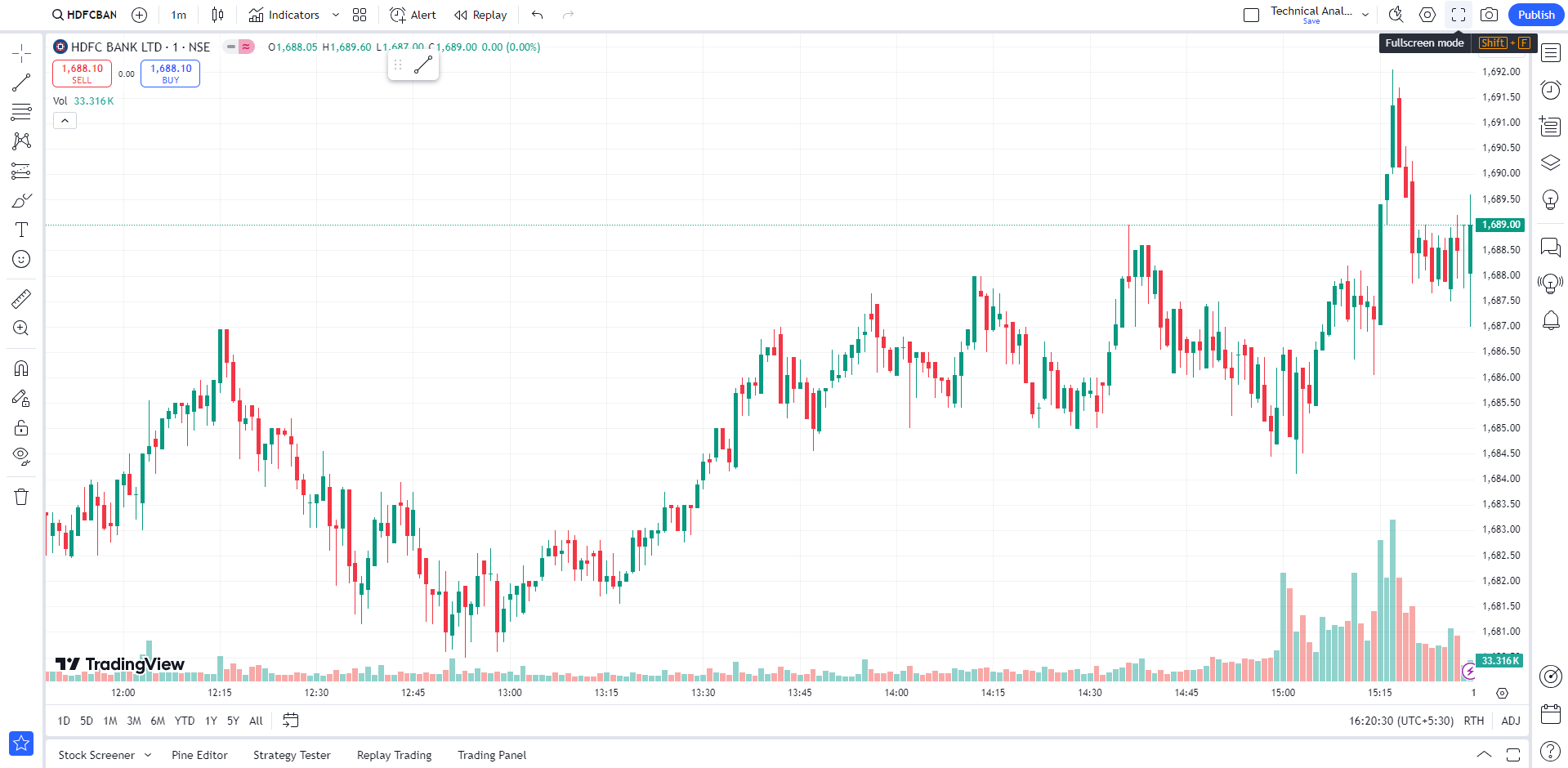
    Multiple Full-screen Charts View with Pop-Out Feature

    Now, you can open multiple charts for different stocks and also keep track of each one of them individually. With the help of a stock screener, you can easily filter and analyze stocks based on various criteria, ensuring you focus on the most relevant opportunities. You can also set your own timeframes in each chart, allowing you to concentrate on both short-term movements and long-term trends simultaneously.

    It is quite easy to switch between these different charts or view them all at once. Thus, making sure to manage multiple stocks at the same time. This setup helps you stay on top of the market whether you’re day trading on simply monitoring instruments.

    pop out fullscreen mode in stock chart

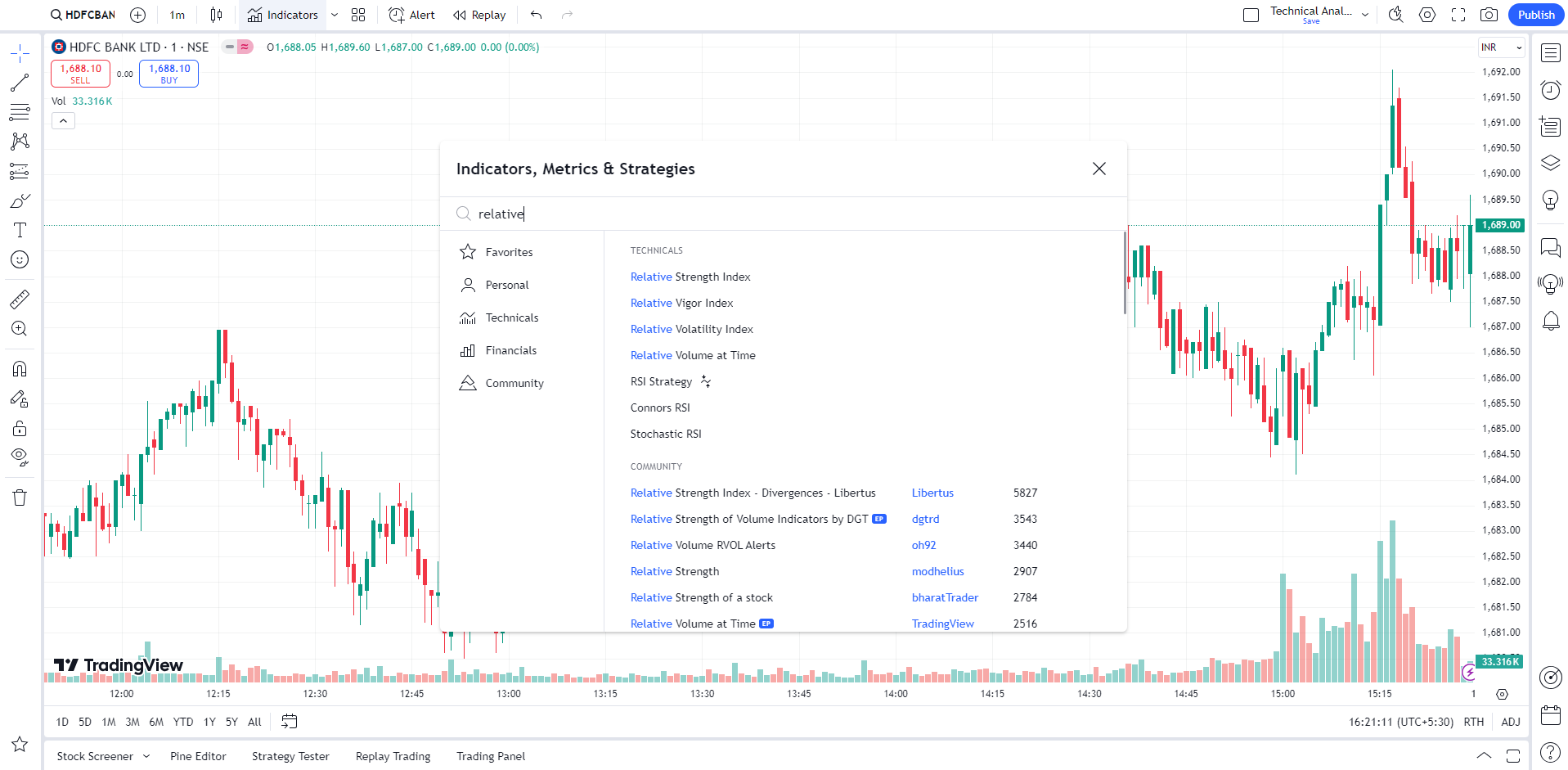
    Advanced Indicators and Drawing Tools

    With the new advanced indicators and drawing tools on TradingView, you can level up your technical analysis game. This new feature will help you track trends, identify support and resistance levels and also analyze chart patterns. Be it moving averages, oscillators, trendlines or Fibonacci retracements, this new feature gives you all the power to make informed decisions. This is perfect for advanced traders looking for more precision and depth in their analysis to spot opportunities and manage risks better.

    multiple advanced indicators

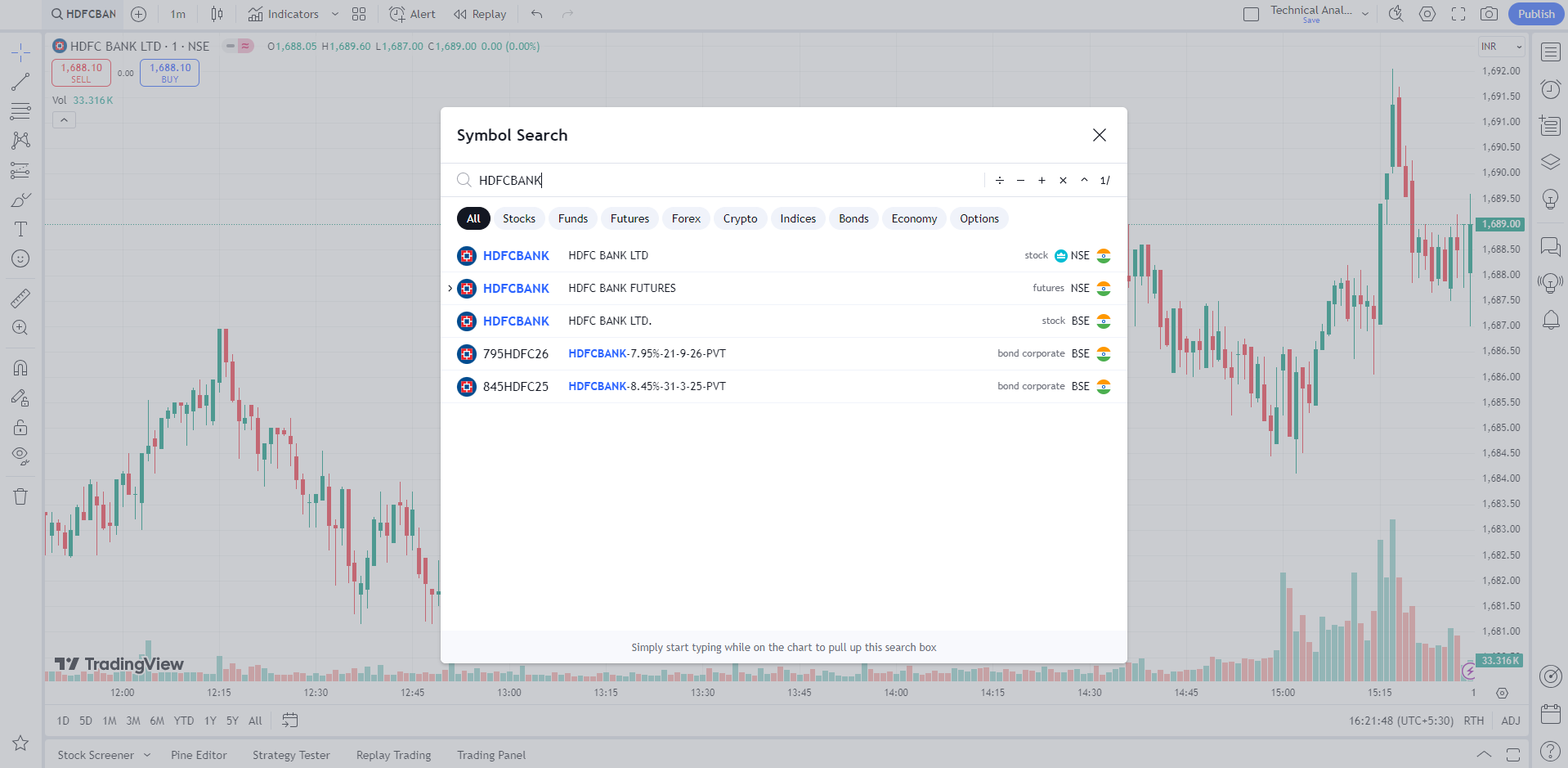
    Effortless Stock Search and Addition

    Adding new stocks with just a few keystrokes is now a reality. It has become a lot easier to find stocks and add them to your watchlist and your full screen chart. No need to navigate through different menus. This feature helps you to switch between different stocks, allowing you to focus on analysis and not on managing your setup. This feature will help you stay agile and efficient during the fast moving markets.

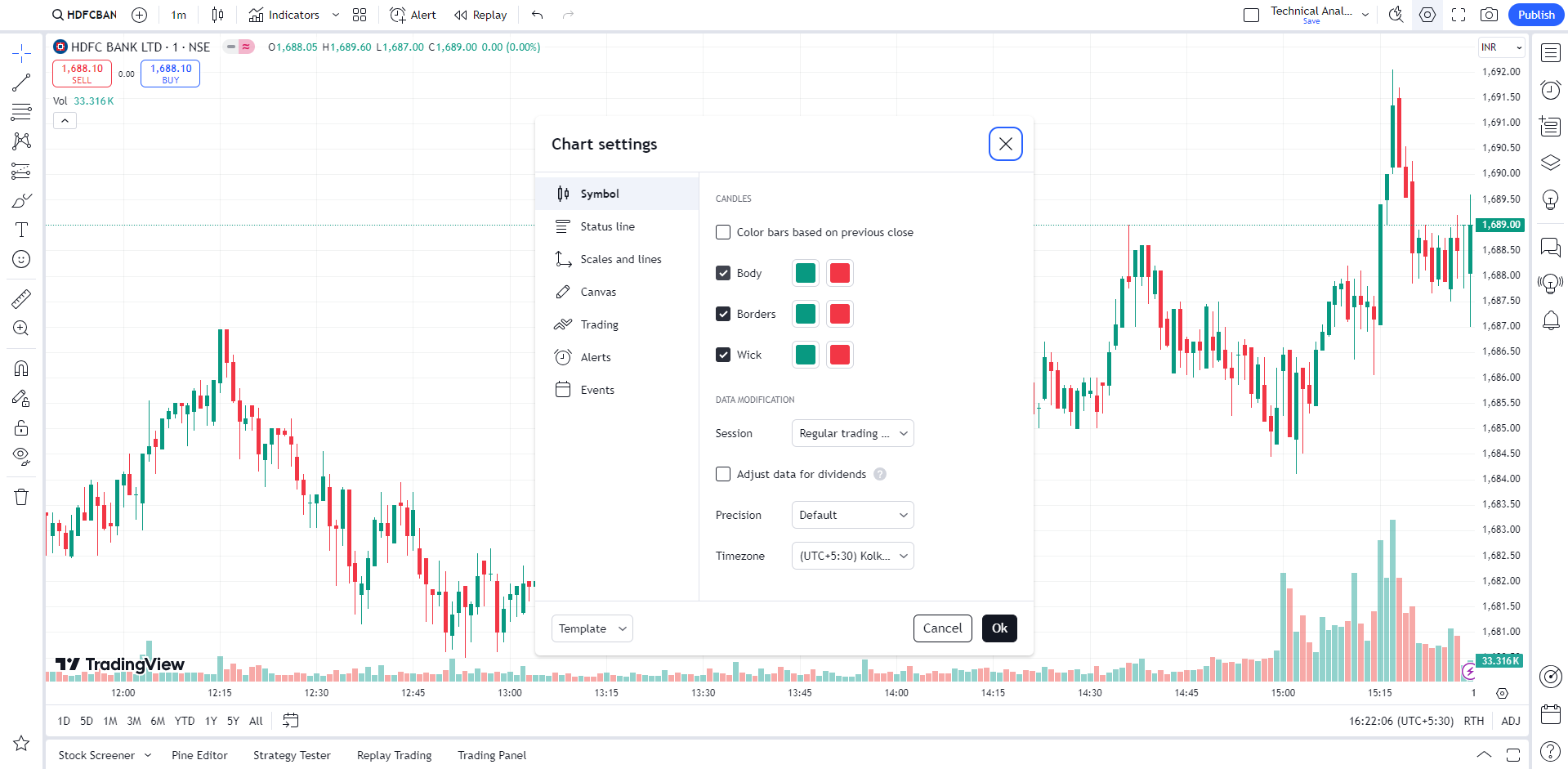
    Customizable Chart Colors and Lines

    Now, it is easy to customize your charts by choosing from a wide range of colors and lines to suit your preferences. Be it highlighting trends, making certain data stand out or simply creating a cleaner view. These customization options also allow you to design charts to enhance readability and customize your workflow to fit your needs. You can even adjust the thickness of lines or apply different color schemes to indicators, interpret data more clearly and efficiently. This feature helps traders to clearly see the charts and tailor it specifically to their needs.

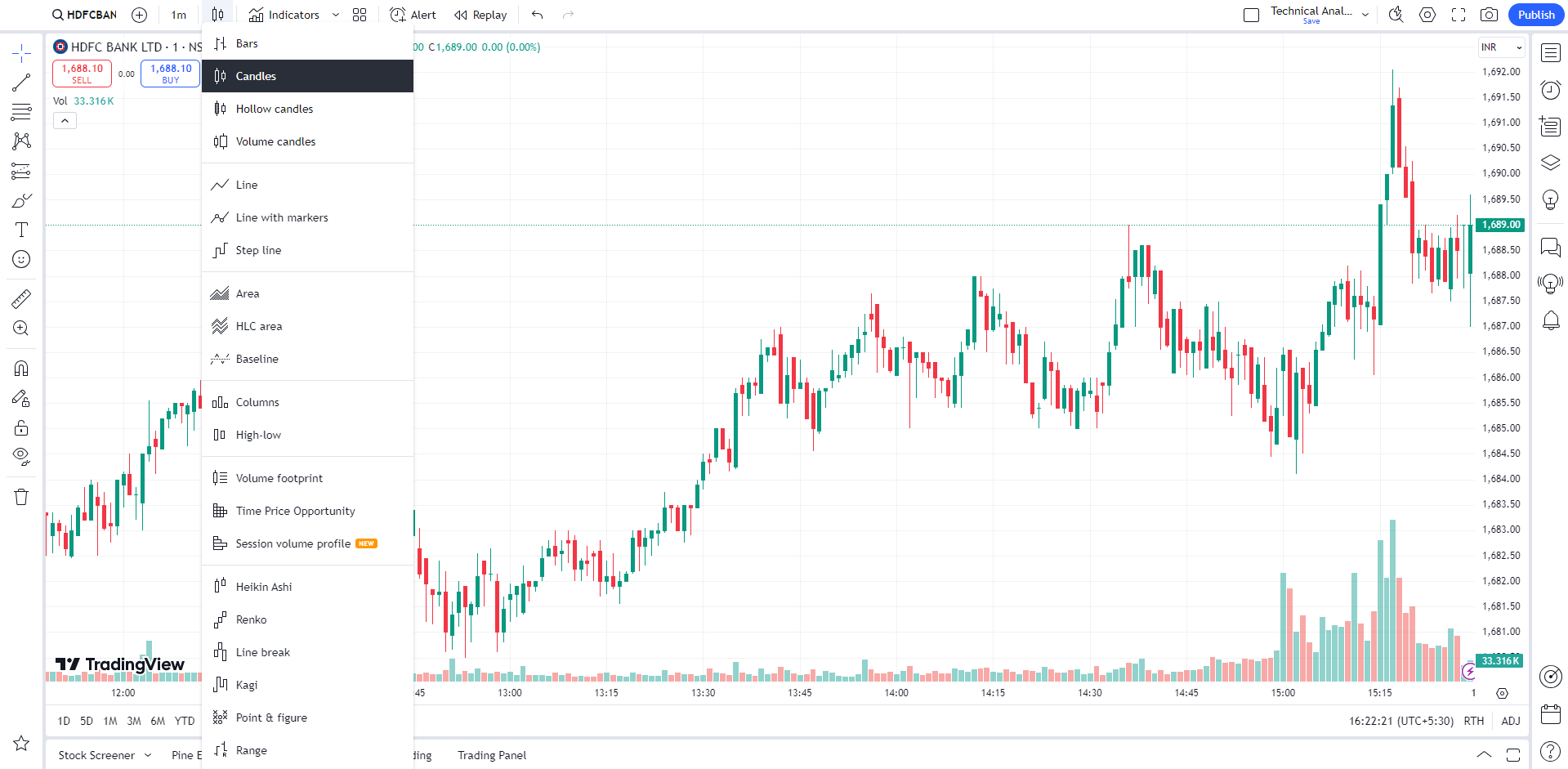
    Diverse Chart Types

    Be it candlesticks, bar charts, line graphs or even Heiken-Ashi, it is now easy to choose a chart type from all these varieties of chart types. Each chart type offers a different view on price action and allows you to gain deeper insights into market trends and patterns. Now, you can easily switch between them and choose the one that fits your trading strategy or current market conditions. This flexible approach allows us to best visualize the data that is meaningful and personalized for you.

    stock-chart-type

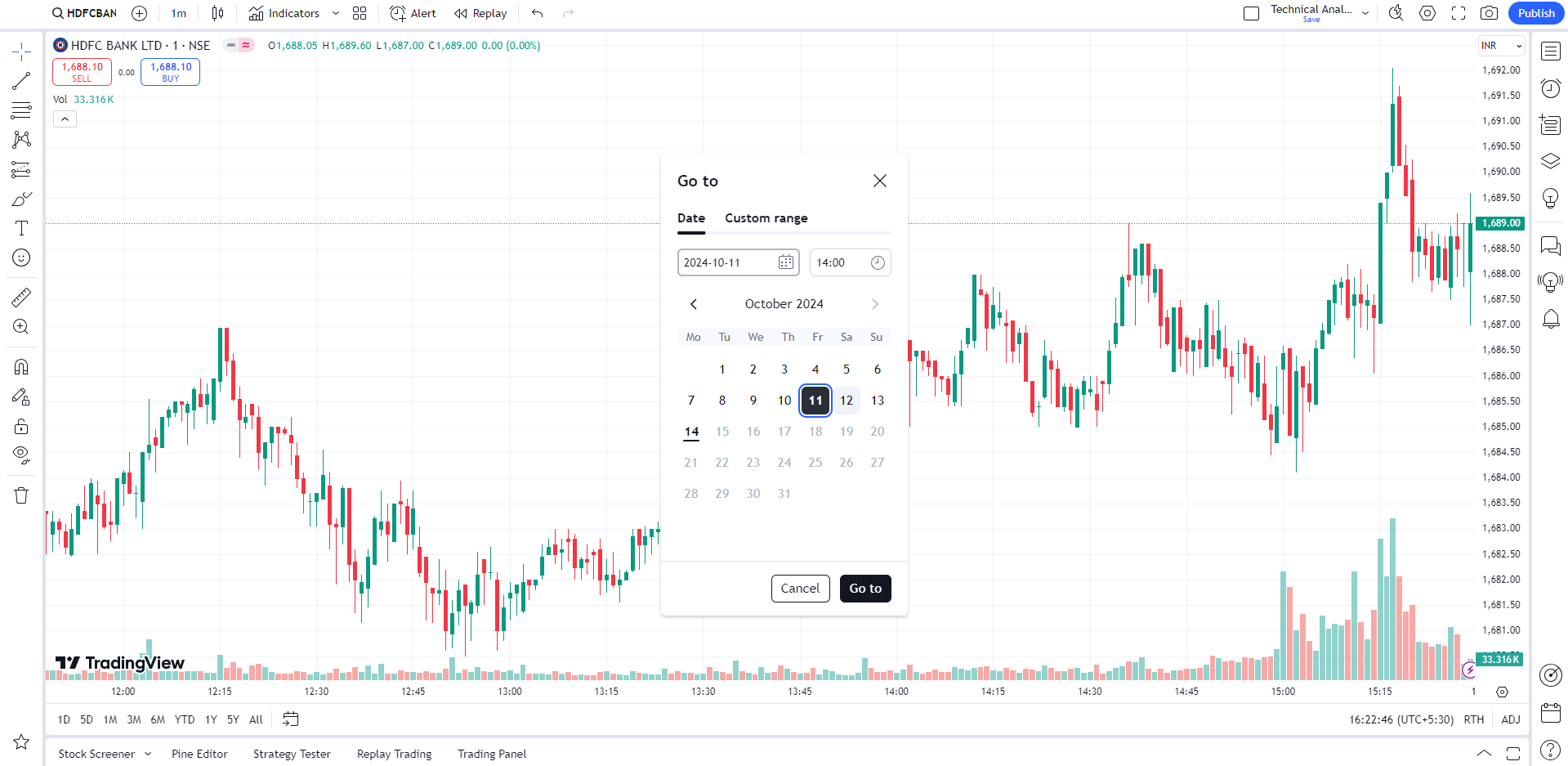
    Navigate to Specific Dates and Timeframes

    It has now become easy to explore a stock’s historical performance by jumping to specific dates and time frames in just a few clicks. If you’re looking to analyze how a stock behaved during a particular day or during a period, this will help you zoom in and out on the exact data you need. This is perfect for traders who rely on detailed historical data to spot trends, past market reactions or even fine tune or optimize their algo trading strategies. This will also help you stay focused on making informed decisions without getting lost in the data.

    timeframe

    This integration will allow you to dive deep into advanced technical analysis with familiar tools and layouts, making it easier to track your investments. You’ll also have access to real-time stock news, keeping you updated on market-moving events, and an economic calendar so you never miss key data releases that could impact your trading strategy.

    With everything in one place—from customizable charts to market insights—Findoc is set to become your go-to platform for algo trading. Get ready to take your investments to the next level—happy trading!

  • What is Beneficial Owner Identification Number (BO ID)?

    What is Beneficial Owner Identification Number (BO ID)?

    Your Demat account is like a safety vault where you keep all your investments in different securities, in electronic format. Now like for a physical vault, there is a code to open it, isn’t it? Similarly, for the Demat account, there is BO ID, which stands for Beneficial Owner Identification ID.

    In this article, we will discuss this BO ID in detail, how it works, why it is important, how you can get the same and a lot more. This is crucial for every investor with a Demat account.

    What is BOID?

    BO ID can be defined as a unique identification code, which is given to every Demat account holder whether he or she is registered with CDSL or NSDL. The Depository participant, or in simple terms the brokerage house, with which the investor/ trader has opened the Demat account assigns the BO ID.

    For CDSL Demat account holders, the BO ID is a 16-digit code, which is a mix of alphabets and numbers. The first eight characters represent the ID of the DP and the last eight represent the Client ID.

    For NSDL Demat accounts, the BO ID is a 16-digit code only but it always starts with IN and then the remaining 14 characters are numbers. For instance, an NSDL BO ID can be IN12345678910112 while a CDSL BO ID can look like 94982280ABZ012534.

    BO ID is crucial for every Demat account holder as it keeps track of all the transactions happening in the account and the movement of the assets in your account as well. This ID irrespective of the device from which you are logged in, or irrespective of what kind of securities you are trading, keep track of transactions and movement in the Demat account.

    How Does BOID Work?

    The BO ID is required at different phases of trading and investments. When a Demat account holder places an order, the brokerage house with which it is trading/ investment (DP) verifies the order using the BO ID of the account holder. Then the broker places the trade on the respective stock or other exchanges for further processing.

    Then BO ID is also required while transferring securities from one account to another. It is recorded at both the end of the transactions, making sure the securities go into the right account.

    Companies issuing dividends, bonus shares and other benefits to the investors use the BO ID of the Demat amount holder to transfer the benefits. So, this ID is essential at every step involved in investments and trading.

    Key Features of BO ID

    • Unique 16-digit Number: A BO ID is a fixed 16-digit code that identifies each Demat account holder in CDSL.
    • Combination of Two IDs: It is formed by combining the Depository Participant (DP) ID (first 8 digits given to the broker or bank) and the Client ID (last 8 digits unique to the investor).
    • Ownership Tracking: It keeps a clear record of who owns which shares, bonds, or mutual funds.
    • Transaction Security: Every buy, sell, or transfer of securities is directly connected with this ID.
    • Digital Record Keeping: Investors no longer need paper share certificates, as all data is stored safely online.
    • Regulatory Compliance: BO ID helps maintain transparency and follows the rules laid by market regulators.

    How to Create a BOID?

    For creating your BO ID, you have to follow the following steps –

    • Pick your DP: The BO ID is generated when you open a Demat amount with a depository participant (DP), or broker in a common language. Therefore, you need to pick the right brokerage house as your DP to create your BO ID. Findoc here can help you as it offers a wide range of brokerage services, which you can use for creating BO ID.
    • Demat Account opening: Once you pick your DP, for instance, you picked Findoc, you have to then open the Demat account. You need to share your details such as name, address, occupation, income, and other details for applying for the Demat account.
    • KYC: The next step is to upload all your documents that are required for opening and KYC verification. The documents you need to upload will include PAN, AADHAAR, Bank Statements, Photos, and other details.
    • Agreement: Once the KYC is done, you will be shared an agreement, which you need to sign and which is to ensure that you are obliging with the terms and conditions of the DP for opening the Demat and trading account.
    • Make payment: If there is any account opening charge, you need to pay the same to finalise the account opening procedure. With Findoc, you can open Demat account online free of cost and maintain it with just a one-time maintenance fee, isn’t that great?
    • Get your BO ID: Once all the above steps are completed, your Demat account will be live and your BO ID will be shared with you on your registered email id.

    How to Find BOID?

    Often people find it difficult to check their BOID. However, it is quite simple and doesn’t include many steps.

    All you need to do is to –

    • Open your Demat account, and log in using your username and password
    • Then go to the ‘My Profile section or ‘ Account information tab in the Demat account
    • Here you will find the BO ID under the account information or your profile. It is a 16-digit alphanumeric code.
    • You can note down the BO ID to use it without hassle in the future.

    Why BOID is So Important?

    The BO ID of a Demat account holder is important for so many aspects. Let’s understand each one of them –

    • Firstly, with the BO ID, the Demat account holder can have track of all his investments online as well as offline mode. He or she can track not just the portfolio valuation, but also each of the transactions that take place in the account.
    • This brings us to the safety quotient of the portfolio and the account holder. With the rise in cybercrimes, Demat accounts are not spared even. However, with the help of BO ID, you can keep track of each and every transaction done in the account, so, the risk of online theft comes down significantly.
    • Thirdly, with the help of BO ID, you can keep all the records of your transactions online. You do not have to maintain any physical document or journal. This makes the entire process easy and quick.

    While BO ID is highly useful for every investor and trader, they also need to keep in mind that this id has certain limitations as well.

    • For instance, the BO ID for a Demat account opened on CDSL will be different from a Demat account opened with NSDL.
    • Then this id cannot help in tracking any physical trading or investments done, without using the Demat account.
    • Another major concern is BO ID is entirely dependent on the DP, so choosing the right brokerage house with whom you open a Demat account is essential.

    Key Benefits of BO (Beneficial Owner) ID

    • Clear Identification: Ensures that every account holder has a separate code, reducing confusion between investors.

    • Simple Transactions: It allows smooth buying, selling, and transferring of securities without delays.

    • High Security: As every transaction is tied to a single BO ID, it reduces errors and the chance of fraud.

    • Accurate Records: Helps in maintaining precise statements of all investments and activities in the account.

    • Direct Corporate Benefits: Companies use BO ID details to credit dividends, rights issues, or bonus shares directly to investors’ Demat accounts.

    • Easy Account Access: Investors can check holdings, monitor past transactions, and download statements anytime.

    • Market Compliance: It plays a key role in making trading more transparent for regulators and depositories.

    • Boosts Investor Confidence: By offering a secure and organised system, it gives confidence to investors that their investments are well-protected and tracked.

    BO ID Limitations

    • Accuracy Required: The BO ID is linked with the account details given during registration. If those details are wrong, it may cause issues later in transactions.

    • Difficult for Multiple Accounts: Investors who hold more than one Demat account must remember and manage several BO IDs, which can sometimes be confusing.

    • Privacy Concerns: Since the BO ID is linked to personal and financial data, there is a risk if the information is not protected by the broker or depository.

    • Dependence on System and Rules: Any change in regulations or operational processes can impact how BO IDs work.

    • Processing Errors: Mistakes from the DP while linking BO IDs may cause delays in transfers or settlement.

    • Challenging for Beginners: New investors may take time to fully understand the role of BO ID in trading and investments.

    What is a Depository Participant (DP)?

    A Depository Participant (DP) is an agent or middleman that connects investors with the depository. A depository is an organisation that stores securities like shares, bonds, and mutual funds in electronic form. To open a Demat account, an investor must register with a DP. DPs can be banks, brokers, or financial companies that are authorised by SEBI. They handle essential services such as opening Demat accounts, updating records, settling trades, and helping investors with transfers. Each DP has a special code known as a DP ID, which is part of your 16-digit BO ID. Simply put, a DP sees to it that all securities are securely stored and transactions are executed in the right manner on behalf of the investor.

    How does a Demat Account differ from a DP ID?

    A Demat Account is a repository account where your shares, bonds, and securities are held in a digital format. It has a 16-digit Demat number that is allotted to each investor. This number is divided into two segments. The initial 8 digits are the DP ID, representing the opening bank, broker, or financial institution. The last 8 digits are the Client ID, that is, your account holder identity. Together, they form the entire BO ID. The DP ID by itself is the broker or bank’s and is the same for all clients of the same DP. The complete Demat account number (DP ID + Client ID), however, is yours as an investor.

    Conclusion

    Thus, the next time you open your Demat account; do not forget to look for your BO ID. Keep a note of the code for your future reference and ease of use. This ID is essential for every investment you make using your Demat account.

    Frequently Asked Questions

    If you forget your BO ID, you can refer to it in your Demat account statement, the trading app of your broker, or communicate with your Depository Participant. They will give you your 16-digit BO ID after authentication.

    A BO ID is always 16 digits long. The first 8 digits are the Depository Participant (DP) ID, and the remaining 8 digits are the distinctive Client ID provided for every Demat account holder.

    You can log in to your broker’s trading platform or check your Demat account statement. If your transactions and holdings show correctly under the BO ID, it means your account is active and valid.

    A BO ID acts like the account number for your Demat account. It ensures secure ownership tracking, smooth transactions, and correct credit of benefits such as dividends, rights issues, and bonus shares to your account.

    A DP ID is an identification number given to the broker or bank that opened your Demat account. It is important because it shows which Depository Participant manages your account and forms part of your BO ID.

    Yes, every Demat account must be opened through a Depository Participant (DP). The DP acts as a middleman between you and the depository, helping with account opening, trade settlements, and keeping your securities safe in electronic form.

  • Difference Between Debt and Equity Financing

    Difference Between Debt and Equity Financing

    Every business needs funds to start, run and prosper, isn’t it? For a business, usually there are two options to raise funds, one is debt and the other one is equity. In this article, we will talk about both debt financing and equity financing and see how they are different from each other. It is important for the investors to know how the company is funding its operations, and capital expenditures, as it plays a vital role in analysing the fundamentals of the company.

    What is Debt Financing?

    As the name suggests, Debt financing is a method of raising capital for your business by borrowing money. When a company borrows money, it has to repay the amount as well and that too along with interest. This is how any individual takes a loan from a bank and then repays the same along with the interest amount accrued on the loan. Companies, also avail loans from banks, private lenders, HNIs, and other sources.

    However, the loan is not the only form of debt financing. There are other types of debt financing as well which will discuss in the later segment of the article.

    The funds borrowed by the company can be used for running the business operations, paying off previous debts, or expanding the business or for any purpose, which benefits the business and the shareholders.

    Debt financing can be secured and unsecured too. When the borrower borrows the fund from the lender by keeping some kind of collateral for security, then it is known as secured debt financing, while on the other hand, if there’s no collateral kept for availing the debt, then it is an unsecured debt financing process.

    Types of Debt Financing

    By debt financing, often people think it is only about loans, but there is a lot more to the list.

    Bank loans: This is the most fundamental way of debt financing and also reasonable for the company as compared to other debt financing options, traditional bank loans come at lower interest rates. This in turn helps the company in saving on the interest part.

    Corporate bonds: Another popular way of raising funds using Debt financing tactics is corporate bonds. These are debt instruments, which businesses use for raising funds from the public. However, the bondholders or people who are buying these bonds do not get any ownership right over the company or any other rights. This is one of the major differences between debt and equity financing methods. 

    The investors who are buying the bonds are lending money to the company against which they will get a fixed interest, which is known as a coupon and the principal amount after a specified timeline. Therefore, both the company and the investors get benefits. The company get funds to finance its long-term goals, and expansion projects, while bondholders get fixed income against their investments.

    Non-convertible debentures: Indian companies to raise funds also use these debt instruments but these debt instruments are not convertible into equity shares. The investors get fixed interest on investing in these debt instruments as well.

    Convertible debentures: There is another way that corporates use to raise funds is convertible debentures. As the name suggests, these debentures can be converted into equity shares after a certain point in time. The interest rate on these debt instruments is comparatively lower as they offer the option to the investor to convert them into equity shares, get shareholding rights, and share the profits of the company.

    Small-business loans: Small-scale or MSMEs, which do not have the means of raising funds via bonds or debentures, often opt for business loans that are particularly meant for SMEs and MSMEs. These loans often come at a lower interest rate and longer tenure. However, there are multiple criteria, which businesses have to fulfil to avail of these loans.

    Line of credit: Another way of financing a business is using a line of credit. It is somewhat similar to an overdraft facility where the business is granted a lump sum amount of credit, but the interest is charged only on the amount, which is withdrawn or used by the business. 

    Suppose, ABC company has been granted Rs. 10 crores of line of credit in 2022. It used Rs. 3 crores in FY 2022-23. So, for FY 2022-23, the interest will be charged only on Rs. 3 crores and not on the entire line of credit of Rs. 10 crores. This helps the business reduce their interest cost, and use the credit facility as and when required.

    These are the most prominent debt financing options available in India, however, there are other options as well but they are not so commonly used by Indian businesses.

    Pros and Cons of Debt Financing

    So, now let’s see the benefits of using debt financing –

    1. Transparent Terms: When a company use debt financing, it has to give all the details of its business to the lenders, whether it is a bank, investors, or NBFCs. This makes the business transparent and helps the investors understand how the business is running, and its fundamentals.

    2. Raising funds without giving away ownership rights: The most important benefit of debt financing is that no lender gets any ownership right in the business/ company by lending the funds. Even when the general people purchase corporate bonds, they lend money to the company, not owning any shares. The business retains control over its operations and management when using debt financing.

    3. Tax benefits: The companies who uses debt financing, have to repay the amount borrowed along with interest. This interest is deductible from the profits of the company and thus benefits the company in tax savings.

    Now you know why the company can opt for debt financing, but there are certain drawbacks as well that the companies need to consider.

    Early repayments: If the company avails loans from traditional banks or NBFCs, the timeline for repayment starts right after a month or a few of disbursing the loan. This makes it difficult for companies to plan long-term projects, expansion using traditional loans especially. However, this is not the case with bonds, or debentures, as the company requires paying the interest on these debt instruments regularly and repaying the principal after the instruments mature.

    Put the business at stake: If a business borrows from multiple sources, and fails to repay on time, this put the impression of the company at stake. It makes it difficult for the business to get further loans. It also affects the business as creditors and investors may shy away from investing or doing business if the debt-to-equity ratio is high.

    So, now you know how debt financing works, or the options available for debt financing. Now let’s see equity finance’s meaning and the options available to a business for equity financing and its pros and cons.

    What is Equity Financing?

    Equity financing is a method of raising funds by selling the equity of a company. This is where the company sells its ownership to others for capital. A company can sell its equity to private financers, investors, HNIs, and the public. When any company launches an IPO, it means, it is selling its equity to the public. Thus, shareholders are also known as owners of the company. Unlike, in debt financing, the company doesn’t need to repay the amount raised via equity financing as the company also sold a portion of its equity to the investor.

    Types of Equity Financing

    Equity financing involves different options such as –

    Angel investing: If you monitor the economy and share market through equity stock watch tools on NSE and BSE , you will notice numerous start-ups seeking angel investors. Raising capital in the early stages can be challenging for these companies due to several factors. Potential investors might be unaware of the company, the business idea might be innovative yet not immediately viable, or there could be regulatory hurdles to overcome.

    In this phase, angel investors are the best solution for companies looking for equity financing. Angel investors are high net-worth individuals (HNIs) or investment firms, private lenders who invest in the business idea and the company against a portion of the equity in the company. 

    These angel investors analyse the business plan and see if there is a prospect for the business in the future. Usually, angel investors take equity shares or convertible debentures against their investments.

    Equity crowdfunding: This is quite picking up in India when it comes to equity financing. Crowdfunding is a method of equity financing where the company sells a small portion of its equity to a large number of people against a certain amount. However, there are different regulations on crowdfunding at present as well as it requires a lot of marketing and promotions.

    Venture capitalists: If a business is having high-risk but also high return potential, then venture capitalists take an interest in the business. They invest in the business in the initial stages of the business like angel investors. However, they take a higher portion of the equity in return for the capital they invest in the business since high-risk businesses often find it difficult to raise capital in the initial as well as later stages.

    IPO: When a company is well known, has a good client base and business is growing with a lot of prospects, and most importantly, can fulfil the SEBI criteria for launching an IPO and listing its shares on a stock exchange and going public, then the company can come up with an IPO for raising capital from the public in general. 

    With an IPO, the company sells its equity shares to a wide number of people who applies for the IPO, and in return, the investors get a stake in the company and ownership and voting rights.

    Pros and Cons of Equity Financing

    The benefits of equity financing include –

    No repayment of the funds: In equity financing, the company does not require to repay the funds it has raised. As it is selling its equity for getting those funds.

    No interest payments: Unlike in debt financing, the company does not require to pay any interest to the shareholders. If the company makes a profit, it may distribute a portion of the same in the form of dividends. The shareholders thus share the same risk and return ratio as the company, as they are also the owners. 

    If the company makes a profit, and the share price increases, it’s a benefit for the investors, while in case of the company making losses, and the share price going down, the investors have to share the loss too as the value of their investment will go down.

    Going public: Only with equity financing, a company can go public that is via the IPO route.

    Some shortcomings of equity financing which a company needs to identify are –

    Exceptional business prospects: Only around 10% of start-ups survive worldwide, and thus, being financed by an Angel Investor or Venture capitalist or getting crowdfunded is only possible if the business idea is disruptive, and have exceptional prospect.

    Regulatory requirements: For equity financing, there are different regulations, to which a company needs to adhere. This makes it difficult for companies to raise capital via equity financing when they need the capital the most.

    How to Choose Between Debt and Equity Financing?

    Choosing between debt and equity for financing a business is one of the vital decisions entrepreneurs need to take. However, it is never like only debt or only equity for financing a business. It can be a mix of both and that is how the businesses grow and prosper. However, one needs to know the ratio at which they need to mi debt and equity. 

    As per financing experts, and business leaders, a good debt-to-equity ratio is two. This means the company derives 2/3rd of its funds from debt while 1/3rd from equity financing. Now, this ratio can vary but the maximum is two for most of the industries except a few like mining industries or manufacturing companies.

    Conclusion

    So, whether you are an investor or a company, knowing about debt and equity differences can help you with your investments and financing respectively.