findocblog

Category: Mutual Fund

  • Significance of ratios for mutual funds

    Significance of ratios for mutual funds

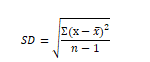
    sd

    Here, is the mean of returns, n is the number of returns, and x refers to each individual return. The operator denotes sum. Thus, to calculate standard deviation we subtract each return from its mean, square the deviations and sum them up. Then we divide them by the total number of returns less one, and square root the result. Let’s understand why we use standard deviation.

    Standard deviation is a measure of the distribution of a dataset in relation to its mean. Since all funds provide us with mean returns over a period, standard deviation is helpful in measuring the volatility of a fund. A higher standard deviation indicates that the fund’s price tends to fluctuate more, indicating unpredictability of returns. This unpredictability is taken as a proxy for risk in the market, making standard deviation an important metric to judge riskiness of investments.

    It is important to note that high or low standard deviation does not necessarily make a good or bad investment. All else constant, lower standard deviation indicates greater consistency of returns, but people who have a higher risk appetite might choose to go with funds that have slightly higher standard deviations. The choice depends entirely on the risk profile of the investor. Also, it must be kept in mind that standard deviation must not be studied in isolation. Because it measures volatility around the mean returns, studying the mean returns themselves is also important before picking the mutual fund that is right for you.

    ratio-2

    The purpose of the Sharpe ratio is to provide a measure that integrates risk and return. By adjusting the portfolio’s excess returns by its standard deviation, it essentially measures the returns a fund can generate for every unit of risk that it takes. A higher Sharpe Ratio is always desirable as it indicates that the fund is generating higher returns by taking lower risk.

    Another important measure of risk is the Beta of a mutual fund.

    coc

    Thus, it is calculated by dividing the covariance of a portfolio’s returns with the market/benchmark returns, divided by the variance of the market/benchmark returns.

    The purpose of beta is to track the volatility of your investment with relation to the market. The beta is centered around 1 as the market has a beta of 1. Thus, a portfolio with a beta higher than 1 is more volatile than the average market, while a beta lesser than 1 indicates lower-than-market volatility. Let’s take an example. Suppose a mutual fund has a beta of 1.15. This indicates that for every 1 point of deviation in the market, we expect the mutual fund’s value to change by 1.15 points. Thus, it is a fund which is riskier than the market.

    Much like standard deviation, we cannot establish a thumb rule as to whether a high or low beta is desirable. The beta is merely a measure of risk. Higher betas raise the expected return of an investment as the fund manager is taking on more risk, while lower betas indicate safer investments.

    The final ratio we will discuss is alpha.
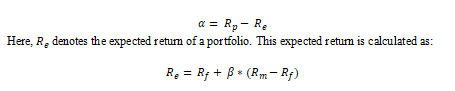
    final-ratio

    Alpha measures the excess returns a fund is generating as compared to its expected return, based on its beta. For example, an alpha of 3% indicates that the fund is generating 3% more returns than it is expected to, based on the riskiness of its investments. It is taken as a valuable measure of the quality of a fund and particularly its fund manager. We look for higher alphas as they indicate that the fund can generate market-beating returns.

    Finally, investors must keep in mind that ratios must be tracked over time. Consistency across them is important. For example, a fund with a positive alpha currently but with negative alphas in previous periods is something that must be treated with caution. So go ahead, study the ratios of your mutual funds, and decide what’s best for you based on your own risk profile.

  • What is a Private Client Group and How Do They Allocate Assets?

    What is a Private Client Group and How Do They Allocate Assets?

    If given a choice, would you prefer a ready-to-wear suit or a bespoke one? Most of us would choose the latter for one simple reason: customization to meet our needs. In the world of wealth creation, such a professionally customized portfolio service is termed a Private Client Group.

    This service is offered by banks or professional advisory groups and provides an exhaustive collection of research-based advisory services tailored to each client’s needs. It is an exclusive service designed to fulfill the exceptional investing requirements of privileged customers or high-net-worth individuals with capital of 25 lakhs and above.

    The basket of investment options can include equities, derivatives, mutual funds, IPOs, or a combination of these asset classes to maximize market opportunities. The achievement of specific goals is facilitated by optimal asset allocation, which depends on two broad factors:

    Time: The primary factor is the time frame within which the investor seeks to exit. If an investor has a long-term horizon, they can opt for higher potential returns with a potentially higher risk. Conversely, for a short-term investor, investment choices must be evaluated based on market volatility.

    Risk Tolerance: Risk tolerance determines the extent to which the portfolio can withstand risk. This can be assessed based on the investor’s economic/financial ability to tolerate risk and their emotional/psychological capacity to handle the unforeseen.

    The major objective behind asset allocation is to mitigate losses arising from one asset class in the portfolio with gains in another. In short, the portfolio of such superior clients is well-equipped to handle risks in the form of a bear market or any sector-specific recession.

    Conclusion

    Private Client Groups provide high-net-worth individuals with personalized investment strategies that focus on optimizing asset allocation based on time horizons and risk tolerance. By tailoring portfolios to meet specific needs and goals, they help clients navigate the complexities of financial markets, aiming to preserve and grow wealth even amidst uncertainties.

  • Mutual Funds and its importance in daily life

    Mutual Funds and its importance in daily life

    It was Madhu’s 25th birthday, but she was far away from home. She wasn’t very familiar with her new friends in the class, so she dropped her celebration plans and decided to return home early. But when her class friends got to know about her birthday, do you know what happened next? Of course, they bumped into her and excitedly asked “Where is the Party today?”

    no-money-no-party

    It was indeed a good reason to meet up and get to know her new classmates in the university. So, she anxiously agreed but realized she had no sufficient money to feed her friends for the party. Disappointingly, she changed her plans and told her friends that ‘No Money, No Party.

    Mutual Fund

    There was this new restaurant opened in their neighborhood that served delicious burgers. But it looked like the plans got canceled. But, No, it wasn’t like this. There were 10 people including Madhu, and they all mutually decided to pour in little money, and together they paid while also enjoying the burgers.

    The Connection!

    So, what we are trying to explain to you is Mutual Funds are like a birthday party, but there is no one host in it. Everyone pays some amount of money that gets collected and is further invested in stocks, money market instruments, assets, and bonds by a professional fund/money manager on behalf of you.

    Also, Mutual Funds has a specifically defined portfolio designed according to your investment requirements. So you gain what you desire. It is both a short-term and long-term investment that offers incredible financial benefits to you. When you plan to invest in Mutual Funds, you will be asked these questions that help the analyst assist your risk-assessment capabilities and develop a portfolio.

    Invest in Mutual Funds

    invest-in-mutual-funds

    How much is your risk exposure?

    – It means how much money are you willing to invest in Mutual Funds.

    How much is your time frame?

    – It emphasizes short/long term investment or an individual time horizon respectively.

    What is your age?

    – There are different kinds of Mutual Funds like equity funds that fit best for people who are in the 20-45 age bracket and retirement funds for people who fall into the 60-70 age bracket. So, again age is a major factor in Mutual Funds, it is always great if you start young, but even if you start a bit older, it will still give you a lot of leverage.

    How do you want to invest?

    – SIP or lump sum are two ways you can invest in Equity Mutual Funds. SIP or Systematic Investment Plan is a way through which you can contribute small but regular amounts. Both of these provide leverage so that they can help you analyze which is more suitable for you.

    Portfolio development is extremely important, and thus you must answer these questions with clarity. You can invest into several categories based on your investment purpose that matches your portfolio. Your investment is diversified across different securities, and you can easily start with low investment amounts. You can even start with investing Rs. 100 only!

    In simple words, when you invest or buy a unit of Mutual Funds (also called a share of Mutual Funds) you are investing into that share’s portfolio value. It is similar to evaluating the performance of a share. This is a reason why the price of the Mutual Funds is called NET ASSET VALUE or NAV.

    NAV keeps on changing every day because of the volatile nature of the market value of the assets. So NAV is also like a navigator that helps you understand the performance of the scheme you have invested in. It can give you a long-term analysis for further speculations.

    Remember that restaurant where Madhu and her friends enjoyed burgers? In that restaurant’s menu, there were more items to give a variety of choices to the customers.

    happy-birthday-madhu

    It is similar to Mutual funds investment, here, you get to choose from different types of Mutual Funds available in the market like open-ended or close-ended funds. Then comes equity funds which also include sector-specific or index funds. Then debt funds or fixed-income funds, balanced funds, tax-saving funds, and retirement funds. These are some significant Mutual Funds that exist in the market today.

    Also, some great advantages that are offered by this kind of investment are that they are easy to access because they are liquid investments, professionally managed by a proficient investor, provide higher expected returns with diversified investment.

    Mutual Funds are inclined towards growth investing, but we always urge you to read the complete details before making a move.

    Also, do you know what advice Madhu’s friends give her in the cafe?

    It was to start investing in mutual funds so that Madhu can enjoy her next birthday with her own savings from the returns of mutual funds without asking for help from anyone. And make her own choices and enjoy financial freedom just like she wishes to.