findocblog

Blog

  • Gold Hits Record High Amid Tariff Uncertainty – Can It Reach ₹1 Lakh Soon?

    Gold Hits Record High Amid Tariff Uncertainty – Can It Reach ₹1 Lakh Soon?

    Gold prices have surged to record highs, driven by economic uncertainty and geopolitical risks, raising speculation about whether the precious metal can touch the ₹1,00,000 per 10 grams milestone in the near future. The latest rally in gold prices has been fueled by growing concerns over global trade policies, particularly the tariff measures announced by the United States, as well as the impact of central bank decisions and inflationary pressures.

    Gold Surges to Record Highs!

    In the domestic market, gold futures on the Multi Commodity Exchange (MCX) touched an all-time high of ₹88,672 per 10 grams on March 18. By the afternoon session, the metal was trading 0.65% higher at ₹88,595 per 10 grams. Meanwhile, in international markets, gold prices reached an unprecedented $3,037.60 per ounce, marking a strong uptrend as investors sought safe-haven assets amid escalating economic and geopolitical tensions.

    Experts believe the current bullish trend in gold is primarily driven by the uncertainty surrounding the U.S. administration’s tariff policies, which have led to a decline in investor confidence. Concerns over a potential economic slowdown have prompted investors to hedge their risks by increasing their exposure to gold, historically regarded as a reliable store of value during times of financial instability.

    Key Drivers Behind Gold’s Rally

    Several factors have contributed to the recent surge in gold prices:

    1. Trade War and Economic Uncertainty

    The U.S. government’s new tariff measures on various imports, including metals and electronics, have heightened fears of a prolonged trade war. Such measures often lead to economic slowdowns, prompting investors to flock to gold as a hedge against market volatility.

    2. Central Bank Buying

    Major central banks across the globe have been accumulating gold reserves as part of their diversification strategy. Central bank purchases have provided significant support to gold prices, reinforcing investor confidence in the long-term value of the metal.

    3. Dollar Index Decline

    Gold is priced in U.S. dollars, and any decline in the dollar index makes it more affordable for investors holding other currencies. The dollar index has weakened in recent weeks, further boosting gold’s appeal.

    4. Geopolitical Risks

    Rising tensions in the Middle East, coupled with global economic instability, have added to gold’s safe-haven appeal. Investors often turn to gold during times of geopolitical crises as a means of protecting their wealth.

    5. U.S. Federal Reserve Policy

    The Federal Open Market Committee (FOMC) is expected to keep interest rates unchanged in its upcoming meeting. While higher interest rates tend to weigh on gold prices by making fixed-income investments more attractive, a potential rate cut later in the year could provide further upside for gold.

    Can Gold Reach ₹1 Lakh?

    With gold trading at record highs, the possibility of it reaching ₹1,00,000 per 10 grams has become a widely discussed topic. However, experts believe that while gold is on a strong upward trajectory, reaching this milestone in the immediate future is unlikely.

    According to market analysts, for gold to cross ₹1,00,000 per 10 grams, global prices would need to climb to around $3,300 per ounce, coupled with a weaker Indian rupee against the U.S. dollar. Current projections suggest gold could reach $3,100 per ounce in the near term, which translates to approximately ₹91,500-92,000 per 10 grams in the Indian market.

    While achieving ₹1,00,000 per 10 grams this year may be difficult, analysts suggest that gold could potentially reach this level within the next two to three years if current growth trends continue. Over the past decade, gold has delivered a compound annual growth rate (CAGR) of around 10%, indicating a steady long-term uptrend.

    Conclusion

    Gold’s record-breaking rally has reaffirmed its status as a safe-haven asset in times of uncertainty. While reaching ₹1,00,000 per 10 grams in the immediate future may be challenging, the long-term outlook for gold remains highly optimistic. Investors should closely monitor global economic developments, central bank policies, and geopolitical risks to make informed decisions about their gold investments.

    Disclaimer: This article is for informational purposes only and should not be considered as investment advice.

  • KSB Ltd Q3 FY25 Results: Net Profit Rises 32.39% to Rs. 699 Million

    KSB Ltd Q3 FY25 Results: Net Profit Rises 32.39% to Rs. 699 Million

    KSB Ltd Q3 FY25 Results

    Parameter Q3 FY25 Q3 FY24 % Change
    Sales (Rs. Million) 7264.00 6026.00 20.54%
    Other Income (Rs. Million) 102.00 65.00 56.92%
    PBIDT (Rs. Million) 1086.00 874.00 24.26%
    Interest (Rs. Million) 4.00 16.00 -75.00%
    PBDT (Rs. Million) 1082.00 858.00 26.11%
    Depreciation (Rs. Million) 144.00 137.00 5.11%
    PBT (Rs. Million) 938.00 721.00 30.10%
    TAX (Rs. Million) 239.00 193.00 23.83%
    Deferred Tax (Rs. Million) -11.00 -5.00 120.00%
    PAT (Rs. Million) 699.00 528.00 32.39%
    Equity (Rs. Million) 348.00 348.00 0.00%
    PBIDTM (%) 14.95% 14.50% 3.08%

    KSB Ltd delivered a strong financial performance in the third quarter of FY25. The company reported a 20.54% increase in sales, reaching Rs. 7,264 million compared to Rs. 6,026 million in the same quarter last year. This growth reflects the company’s ability to capture market demand effectively.

    KSB Ltd’s other income rose by 56.92%, totaling Rs. 102 million against Rs. 65 million in the previous year’s corresponding quarter. This significant increase in other income contributed to the overall growth in profitability.

    The Profit Before Interest, Depreciation, and Tax (PBIDT) climbed by 24.26% to Rs. 1,086 million from Rs. 874 million. This rise indicates efficient cost management and better operational performance. The company reduced its interest expenses by 75%, bringing it down to Rs. 4 million from Rs. 16 million.

    The Profit Before Depreciation and Tax (PBDT) increased by 26.11% to Rs. 1,082 million, compared to Rs. 858 million in the corresponding quarter of the previous year. This growth highlights the company’s solid operational capabilities and cost efficiency.

    KSB Ltd recorded a 5.11% increase in depreciation expenses, which stood at Rs. 144 million compared to Rs. 137 million. Despite the rise in depreciation, the Profit Before Tax (PBT) surged by 30.10%, reaching Rs. 938 million from Rs. 721 million.

    The company’s tax expenses increased by 23.83% to Rs. 239 million from Rs. 193 million. KSB Ltd reported a deferred tax benefit of Rs. 11 million, which improved from Rs. 5 million in the same quarter last year.

    KSB Ltd’s Profit After Tax (PAT) grew by 32.39% to Rs. 699 million from Rs. 528 million. This increase reflects the company’s strong revenue growth and improved cost efficiency. The equity remained unchanged at Rs. 348 million.

    The company’s Profit Before Interest, Depreciation, and Tax Margin (PBIDT Margin) improved slightly to 14.95%, compared to 14.50% in the previous year. This rise demonstrates the company’s ability to maintain profitability despite increased expenses.

    Overall, KSB Ltd delivered a robust financial performance in Q3 FY25, driven by strong sales growth, better operational efficiency, and a significant increase in net profit.

    Disclaimer: This blog is for informational purposes only and should not be considered as financial advice or any buy/sell recommendations.

  • Sylph Technologies Q3 FY25 Results: Net Loss Rises by 102.09%, Sales Drop to Zero

    Sylph Technologies Q3 FY25 Results: Net Loss Rises by 102.09%, Sales Drop to Zero

    Sylph Technologies Ltd Q3 FY25 Results

    Metric Q3 FY25 Q3 FY24 % Change
    Sales (Rs. Million) 0.00 86.29 -100%
    Other Income (Rs. Million) 0.22 0.98 -77.55%
    PBIDT (Rs. Million) -17.17 -6.10 -181.48%
    Tax (Rs. Million) -1.73 1.54 -212.34%
    PAT (Rs. Million) -15.44 -7.64 -102.09%
    Equity (Rs. Million) 857.60 159.50 437.68%
    PBIDT Margin (%) 0.00% -7.07%

    Sylph Technologies Ltd released its Q3 FY25 financial results, showing significant changes across multiple financial metrics.

    Sales and Other Income

    The company reported zero sales for the quarter, marking a 100% decline compared to Rs. 86.29 million in Q3 FY24. Other income also dropped by 77.55%, falling to Rs. 0.22 million from Rs. 0.98 million in the same period last year. Year-to-date other income increased by 149.84%, reaching Rs. 7.72 million from Rs. 3.09 million in FY24.

    Profitability Metrics

    Sylph Technologies Ltd’s Profit Before Interest, Depreciation, and Tax (PBIDT) fell sharply. The company reported a loss of Rs. 17.17 million, which reflects a 181.48% increase in losses compared to a Rs. 6.10 million loss in Q3 FY24. On a year-to-date basis, PBIDT stood at Rs. -10.52 million, reflecting a 101.92% decline compared to Rs. -5.21 million last year.

    The company incurred zero interest expenses during the quarter, similar to Q3 FY24. Profit Before Depreciation and Tax (PBDT) also reflected the same Rs. -17.17 million loss, marking a 181.48% rise in losses from the previous year’s figure of Rs. -6.10 million.

    Tax and Net Profit

    Sylph Technologies Ltd reported a tax expense of Rs. -1.73 million, a significant drop from Rs. 1.54 million last year, reflecting a -212.34% change. The net profit (PAT) decreased by 102.09%, with the company reporting a loss of Rs. -15.44 million, compared to Rs. -7.64 million in Q3 FY24.

    Year-to-date net profit stood at Rs. -10.52 million, showing a 50.72% decrease from Rs. -6.98 million in the previous financial year.

    Equity and Margins

    The company increased its equity significantly to Rs. 857.60 million, reflecting a 437.68% rise compared to Rs. 159.50 million in Q3 FY24. PBIDT margins also took a hit, reporting 0.00% for this quarter compared to -7.07% in the same period last year.

    Final Thoughts

    Sylph Technologies Ltd experienced zero sales, significant losses in PBIDT and PAT, and a substantial increase in equity. Despite growth in year-to-date other income, the company’s core profitability remains under pressure due to rising expenses and falling revenues.

    Disclaimer: This blog is for informational purposes only and should not be considered as financial advice or any buy/sell recommendations.

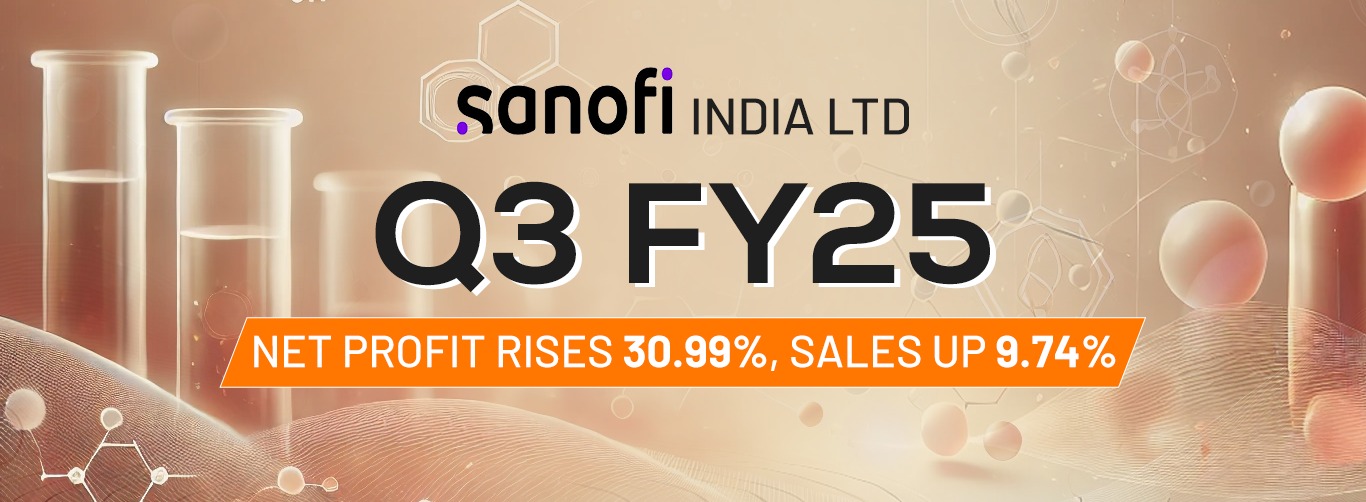
  • Sanofi India Ltd Q3 FY25: Net Profit Rises 30.99%, Sales Up 9.74%

    Sanofi India Ltd Q3 FY25: Net Profit Rises 30.99%, Sales Up 9.74%

    Sanofi India Ltd Q3 FY25 Results

    Metric Q3 FY25 (Rs. Million) Q3 FY24 (Rs. Million) % Change
    Sales 5,149 4,692 9.74%
    Other Income 59 94 -37.23%
    PBIDT 1,242 1,090 13.94%
    PBT 1,222 993 23.06%
    PAT 913 697 30.99%

    Sanofi India Ltd reported a solid financial performance for Q3 FY25. The company’s net profit increased by 30.99% to Rs. 913 million, compared to Rs. 697 million in the same quarter last year. The company’s sales also grew by 9.74%, reaching Rs. 5,149 million, up from Rs. 4,692 million in Q3 FY24.

    The company’s other income decreased by 37.23% to Rs. 59 million, compared to Rs. 94 million in the previous year’s quarter. Despite the decline in other income, the profit before interest, depreciation, and tax (PBIDT) rose by 13.94%, reaching Rs. 1,242 million from Rs. 1,090 million.

    Sanofi India Ltd maintained a steady interest expense of Rs. 4 million, showing no change from the previous year’s quarter. The company’s profit before depreciation and tax (PBDT) increased by 21.36% to Rs. 1,318 million, compared to Rs. 1,086 million in Q3 FY24.

    Depreciation costs rose slightly by 3.23% to Rs. 96 million, up from Rs. 93 million. The profit before tax (PBT) stood at Rs. 1,222 million, marking a 23.06% increase compared to Rs. 993 million in the same quarter of the previous year.

    The company paid Rs. 309 million in taxes, reflecting a 4.39% increase from Rs. 296 million last year. Deferred tax increased by 20%, reaching Rs. 30 million from Rs. 25 million.

    Sanofi India Ltd maintained its equity base at Rs. 230 million, showing no changes from the previous quarter. The PBIDT margin improved to 24.12%, reflecting a 3.83% increase from 23.23% last year.

    The company’s year-to-date figures also showed a modest increase in sales by 0.86% to Rs. 20,132 million. However, other income declined sharply by 73.04% to Rs. 165 million. Despite this, the profit after tax (PAT) increased by 30.99% to Rs. 3,137 million, up from Rs. 2,397 million.

    Sanofi India Ltd’s strong Q3 FY25 performance reflects its ability to maintain growth in core operations while managing costs effectively. The steady rise in net profit and sales highlights the company’s solid market position and efficient operational strategy.

    Disclaimer: This blog is for informational purposes only and should not be considered as financial advice or any buy/sell recommendations.

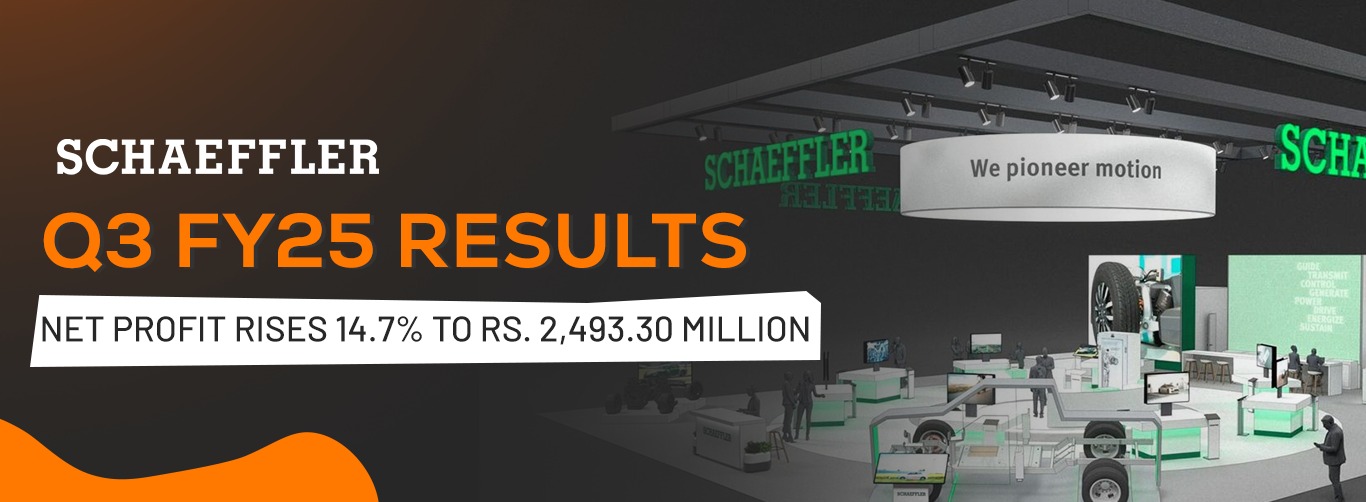
  • Schaeffler India Q3 FY25 Results: Net Profit Rises 14.7% to Rs. 2,493.30 Million

    Schaeffler India Q3 FY25 Results: Net Profit Rises 14.7% to Rs. 2,493.30 Million

    Schaeffler India Ltd Q3 FY25 Results

    Metric Q3 FY25 (Rs. Million) Q3 FY24 (Rs. Million) % Change
    Sales 20,823.10 18,550.70 12.25%
    Other Income 365.10 305.00 19.70%
    PBIDT 4,141.40 3,585.90 15.49%
    Interest 6.10 9.80 -37.76%
    PBT 3,387.30 2,958.20 14.51%
    TAX 894.00 784.40 13.97%
    PAT 2,493.30 2,173.80 14.70%
    PBIDT Margin (%) 19.89% 19.33% 2.89%

    Schaeffler India Ltd delivered a solid performance in Q3 FY25, showcasing growth across key financial metrics. The company increased its sales by 12.25% year-on-year, reaching Rs. 20,823.10 million compared to Rs. 18,550.70 million in Q3 FY24. This rise reflects higher demand and better market conditions.

    The company’s other income grew by 19.70%, totaling Rs. 365.10 million compared to Rs. 305.00 million in the same quarter last year. This increase in additional revenue streams contributed positively to the overall performance.

    Schaeffler India Ltd boosted its Profit Before Interest, Depreciation, and Tax (PBIDT) by 15.49%, reporting Rs. 4,141.40 million against Rs. 3,585.90 million in Q3 FY24. Lower interest expenses, which dropped by 37.76% to Rs. 6.10 million from Rs. 9.80 million, further strengthened the company’s financial position.

    The Profit Before Depreciation and Tax (PBDT) increased by 17.18%, reaching Rs. 4,135.30 million, up from Rs. 3,529.10 million in the previous year. The company’s depreciation expenses rose by 31.02%, totaling Rs. 748.00 million compared to Rs. 570.90 million, reflecting investments in infrastructure and technology.

    Schaeffler India Ltd improved its Profit Before Tax (PBT) by 14.51%, reaching Rs. 3,387.30 million compared to Rs. 2,958.20 million in Q3 FY24. Tax expenses increased by 13.97% to Rs. 894.00 million from Rs. 784.40 million, aligned with the higher profit.

    Despite a deferred tax liability of Rs. 16.90 million, which reversed from a credit of Rs. -15.20 million last year, the company increased its Profit After Tax (PAT) by 14.70%. PAT stood at Rs. 2,493.30 million, up from Rs. 2,173.80 million in the previous quarter.

    The company’s PBIDT margin improved slightly to 19.89% from 19.33%, reflecting better operational efficiency and cost management.

    Schaeffler India Ltd continues to focus on growth and operational excellence, as reflected in these robust Q3 FY25 financial results. With strong sales performance and effective cost control, the company is well-positioned to maintain its growth trajectory in the coming quarters.

    Disclaimer: This blog is for informational purposes only and should not be considered as financial advice or any buy/sell recommendations.

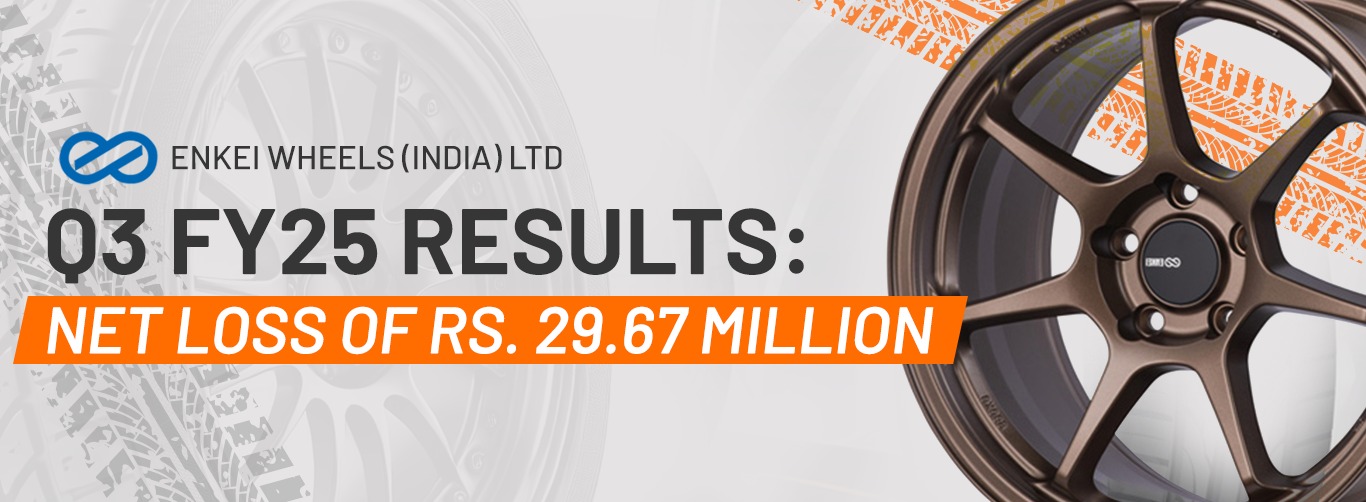
  • Enkei Wheels (India) Ltd Q3 FY25 Results: Net Loss of Rs. 29.67 Million

    Enkei Wheels (India) Ltd Q3 FY25 Results: Net Loss of Rs. 29.67 Million

    Enkei Wheels (India) Ltd Q3 FY25 Results

    Metric Q3 FY25 (202412) Q3 FY24 (202312) % Change
    Sales (Rs. Million) 1952.00 2002.47 -2.52%
    Other Income (Rs. Million) 53.67 -48.15 -211.46%
    PBIDT (Rs. Million) 132.13 161.67 -18.27%
    Interest (Rs. Million) 37.45 28.52 31.31%
    PBDT (Rs. Million) 94.68 133.15 -28.89%
    Depreciation (Rs. Million) 131.60 123.90 6.21%
    PBT (Rs. Million) -36.92 9.25 -499.14%
    TAX (Rs. Million) -7.25 -11.85 -38.82%
    Deferred Tax (Rs. Million) 0.00 -11.85 -100.00%
    PAT (Rs. Million) -29.67 21.10 -240.62%
    Equity (Rs. Million) 89.87 89.87 0.00%
    PBIDTM (%) 6.77 8.07 -16.16%

    Enkei Wheels (India) Ltd recently released its Q3 FY25 financial results, revealing both challenges and positive takeaways. The company reported a slight decline in sales but showed improvement in other areas like interest income and depreciation.

    Sales and Revenue Performance

    Enkei Wheels (India) Ltd reported sales of Rs. 1952 million in Q3 FY25, which shows a decrease of 2.52% compared to Rs. 2002.47 million in Q3 FY24. Despite the decline in sales, the company generated Rs. 53.67 million in other income, marking a significant turnaround from the negative Rs. 48.15 million recorded in the previous year.

    Profitability Metrics

    The company’s Profit Before Interest, Depreciation, and Tax (PBIDT) fell by 18.27%, reaching Rs. 132.13 million compared to Rs. 161.67 million in the same quarter last year. Interest costs increased by 31.31% to Rs. 37.45 million, indicating higher borrowing expenses during this period.

    Profit Before Depreciation and Tax (PBDT) stood at Rs. 94.68 million, marking a decrease of 28.89% from Rs. 133.15 million in Q3 FY24. Meanwhile, depreciation costs rose by 6.21% to Rs. 131.60 million, reflecting the company’s increased investment in fixed assets.

    Net Profit and Tax Impact

    The company reported a loss before tax (PBT) of Rs. 36.92 million, a significant drop from the profit of Rs. 9.25 million in the previous year. Tax expenses fell by 38.82% to Rs. 7.25 million. Deferred tax expenses dropped sharply to zero from Rs. 11.85 million, which positively impacted the overall tax burden.

    As a result, the company recorded a net loss (PAT) of Rs. 29.67 million, compared to a profit of Rs. 21.10 million in Q3 FY24. This translates to a decline of 240.62% in net profit.

    Operational Efficiency

    The PBIDT margin dropped by 16.16%, settling at 6.77% compared to 8.07% in the previous year. Despite operational challenges, the company’s equity capital remained unchanged at Rs. 89.87 million.

    Year-to-Date and Year-End Summary

    For the year-to-date period, sales increased by 17.92% to Rs. 8444.63 million from Rs. 7161.37 million. Interest expenses rose by 31.04% to Rs. 140.16 million. The profit before tax for the year decreased by 86.11% to Rs. 22.30 million. Net profit for the year declined by 77.29% to Rs. 26.56 million.

    Final Thoughts

    Enkei Wheels (India) Ltd continues to navigate through a challenging financial landscape. While the increase in sales and reduction in deferred tax provide positive signals, the rising interest costs and declining profitability indicate areas requiring strategic focus.

    Disclaimer: This blog is for informational purposes only and should not be considered as financial advice or any buy/sell recommendations.

  • IOL Chemicals Announces 1:5 Stock Split, Shares Jump Over 10%

    IOL Chemicals Announces 1:5 Stock Split, Shares Jump Over 10%

    IOL Chemicals & Pharmaceuticals Ltd, a leading manufacturer of active pharmaceutical ingredients (APIs) and specialty chemicals, has announced a 1:5 stock split. On December 27, 2024, the company’s Board of Directors approved the share split, and shareholders gave their approval through a Postal Ballot on January 31, 2025.

    Key Details of the IOL Chemicals Stock Split

    • Stock Split Ratio: 1:5 (Each ₹10 share will split into five ₹2 shares)
    • Board Approval Date: December 27, 2024
    • Shareholder Approval Date: January 31, 2025 (via Postal Ballot)
    • Record Date: March 11, 2025 (for eligible shareholders)

    This is IOL Chemicals’ first stock split, aimed at increasing liquidity, making shares more affordable, and attracting more investors.

    Why is IOL Chemicals Splitting its Stock?

    IOL Chemicals aims to achieve four key goals with this stock split:

    1. Increase Liquidity: Lower share prices make it easier for more people to buy and sell shares.
    2. Improve Affordability: More investors can purchase shares at a lower price.
    3. Expand Shareholder Base: It encourages new investors to enter the market.
    4. Enhance Market Participation: Higher trading volumes can lead to better price discovery.

    About IOL Chemicals & Pharmaceuticals

    IOL Chemicals is a small-cap company with a market capitalization of ₹2,593 crore. It is one of the world’s largest producers of Ibuprofen and offers a diverse range of pharmaceutical products, including:

    • Ibuprofen: For pain relief
    • Clopidogrel: For cardiovascular health
    • Losartan Potassium: For hypertension
    • Paracetamol: For fever and pain

    The company operates state-of-the-art manufacturing facilities and focuses on research and development, serving both domestic and international markets.

    Financial Performance (Q2 FY25 & FY24)

    Q2 FY25:

    • Net Sales: ₹526 crore
    • Net Profit: ₹19 crore

    FY24 (Full Year):

    • Net Sales: ₹2,133 crore
    • Net Profit: ₹135 crore

    Despite market challenges, IOL Chemicals remains profitable and continues to focus on innovation, growth, and expanding its market reach.

    Final Thoughts

    IOL Chemicals’ 1:5 stock split is a strategic move to boost liquidity and investor participation. With the record date set for March 11, 2025, the company is ready to execute this corporate action.

    Although the stock has faced short-term declines, its strong financials, leadership in APIs, and growth potential make it a promising choice for investors interested in the pharmaceutical sector.

    Disclaimer: This article is for informational purposes only and should not be considered investment advice.

  • Nava Ltd Announces ₹360 Crore Share Buyback at ₹500 Per Share

    Nava Ltd Announces ₹360 Crore Share Buyback at ₹500 Per Share

    Nava Ltd, a leading small-cap company in metals, energy, mining, and agriculture, has announced a share buyback worth ₹360 crore. The company will buy back 72 lakh fully paid-up equity shares at ₹500 per share through the tender offer route. This buyback represents 2.48% of its total paid-up equity capital and 9.87% of its total equity capital and free reserves as of March 31, 2024.

    Key Details of the Buyback

    • Buyback Size: ₹360 crore
    • Number of Shares to be Bought Back: 72,00,000 equity shares
    • Buyback Price: ₹500 per share
    • Record Date: February 28, 2025

    Why is Nava Ltd Conducting a Share Buyback?

    On February 19, 2025, the Board of Directors approved the buyback to:

    • Enhance shareholder value
    • Optimize the capital structure
    • Boost investor confidence
    • Improve earnings per share (EPS)

    A Buyback Committee will oversee the process. The board also has the flexibility to adjust the buyback price while maintaining the total buyback amount.

    The company will soon issue a public announcement and letter of offer with detailed information about the buyback process and timelines.

    Nava Ltd’s Financial Performance (Q3 FY25)

    In the latest quarter, Nava Ltd reported mixed financial results:

    • Revenue: ₹878.1 crore (down 11.7% YoY from ₹995 crore in Q3 FY24)
    • Net Profit: ₹353.3 crore (down 24% YoY from ₹465 crore)
    • EBITDA: ₹485.5 crore (up 2.2% YoY)
    • EBITDA Margin: 55.3% (up from 47.8% YoY)

    Despite a drop in revenue and profit, Nava Ltd improved its operational efficiency, increasing its EBITDA margin by 752 basis points.

    About Nava Ltd

    Founded in 1972 and headquartered in Hyderabad, India, Nava Ltd operates in three main segments:

    • Ferro Alloys: Produces ferro chrome, silico manganese, and ferro silicon
    • Power: Generates thermal energy for captive use and external sale
    • Mining: Engages in coal mining for both captive use and outside sale

    Market Cap: ₹12,300 crore

    PE Ratio: 11.1x (compared to the industry average of 17.7x)

    Promoter Holding: 48.89%

    Final Thoughts

    Nava Ltd’s ₹360 crore share buyback is a positive move for investors, offering an attractive exit option at ₹500 per share. The buyback reflects the management’s confidence in the company’s future while optimizing the capital structure.

    With a strong EBITDA margin, an undervalued position compared to industry peers, and ambitious growth plans, Nava Ltd remains a stock to watch in 2025.

    Disclaimer: This article is for informational purposes only and should not be considered investment advice.

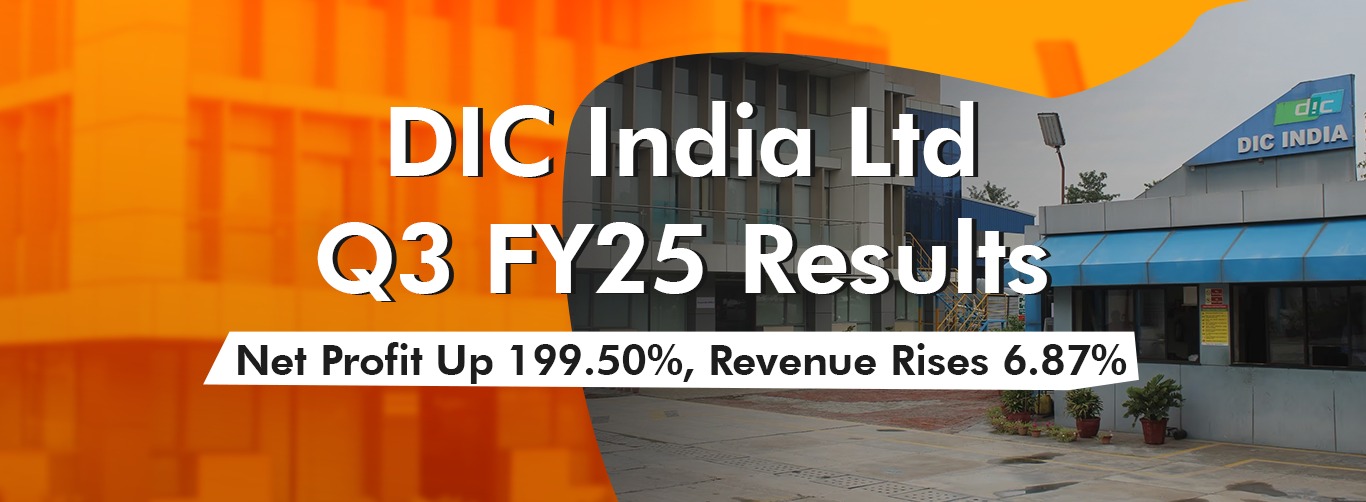
  • DIC India Ltd Q3 FY25 Results: Net Profit Up 199.50%, Revenue Rises 6.87%

    DIC India Ltd Q3 FY25 Results: Net Profit Up 199.50%, Revenue Rises 6.87%

    DIC India Ltd Q3 FY25 Financial Results

    Metric Q3 FY25 (Rs. Million) Q3 FY24 (Rs. Million) Change (%)
    Sales 2192.16 2051.26 6.87
    Other Income 47.02 24.75 89.98
    PBIDT 141.07 29.20 383.12
    Interest 7.39 5.42 36.35
    Depreciation 47.41 46.01 3.04
    PBT 93.19 -81.90 213.79
    TAX 21.71 -10.06 315.81
    PAT 71.48 -71.84 199.50
    PBIDT Margin (%) 6.44 1.42 352.07

    DIC India Ltd reported robust growth in its financial performance for the third quarter of FY25. The company’s revenue and profit figures showed significant improvement compared to the same period last year.

    Revenue Growth

    DIC India Ltd’s revenue rose by 6.87% to Rs. 2192.16 million in Q3 FY25 from Rs. 2051.26 million in Q3 FY24. The company’s other income increased by 89.98%, reaching Rs. 47.02 million compared to Rs. 24.75 million in the same quarter last year.

    Operating Profit Surge

    The company reported a substantial rise in Profit Before Interest, Depreciation, and Tax (PBIDT). It grew by 383.12%, reaching Rs. 141.07 million in Q3 FY25, compared to Rs. 29.20 million in Q3 FY24. The PBIDT margin improved to 6.44%, marking a 352.07% increase from 1.42% last year.

    Interest and Depreciation

    DIC India Ltd’s interest costs increased by 36.35%, rising to Rs. 7.39 million from Rs. 5.42 million. Depreciation expenses also rose slightly by 3.04%, amounting to Rs. 47.41 million compared to Rs. 46.01 million in the corresponding period last year.

    Profit Before Tax (PBT) and Net Profit (PAT)

    The company turned around its performance by reporting a Rs. 93.19 million Profit Before Tax (PBT) compared to a loss of Rs. 81.90 million in the same quarter last year. This improvement reflects a 213.79% rise. DIC India Ltd’s Profit After Tax (PAT) reached Rs. 71.48 million, showing a dramatic improvement of 199.50% compared to a loss of Rs. 71.84 million in Q3 FY24.

    Year-to-Date Performance

    For the nine months ending December 2024, DIC India Ltd’s revenue increased by 6.36% to Rs. 8815.29 million from Rs. 8288.51 million. The company’s PBIDT surged by 156.83% to Rs. 459.96 million. PAT improved significantly to Rs. 195.39 million, compared to a loss of Rs. 226.75 million during the same period in FY24.

    Final Thoughts

    DIC India Ltd’s strong performance reflects effective cost management, higher operational efficiency, and revenue growth across its segments. The company continues to focus on strengthening its market position and delivering value to its stakeholders.

    Disclaimer: This blog is for informational purposes only and should not be considered as financial advice or any buy/sell recommendations.

  • ABB India Ltd Reports Strong Growth in Q3 FY25 Financial Results

    ABB India Ltd Reports Strong Growth in Q3 FY25 Financial Results

    ABB India Ltd Q3 FY25 Financial Results

    Particulars Q3 FY25 (₹M) Q3 FY24 (₹M) Change (%)
    Sales 33,649.3 27,574.9 22.03
    Other Income 866.2 775.9 11.64
    PBIDT 7,439.6 4,948.1 50.35
    Interest 51.3 81.6 -37.13
    PBDT 7,388.3 4,866.5 51.82
    Depreciation 337.0 329.2 2.37
    PBT 7,051.3 4,537.3 55.41
    Tax 1,732.2 1,085.3 59.61
    Deferred Tax 30.8 -56.0 -155.00
    PAT 5,319.1 3,452.0 54.09
    PBIDT Margin (%) 22.11 17.94 23.21

    ABB India Ltd delivered an impressive performance in Q3 FY25, reporting strong growth in revenue and profits. The company’s sales reached ₹33,649.3 million, marking a 22.03% increase from ₹27,574.9 million in the same quarter last year.

    Revenue and Income Surge

    ABB India recorded ₹866.2 million in other income, reflecting an 11.64% rise compared to ₹775.9 million last year. The company’s profit before interest, depreciation, and tax (PBIDT) jumped by 50.35% to ₹7,439.6 million, demonstrating its operational efficiency.

    Profitability Improves

    The company managed its interest costs effectively, reducing them by 37.13% to ₹51.3 million from ₹81.6 million in Q3 FY24. Profit before depreciation and tax (PBDT) surged by 51.82% to ₹7,388.3 million, showing strong cost control.

    Depreciation expenses increased slightly by 2.37% to ₹337.0 million, but profit before tax (PBT) still rose by 55.41% to ₹7,051.3 million.

    Tax Expenses and Net Profit Growth

    ABB India paid ₹1,732.2 million in taxes, reflecting a 59.61% increase from last year. The company also reported ₹30.8 million in deferred tax compared to a negative ₹56.0 million last year.

    Despite the tax increase, ABB India’s net profit (PAT) soared by 54.09%, reaching ₹5,319.1 million compared to ₹3,452.0 million in Q3 FY24.

    Strong Margins and Equity Stability

    ABB India maintained robust profit margins, with its PBIDT margin improving to 22.11% from 17.94% last year. The company’s equity remained stable at ₹423.8 million.

    Final Thoughts

    ABB India Ltd showcased remarkable financial strength in Q3 FY25. The company achieved significant revenue growth, controlled costs efficiently, and delivered strong profit margins. Investors can find ABB India’s consistent performance promising for long-term growth.

    Disclaimer: This blog is for informational purposes only and should not be considered as financial advice or any buy/sell recommendations.