findocblog

Category: Finance

  • How Gen Z Is Redefining Money in India?

    How Gen Z Is Redefining Money in India?

    India’s 377 million Gen Z population drives 43% of consumer spending, which adds up to about $860 billion. This economic force will likely hit $2 trillion by 2035 and reshape how money flows through our economy.

    Gen Z shows remarkable discipline in building wealth – 93% keep saving money and set aside 20-30% of their income. They differ from earlier generations as 58% choose stock investments over traditional options like mutual funds or fixed deposits. Their approach aligns with FIRE (Financial Independence Retire Early) principles, and 65% aim to achieve financial independence before turning 25.

    These ambitious goals come with real challenges – 40% of Gen Z struggle to stretch their salary until month-end. They find smart solutions through fintech and spend 1.8 times more time on financial education features than millennials. On top of that, 64% prefer financial apps that match their personal values, such as ethical investing.

    This piece dives into Gen Z’s unique money mindset, their digital-first approach, and what they want from financial services. Their values have altered the map of India’s fintech space. Their push for financial independence creates new money patterns that reflect their generation’s needs and aspirations.

    The digital-first generation and their financial habits

    Gen Z views money through smartphone screens instead of bank counters. This generation, born between 1997-2012, has changed India’s financial world with their digital-first mindset that shows what matters to them.

    Why Gen Z prefers digital over traditional banking

    Gen Z makes banking choices based on convenience, and 63% choose online or mobile banking rather than visiting branches. They want their banking experience to feel like their favorite apps—with an accessible interface that’s always available and tailored to their needs. Traditional banking features like reputation or legacy barely matter, as only 3% of young Indians consider these important.

    Neo-banks have emerged as popular choices, with 67% of Gen Z and millennials using these digital-only platforms. These platforms help users avoid long queues, paperwork, and restricted hours while offering round-the-clock service.

    Multiple accounts, UPI, and instant payments

    About 48% of Gen Z keeps multiple bank accounts and splits their money for different uses. UPI has become essential to their financial lives—68% use it because it’s easy and offers cashback benefits. PhonePe leads with 40% users, followed by Google Pay at 35%, and Paytm at 20%.

    UPI usage keeps growing rapidly, with monthly transactions crossing 10 billion in 2023. Gen Z shows almost complete UPI adoption and uses these apps not just to pay but also to monitor their spending.

    Saving and spending patterns of Gen Z

    In stark comparison to what people think, 93% of Gen Z keeps saving money regularly, setting aside 20–30% of their income. Their approach is different from earlier generations—they value experiences as much as building wealth. A financial advisor points out, “Gen-Z is not careless with money. They are disciplined savers and bold investors – but unlike 90s kids, they refuse to postpone life”.

    This generation practices what experts call “soft saving”—they enjoy the present while staying financially responsible. More than 70% prefer a better quality of life over extra savings, showing their calculated response to economic uncertainty.

    Credit cards have caught Gen Z’s attention, with 46% choosing them for rewards and 36% for convenience. However, 35% admit to overspending or making impulse purchases because UPI makes transactions so easy, showing both benefits and risks of digital finance.

    What Gen Z expects from financial services

    Gen Z wants more than just basic banking services – they look for experiences that match their values and digital lifestyle. These smartphone-era consumers expect their banking to work just as smoothly as their favorite apps.

    Personalization and real-time insights

    Personalization stands at the core of Gen Z’s banking expectations. The numbers tell an interesting story – 71% have at least one fintech account, while only 53% of Millennials do. They want their financial services to be as user-friendly as ordering food delivery, and they expect pages to load in under 3 seconds. On top of that, 42% place high importance on getting personalized recommendations.

    These tech-savvy users gravitate toward platforms that offer:

    • Clear pricing with instant notifications
    • Quick payments and account updates
    • Simple connections with other digital tools

    About half of Gen Z keeps multiple accounts to separate money for different goals. This explains why they like AI-powered platforms that give tailored recommendations, analyze spending, and help track goals.

    Transparency and ethical practices

    Gen Z cares about more than just convenience – they value honesty and social impact. A remarkable 73% will spend extra on eco-friendly products, and 64% would switch banks if their current one doesn’t meet ethical standards.

    The numbers speak volumes – 95% of Gen Z investors factor in ethical considerations when making decisions. They look for banks that:

    • Put money in ethical funds
    • Back diversity and inclusion programs
    • Reduce carbon footprints
    • Show exactly how they use customer money

    Money serves as a tool for change in this generation’s hands, drawing them toward finance apps that share their values.

    Gamification and emotional design

    Banking becomes memorable when it creates an emotional connection. Gen Z spends roughly 7 hours each day gaming, which makes game-like financial experiences highly effective. Research shows these experiences boost user participation by almost 50%.

    Financial brands that use gaming elements – like challenges, rewards, and progress tracking – build stronger customer relationships. The addition of emotional design touches, such as friendly wording, relatable comparisons, and attractive interfaces, helps make finance less scary.

    Game-like features help bridge Gen Z’s knowledge gaps in finance, since they scored lowest among all generations, getting only 43% of financial literacy questions right.

    How Gen Z is reshaping fintech in India

    Gen Z’s fresh expectations and behaviors are reshaping India’s fintech world. They do more than just use financial technology—they actively shape its future.

    Fintechs adapting to Gen Z behavior

    Fintech companies now prioritize emotional connection over utility to catch Gen Z’s attention. These users dedicate 1.8 times more time to financial education features than millennials. This trend has pushed platforms to weave learning into their core experience. Companies have reimagined their interfaces with:

    • AI-powered dashboards that boost user involvement
    • Clear pricing without hidden fees
    • Features that let users connect with peers through shared financial goals

    Traditional banks have noticed this change. Grip Invest, backed by Stride Ventures, added a “sell anytime” option that lets investors exit bonds after two months. This move cut customer acquisition costs by 25%. Super.money launched direct cashback rewards on UPI payments, which made user engagement jump 2.5 times.

    Rise of value-based and sustainable finance

    ESG factors shape Gen Z’s money decisions. About 64% of them choose fintech apps that match their personal values, particularly sustainability and ethical investing.

    Wealth management firms have adapted to this generation’s focus on purpose-driven finance. They now offer sustainable investing options and put ethical considerations at the heart of their strategy. ESG-focused portfolios and thematic ETFs grow more popular as young investors build wealth.

    Social investing and creator-led platforms

    Financial creators like Rachana Ranade, Sharan Hegde, and Anushka Rathod have changed how people learn about finance through short videos. They break down complex financial ideas and help bridge the gap between theory and ground application.

    Reddit hosts communities where users share investment strategies and market trends, which promotes group learning. Creator-led financial platforms represent the next step—trusted personalities now build their own financial services based on authenticity rather than institutional backing.

    The future of money: Built by and for Gen Z

    The next decade will see Gen Z not just using financial products—they will design their own financial ecosystems. Gen Z stands to become the wealthiest generation by approximately 2035, thanks to wealth transfer from Baby Boomers.

    Gen Z-led startups and financial ecosystems

    Young founders now create startups that reflect their generation’s values—transparent, inclusive, and purpose-driven. Pune-based Deciml App, to name just one example, turns spare change from everyday digital transactions into mutual fund investments. Users can start investing with as little as ₹5. This change shows Gen Z’s broader vision of financial services that combine technology with authentic connection.

    FIRE financial independence and early planning

    Gen Z professionals have embraced the FIRE (Financial Independence, Retire Early) movement enthusiastically. About 67% of Indians now think about early retirement, and some want to retire as young as 33. Gen Z members want to retire by 40. They live frugally and start investments early to reach this goal. A Gen Z TikTok influencer put it well: “I tell people I want to retire at 40, they laugh, but I have a plan”.

    Bridging the gap between freedom and foresight

    Three in four Gen Zers started serious financial planning between ages 18-25. Yet only 46% feel confident about their financial knowledge. This generation combines early action with technology-driven tools to create new wealth-building opportunities. Gen Z’s financial revolution goes beyond wealth accumulation—it designs financial systems that enable autonomy, purpose, and balance.

    Conclusion

    Gen Z is pioneering India’s financial development through their digital-native behaviors. Their approach merges contrasting elements – they save with discipline yet spend on experiences. They blend tech-savvy practices with human connections and balance instant rewards with future planning.

    This generation charts their own path to wealth instead of following traditional financial advice. Gen Z shows remarkable financial maturity despite economic hurdles. Most save 20-30% of their income and embrace the FIRE philosophy.

    Financial institutions must evolve or become obsolete. Success depends on offering customized services, ethical practices, emotional design, and complete transparency. Platforms that see money beyond wealth creation will thrive. Money serves as a tool to express values and build meaningful lives.

    Gen Z demonstrates better financial literacy than previous generations at their age, but knowledge gaps still exist. These gaps create room for innovative education through platforms that speak their language – visual, interactive, and community-driven.

    The changes go deeper than new spending habits or investment priorities. India’s financial ecosystem is being rebuilt by a generation that connects purpose with profit. Their approach combines innovative technology with human values to create systems that deliver both freedom and security.

    Gen Z’s financial revolution shows something hopeful – when money arranges with personal values and flows through thoughtful technology, it becomes more than wealth. It creates lives worth living.

    FAQs

    Gen Z in India is taking a digital-first approach to money management. They prefer online and mobile banking, use multiple accounts for different purposes, and heavily rely on UPI for instant payments. Despite being tech-savvy, they’re also disciplined savers, often setting aside 20-30% of their income.

    Gen Z in India is drawn to financial services that offer personalization, real-time insights, and align with their values. They prefer platforms with transparent pricing, instant payments, and easy integration with other digital tools. Many are also interested in ethical investing and sustainable finance options.

    Gen Z is reshaping India’s fintech landscape by demanding more engaging and value-driven services. This has led to the rise of gamified financial experiences, social investing platforms, and creator-led financial content. Fintech companies are adapting by offering more personalized, transparent, and ethically-aligned services.

    FIRE (Financial Independence, Retire Early) is a movement gaining traction among Gen Z in India. Many are aiming to retire by 40, living frugally and investing early to achieve this goal. This reflects their desire for financial autonomy and work-life balance, with some starting serious financial planning as early as 18-25 years old.

    While Gen Z shows impressive financial discipline, they face challenges such as overspending due to the ease of digital transactions. Additionally, only 46% feel confident in their financial knowledge, indicating a need for more accessible financial education. Balancing their desire for experiences with long-term financial goals is another ongoing challenge for this generation.

  • Tax Collected at Source (TCS): Meaning, Rates and Exemptions

    Tax Collected at Source (TCS): Meaning, Rates and Exemptions

    TCS or Tax Collected at Source refers to the tax payable by the seller to the government, but is collected from the buyer.

    Transactions  involving specific goods, including alcohol, timber, minerals, and motor vehicles are liable for TCS.

    Tax Collected at Source [TCS]

    TCS which stands for Tax Collected at Source refers to the tax payable by the seller to the government, but is collected from the buyer. This system primarily targets business and trading transactions and helps in tracking and managing tax liabilities effectively.

    What is Tax Collected at Source

    Sellers collect TCS or Tax Collected at Source from buyers at the time of sale. It should be noted that TCS is applicable on the sale of specific goods such as timber, scrap, mineral wood and more, excluding production or manufacturing materials. When a seller sells such goods to a buyer, they collect a certain percentage of tax from the buyer and remit it to the government.

    Let’s say Mr. Vivek sold goods worth Rs 200 on which 1% TCS is applicable. So he will collect Rs. 202 from the buyer and return Rs. 2 to the government with the stipulated period.

    TCS Applicability

    As a seller, it’s important to know if you are subject to TCS obligations. If your business comes under any of the following, you are subject to TCS

    Seller Classifications of TCS

    • Central Government
    • State Government
    • Local Authority
    • Statutory Corporation or Authority
    • Company registered under the Companies Act
    • Partnership firms
    • Co-operative Society
    • Any person or HUF whose accounts are being audited under the Income Tax Act for a specific financial year

    Buyer Classifications of TCS

    The following buyers are liable to pay the tax at source to the seller:

    • Public sector companies
    • Central Government
    • State Government
    • Embassy of High Commission
    • Consulate and other Trade Representation of a Foreign Nation
    • Clubs such as sports clubs and social clubs

    Goods Covered under Tax Collected at Source (TCS)

    TCS is applicable to many sectors. Transactions  involving specific goods, including alcohol, timber, minerals, and motor vehicles are liable for TCS. The tax percentage depends on the type of commodities and the specific regulations mentioned in the Income Tax Act.

    Type of Goods and Rate of TCS

    Here’s a look at type of goods and their TCS rate:

    Type of Goods Rate of TCS
    Liquor of alcoholic nature, made for consumption by humans 1%
    Scrap 1%
    Minerals like lignite, coal, and iron ore 1%
    Bullion that exceeds over Rs. 2 lakhs/ Jewellery that exceeds over Rs. 5 lakhs 1%
    Purchase of Motor vehicle exceeding Rs. 10 Lakhs 1%
    Purchase of Motor vehicle exceeding Rs. 10 Lakhs 2%
    Timber wood under a forest leased 2.5%
    Timber wood by any other mode than forest leased 2.5%
    A forest produce other than Tendu leaves and timber 2.5%
    Tendu Leaves 5%

    TCS Return Due Dates

    Quarter Ending Due date to file TCS return in Form 27EQ Date for Generating Form 27D
    30th June 15th July 30th July
    30th September 15th October 30th October
    31st December 15th January 30th January
    31st March 15th May 30th May

    Certificate of Tax Collected at Source

    When a tax collector files his quarterly TCS return which is  Form 27EQ, he has to provide a TCS certificate to the purchaser of the goods. Form 27D is the certificate issued for TCS returns filed. The certificate contains the following details:

    1. Name of the seller and buyer
    2. TAN of the seller i.e. who is filing the TCS return quarterly
    3. PAN of both seller and buyer
    4. Total tax collected by the seller
    5. Date of collection
    6. The rate of tax applied

    Interest Chargeable on Non-payment

    If the seller who is accountable to collect the tax and give it to the government fails to do so, he/she is liable to pay interest at 1% per month or part thereof.

    Penalty for Incorrect Filing of the TCS Return

    A penalty can be levied if the tax collector files an inaccurate TCS return under section 271H. Additionally, a minimum penalty of Rs 10,000 and a maximum penalty of up to Rs 1,00,000 can be levied if the collector files a wrong TCS return.

    TCS Exemptions

    When the eligible goods are utilised completely for personal consumption, TCS is exempted. It is also exempted when the purchaser buys the goods for manufacturing, processing or production and not for trading.

    e-TCS

    As the name suggests, the method of filing TCS returns by electronic media is referred to as e-TCS. Government and corporate collectors are required to file TCS returns in electronic format beginning with the 2004-2005 fiscal year. Other collectors can file the TCS returns in either paper or electronic format.

    Difference Between TDS and TCS

    Tax Deducted at Source (TDS) is the amount deducted from a taxpayer’s salary by another taxpayer. It is then compensated to the central government. It is tax deducted at source like salaries, rents etc. On the other hand, TCS (Tax Collected at Source) applies to the selling of specific products like scrap, wood, tendu leaves, minerals, and other similar products. It is collected by the seller from the buyer and paid to the government.

    FAQs

    TCS is mainly used for boosting society, infrastructural development, education, and many more sectors. It also helps avoid tax evasion.

    Yes, sellers have the option of filing TCS returns electronically.

    Yes. If the amount of Tax Collected at Source exceeds your tax liability, you can ask for a refund through the income return filing process.

    Inaccurate TCS returns may result in fines under Section 271H of the Income Tax Act. The fines can range from from Rs 10,000 to Rs 1,00,000.

  • Gold Hits Record High Amid Tariff Uncertainty – Can It Reach ₹1 Lakh Soon?

    Gold Hits Record High Amid Tariff Uncertainty – Can It Reach ₹1 Lakh Soon?

    Gold prices have surged to record highs, driven by economic uncertainty and geopolitical risks, raising speculation about whether the precious metal can touch the ₹1,00,000 per 10 grams milestone in the near future. The latest rally in gold prices has been fueled by growing concerns over global trade policies, particularly the tariff measures announced by the United States, as well as the impact of central bank decisions and inflationary pressures.

    Gold Surges to Record Highs!

    In the domestic market, gold futures on the Multi Commodity Exchange (MCX) touched an all-time high of ₹88,672 per 10 grams on March 18. By the afternoon session, the metal was trading 0.65% higher at ₹88,595 per 10 grams. Meanwhile, in international markets, gold prices reached an unprecedented $3,037.60 per ounce, marking a strong uptrend as investors sought safe-haven assets amid escalating economic and geopolitical tensions.

    Experts believe the current bullish trend in gold is primarily driven by the uncertainty surrounding the U.S. administration’s tariff policies, which have led to a decline in investor confidence. Concerns over a potential economic slowdown have prompted investors to hedge their risks by increasing their exposure to gold, historically regarded as a reliable store of value during times of financial instability.

    Key Drivers Behind Gold’s Rally

    Several factors have contributed to the recent surge in gold prices:

    1. Trade War and Economic Uncertainty

    The U.S. government’s new tariff measures on various imports, including metals and electronics, have heightened fears of a prolonged trade war. Such measures often lead to economic slowdowns, prompting investors to flock to gold as a hedge against market volatility.

    2. Central Bank Buying

    Major central banks across the globe have been accumulating gold reserves as part of their diversification strategy. Central bank purchases have provided significant support to gold prices, reinforcing investor confidence in the long-term value of the metal.

    3. Dollar Index Decline

    Gold is priced in U.S. dollars, and any decline in the dollar index makes it more affordable for investors holding other currencies. The dollar index has weakened in recent weeks, further boosting gold’s appeal.

    4. Geopolitical Risks

    Rising tensions in the Middle East, coupled with global economic instability, have added to gold’s safe-haven appeal. Investors often turn to gold during times of geopolitical crises as a means of protecting their wealth.

    5. U.S. Federal Reserve Policy

    The Federal Open Market Committee (FOMC) is expected to keep interest rates unchanged in its upcoming meeting. While higher interest rates tend to weigh on gold prices by making fixed-income investments more attractive, a potential rate cut later in the year could provide further upside for gold.

    Can Gold Reach ₹1 Lakh?

    With gold trading at record highs, the possibility of it reaching ₹1,00,000 per 10 grams has become a widely discussed topic. However, experts believe that while gold is on a strong upward trajectory, reaching this milestone in the immediate future is unlikely.

    According to market analysts, for gold to cross ₹1,00,000 per 10 grams, global prices would need to climb to around $3,300 per ounce, coupled with a weaker Indian rupee against the U.S. dollar. Current projections suggest gold could reach $3,100 per ounce in the near term, which translates to approximately ₹91,500-92,000 per 10 grams in the Indian market.

    While achieving ₹1,00,000 per 10 grams this year may be difficult, analysts suggest that gold could potentially reach this level within the next two to three years if current growth trends continue. Over the past decade, gold has delivered a compound annual growth rate (CAGR) of around 10%, indicating a steady long-term uptrend.

    Conclusion

    Gold’s record-breaking rally has reaffirmed its status as a safe-haven asset in times of uncertainty. While reaching ₹1,00,000 per 10 grams in the immediate future may be challenging, the long-term outlook for gold remains highly optimistic. Investors should closely monitor global economic developments, central bank policies, and geopolitical risks to make informed decisions about their gold investments.

    Disclaimer: This article is for informational purposes only and should not be considered as investment advice.

  • TradingView Charts Integration with Findoc

    TradingView Charts Integration with Findoc

    We are excited to share that Findoc is all set to integrate TradingView charts on all our platforms (Web and Mobile App). Now, you can easily analyze charts using TradingViews’s robust charting features and functions.

    Here are some of the key features that will be unlocked as a result of this integration between Findoc and TradingView:

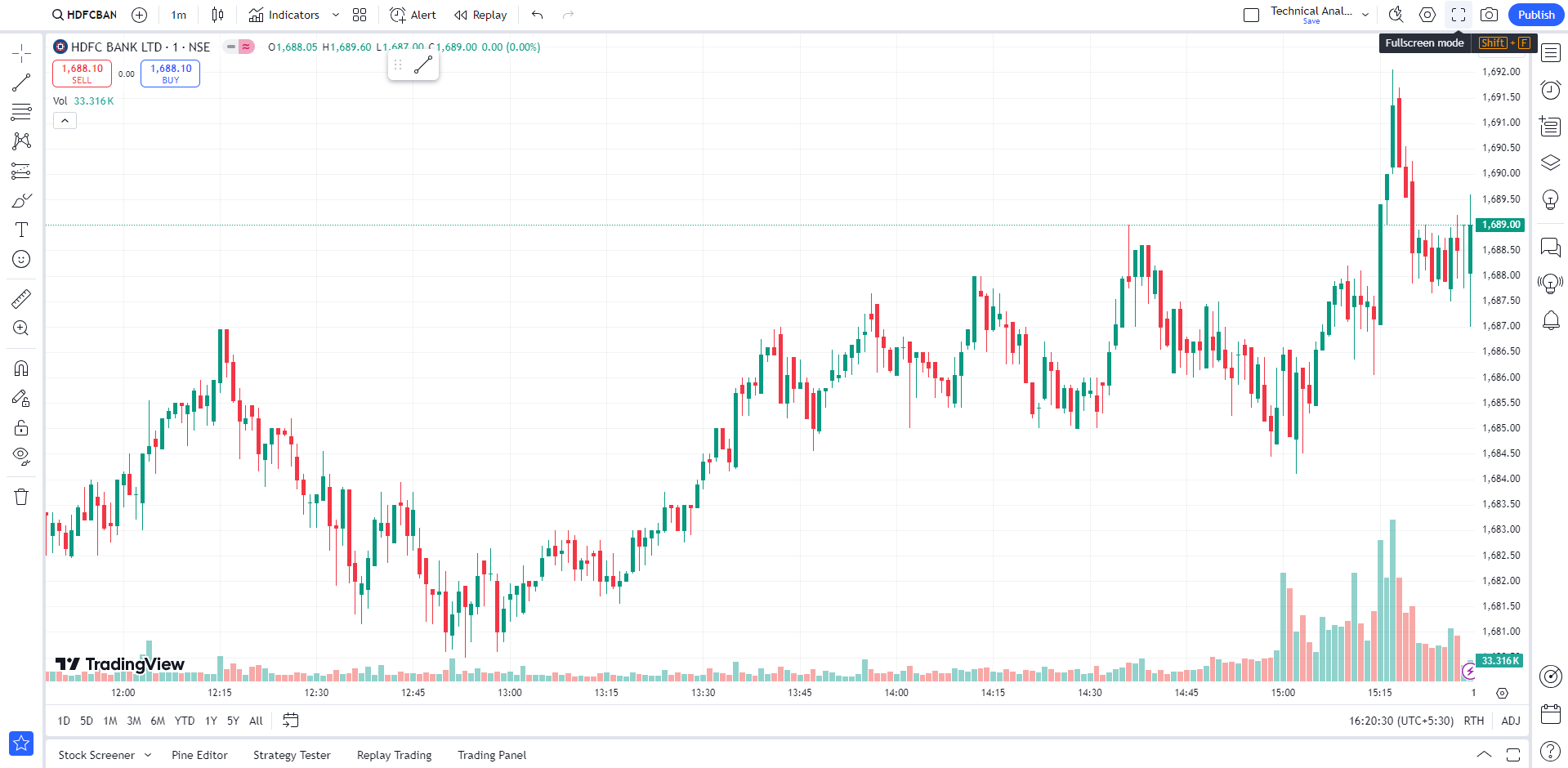
    Multiple Full-screen Charts View with Pop-Out Feature

    Now, you can open multiple charts for different stocks and also keep track of each one of them individually. With the help of a stock screener, you can easily filter and analyze stocks based on various criteria, ensuring you focus on the most relevant opportunities. You can also set your own timeframes in each chart, allowing you to concentrate on both short-term movements and long-term trends simultaneously.

    It is quite easy to switch between these different charts or view them all at once. Thus, making sure to manage multiple stocks at the same time. This setup helps you stay on top of the market whether you’re day trading on simply monitoring instruments.

    pop out fullscreen mode in stock chart

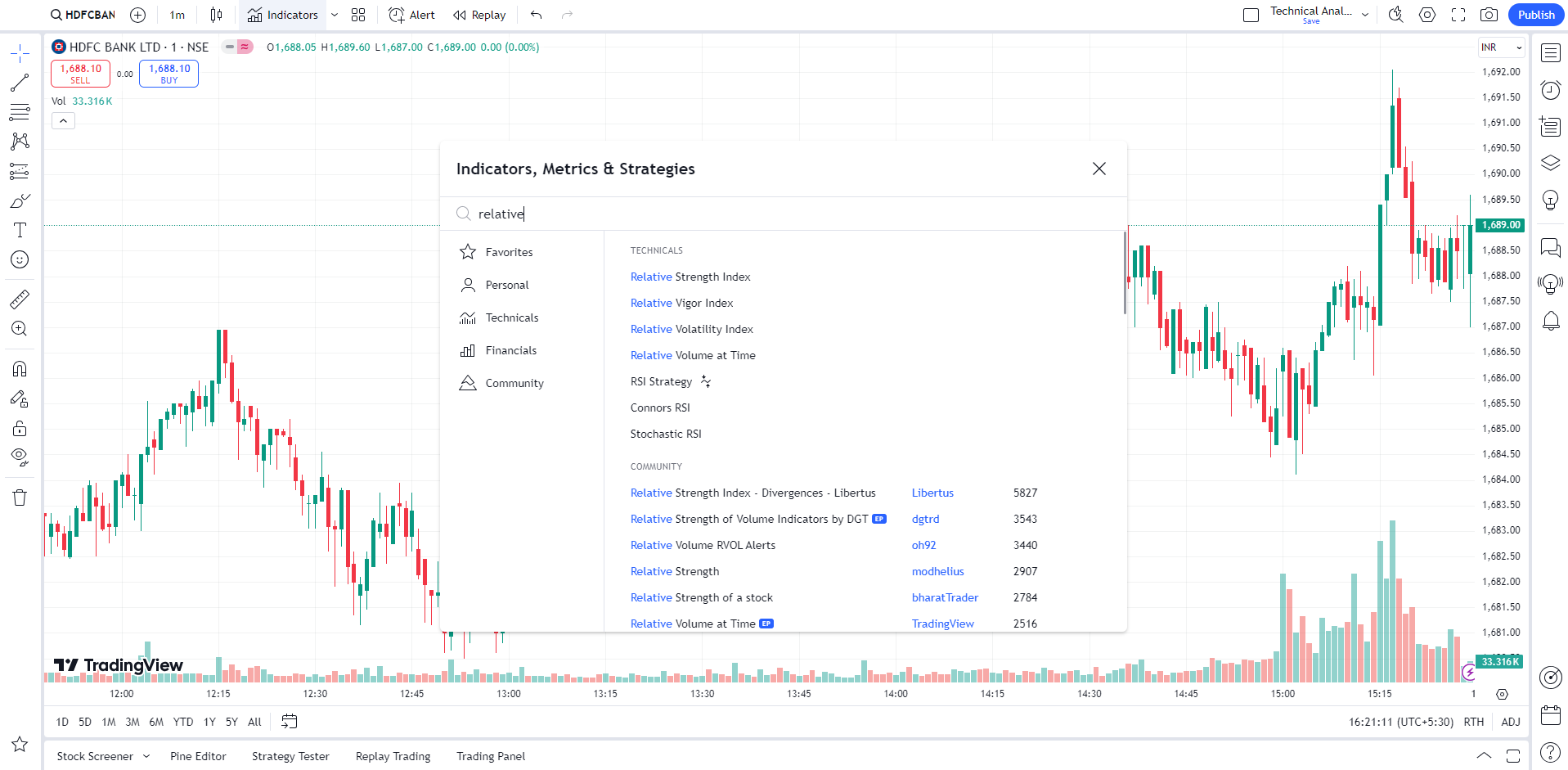
    Advanced Indicators and Drawing Tools

    With the new advanced indicators and drawing tools on TradingView, you can level up your technical analysis game. This new feature will help you track trends, identify support and resistance levels and also analyze chart patterns. Be it moving averages, oscillators, trendlines or Fibonacci retracements, this new feature gives you all the power to make informed decisions. This is perfect for advanced traders looking for more precision and depth in their analysis to spot opportunities and manage risks better.

    multiple advanced indicators

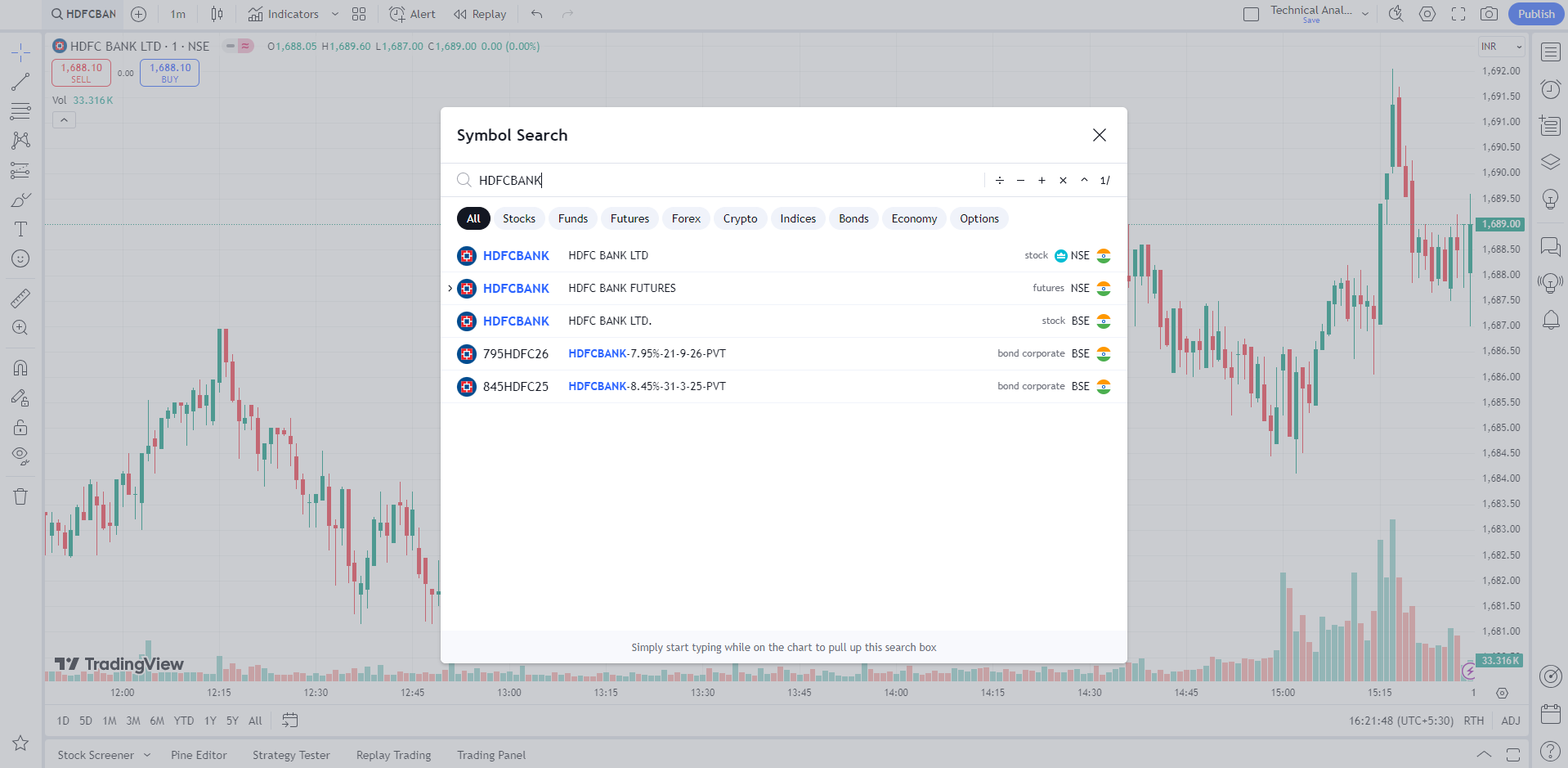
    Effortless Stock Search and Addition

    Adding new stocks with just a few keystrokes is now a reality. It has become a lot easier to find stocks and add them to your watchlist and your full screen chart. No need to navigate through different menus. This feature helps you to switch between different stocks, allowing you to focus on analysis and not on managing your setup. This feature will help you stay agile and efficient during the fast moving markets.

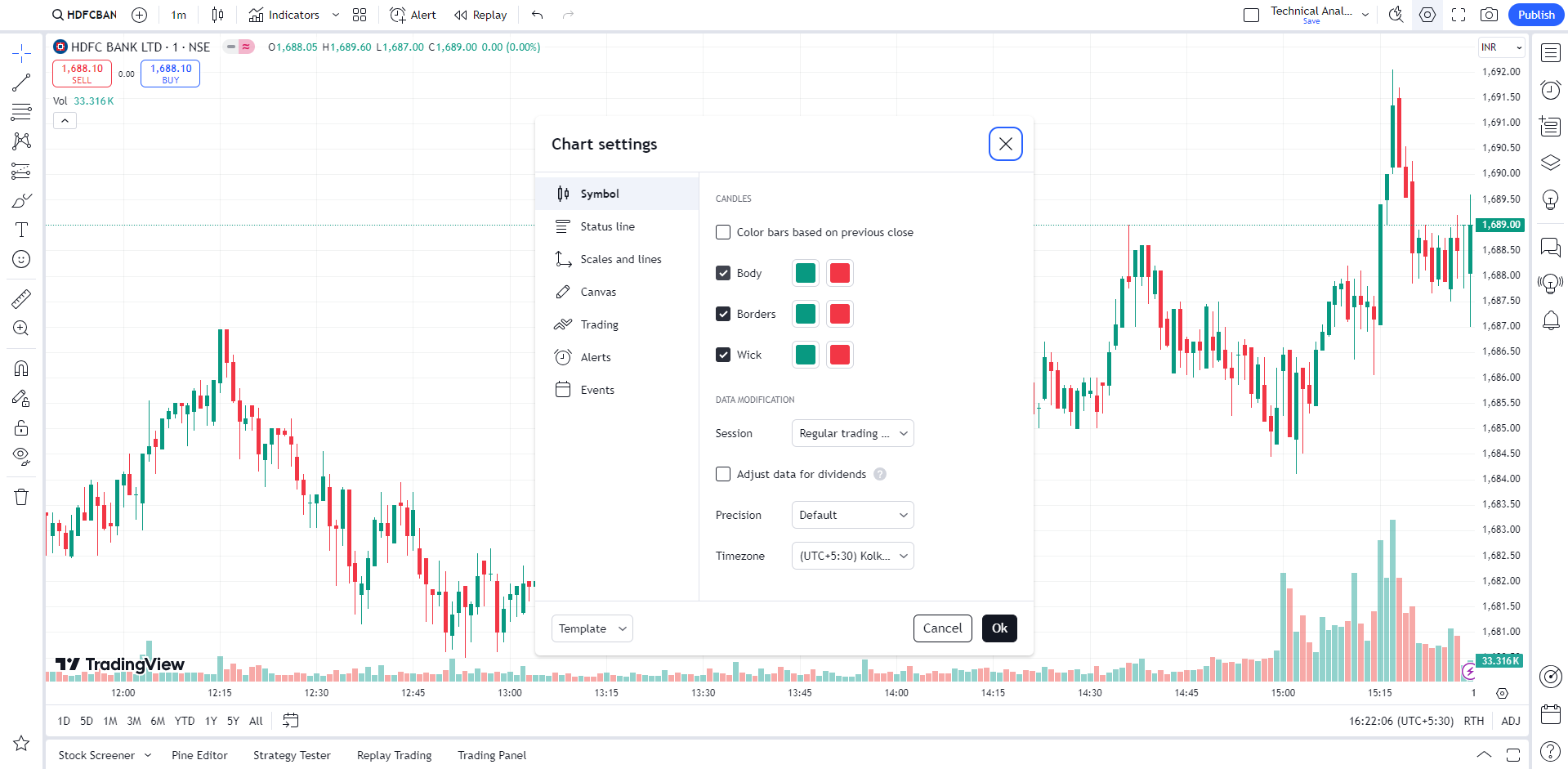
    Customizable Chart Colors and Lines

    Now, it is easy to customize your charts by choosing from a wide range of colors and lines to suit your preferences. Be it highlighting trends, making certain data stand out or simply creating a cleaner view. These customization options also allow you to design charts to enhance readability and customize your workflow to fit your needs. You can even adjust the thickness of lines or apply different color schemes to indicators, interpret data more clearly and efficiently. This feature helps traders to clearly see the charts and tailor it specifically to their needs.

    Diverse Chart Types

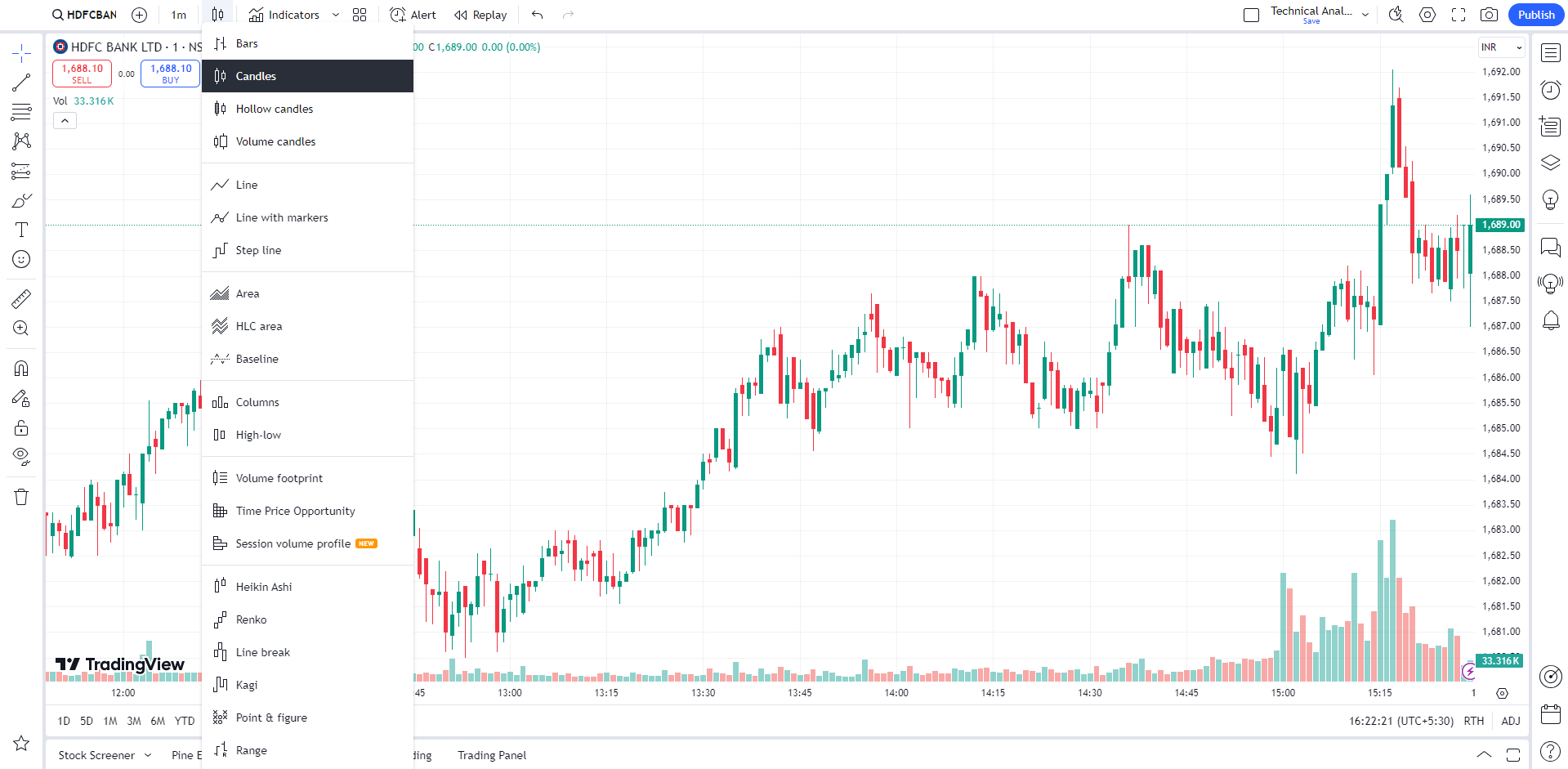
    Be it candlesticks, bar charts, line graphs or even Heiken-Ashi, it is now easy to choose a chart type from all these varieties of chart types. Each chart type offers a different view on price action and allows you to gain deeper insights into market trends and patterns. Now, you can easily switch between them and choose the one that fits your trading strategy or current market conditions. This flexible approach allows us to best visualize the data that is meaningful and personalized for you.

    stock-chart-type

    Navigate to Specific Dates and Timeframes

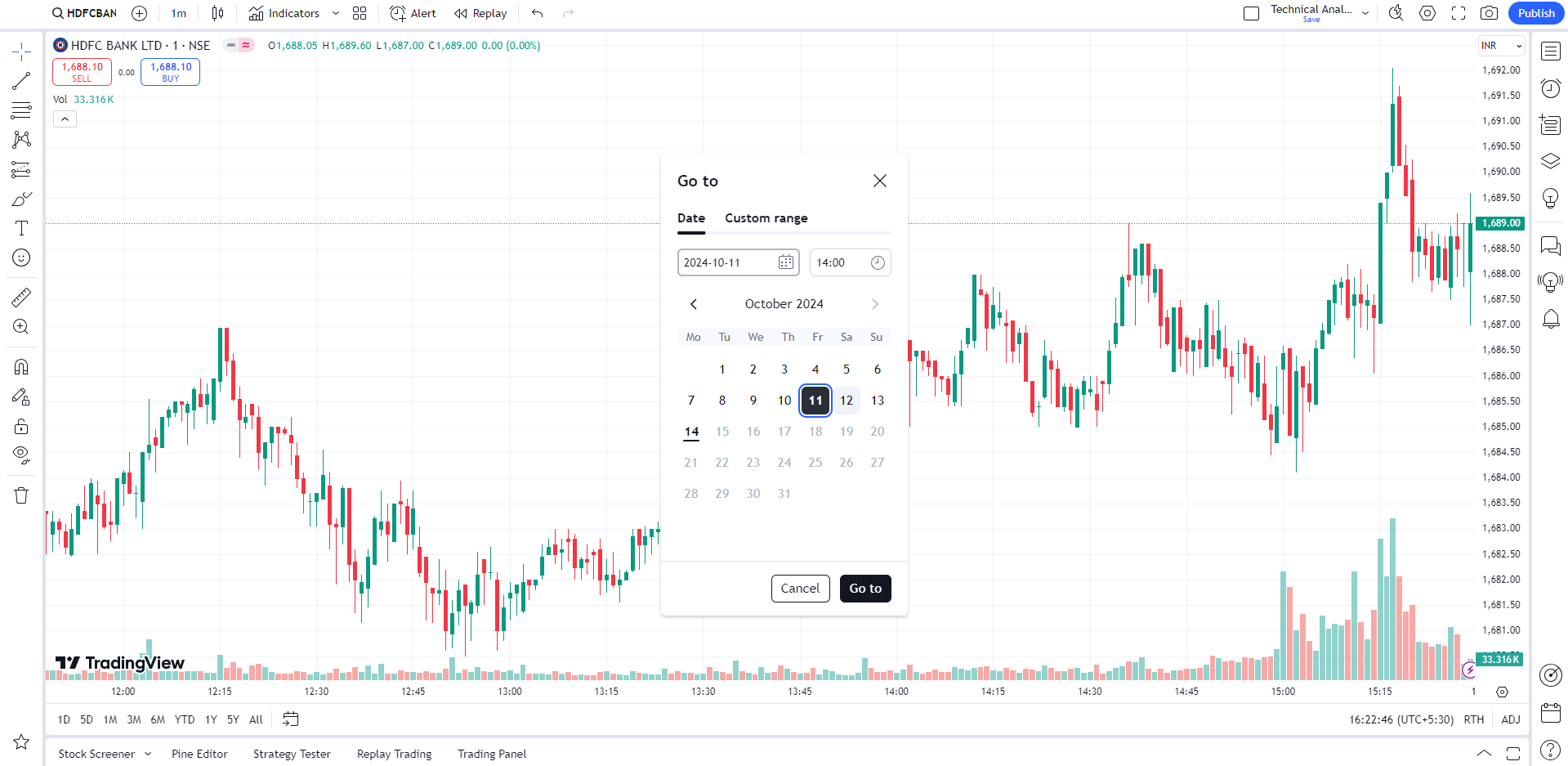
    It has now become easy to explore a stock’s historical performance by jumping to specific dates and time frames in just a few clicks. If you’re looking to analyze how a stock behaved during a particular day or during a period, this will help you zoom in and out on the exact data you need. This is perfect for traders who rely on detailed historical data to spot trends, past market reactions or even fine tune or optimize their algo trading strategies. This will also help you stay focused on making informed decisions without getting lost in the data.

    timeframe

    This integration will allow you to dive deep into advanced technical analysis with familiar tools and layouts, making it easier to track your investments. You’ll also have access to real-time stock news, keeping you updated on market-moving events, and an economic calendar so you never miss key data releases that could impact your trading strategy.

    With everything in one place—from customizable charts to market insights—Findoc is set to become your go-to platform for algo trading. Get ready to take your investments to the next level—happy trading!

  • What is Beneficial Owner Identification Number (BO ID)?

    What is Beneficial Owner Identification Number (BO ID)?

    Your Demat account is like a safety vault where you keep all your investments in different securities, in electronic format. Now like for a physical vault, there is a code to open it, isn’t it? Similarly, for the Demat account, there is BO ID, which stands for Beneficial Owner Identification ID.

    In this article, we will discuss this BO ID in detail, how it works, why it is important, how you can get the same and a lot more. This is crucial for every investor with a Demat account.

    What is BOID?

    BO ID can be defined as a unique identification code, which is given to every Demat account holder whether he or she is registered with CDSL or NSDL. The Depository participant, or in simple terms the brokerage house, with which the investor/ trader has opened the Demat account assigns the BO ID.

    For CDSL Demat account holders, the BO ID is a 16-digit code, which is a mix of alphabets and numbers. The first eight characters represent the ID of the DP and the last eight represent the Client ID.

    For NSDL Demat accounts, the BO ID is a 16-digit code only but it always starts with IN and then the remaining 14 characters are numbers. For instance, an NSDL BO ID can be IN12345678910112 while a CDSL BO ID can look like 94982280ABZ012534.

    BO ID is crucial for every Demat account holder as it keeps track of all the transactions happening in the account and the movement of the assets in your account as well. This ID irrespective of the device from which you are logged in, or irrespective of what kind of securities you are trading, keep track of transactions and movement in the Demat account.

    How Does BOID Work?

    The BO ID is required at different phases of trading and investments. When a Demat account holder places an order, the brokerage house with which it is trading/ investment (DP) verifies the order using the BO ID of the account holder. Then the broker places the trade on the respective stock or other exchanges for further processing.

    Then BO ID is also required while transferring securities from one account to another. It is recorded at both the end of the transactions, making sure the securities go into the right account.

    Companies issuing dividends, bonus shares and other benefits to the investors use the BO ID of the Demat amount holder to transfer the benefits. So, this ID is essential at every step involved in investments and trading.

    Key Features of BO ID

    • Unique 16-digit Number: A BO ID is a fixed 16-digit code that identifies each Demat account holder in CDSL.
    • Combination of Two IDs: It is formed by combining the Depository Participant (DP) ID (first 8 digits given to the broker or bank) and the Client ID (last 8 digits unique to the investor).
    • Ownership Tracking: It keeps a clear record of who owns which shares, bonds, or mutual funds.
    • Transaction Security: Every buy, sell, or transfer of securities is directly connected with this ID.
    • Digital Record Keeping: Investors no longer need paper share certificates, as all data is stored safely online.
    • Regulatory Compliance: BO ID helps maintain transparency and follows the rules laid by market regulators.

    How to Create a BOID?

    For creating your BO ID, you have to follow the following steps –

    • Pick your DP: The BO ID is generated when you open a Demat amount with a depository participant (DP), or broker in a common language. Therefore, you need to pick the right brokerage house as your DP to create your BO ID. Findoc here can help you as it offers a wide range of brokerage services, which you can use for creating BO ID.
    • Demat Account opening: Once you pick your DP, for instance, you picked Findoc, you have to then open the Demat account. You need to share your details such as name, address, occupation, income, and other details for applying for the Demat account.
    • KYC: The next step is to upload all your documents that are required for opening and KYC verification. The documents you need to upload will include PAN, AADHAAR, Bank Statements, Photos, and other details.
    • Agreement: Once the KYC is done, you will be shared an agreement, which you need to sign and which is to ensure that you are obliging with the terms and conditions of the DP for opening the Demat and trading account.
    • Make payment: If there is any account opening charge, you need to pay the same to finalise the account opening procedure. With Findoc, you can open Demat account online free of cost and maintain it with just a one-time maintenance fee, isn’t that great?
    • Get your BO ID: Once all the above steps are completed, your Demat account will be live and your BO ID will be shared with you on your registered email id.

    How to Find BOID?

    Often people find it difficult to check their BOID. However, it is quite simple and doesn’t include many steps.

    All you need to do is to –

    • Open your Demat account, and log in using your username and password
    • Then go to the ‘My Profile section or ‘ Account information tab in the Demat account
    • Here you will find the BO ID under the account information or your profile. It is a 16-digit alphanumeric code.
    • You can note down the BO ID to use it without hassle in the future.

    Why BOID is So Important?

    The BO ID of a Demat account holder is important for so many aspects. Let’s understand each one of them –

    • Firstly, with the BO ID, the Demat account holder can have track of all his investments online as well as offline mode. He or she can track not just the portfolio valuation, but also each of the transactions that take place in the account.
    • This brings us to the safety quotient of the portfolio and the account holder. With the rise in cybercrimes, Demat accounts are not spared even. However, with the help of BO ID, you can keep track of each and every transaction done in the account, so, the risk of online theft comes down significantly.
    • Thirdly, with the help of BO ID, you can keep all the records of your transactions online. You do not have to maintain any physical document or journal. This makes the entire process easy and quick.

    While BO ID is highly useful for every investor and trader, they also need to keep in mind that this id has certain limitations as well.

    • For instance, the BO ID for a Demat account opened on CDSL will be different from a Demat account opened with NSDL.
    • Then this id cannot help in tracking any physical trading or investments done, without using the Demat account.
    • Another major concern is BO ID is entirely dependent on the DP, so choosing the right brokerage house with whom you open a Demat account is essential.

    Key Benefits of BO (Beneficial Owner) ID

    • Clear Identification: Ensures that every account holder has a separate code, reducing confusion between investors.

    • Simple Transactions: It allows smooth buying, selling, and transferring of securities without delays.

    • High Security: As every transaction is tied to a single BO ID, it reduces errors and the chance of fraud.

    • Accurate Records: Helps in maintaining precise statements of all investments and activities in the account.

    • Direct Corporate Benefits: Companies use BO ID details to credit dividends, rights issues, or bonus shares directly to investors’ Demat accounts.

    • Easy Account Access: Investors can check holdings, monitor past transactions, and download statements anytime.

    • Market Compliance: It plays a key role in making trading more transparent for regulators and depositories.

    • Boosts Investor Confidence: By offering a secure and organised system, it gives confidence to investors that their investments are well-protected and tracked.

    BO ID Limitations

    • Accuracy Required: The BO ID is linked with the account details given during registration. If those details are wrong, it may cause issues later in transactions.

    • Difficult for Multiple Accounts: Investors who hold more than one Demat account must remember and manage several BO IDs, which can sometimes be confusing.

    • Privacy Concerns: Since the BO ID is linked to personal and financial data, there is a risk if the information is not protected by the broker or depository.

    • Dependence on System and Rules: Any change in regulations or operational processes can impact how BO IDs work.

    • Processing Errors: Mistakes from the DP while linking BO IDs may cause delays in transfers or settlement.

    • Challenging for Beginners: New investors may take time to fully understand the role of BO ID in trading and investments.

    What is a Depository Participant (DP)?

    A Depository Participant (DP) is an agent or middleman that connects investors with the depository. A depository is an organisation that stores securities like shares, bonds, and mutual funds in electronic form. To open a Demat account, an investor must register with a DP. DPs can be banks, brokers, or financial companies that are authorised by SEBI. They handle essential services such as opening Demat accounts, updating records, settling trades, and helping investors with transfers. Each DP has a special code known as a DP ID, which is part of your 16-digit BO ID. Simply put, a DP sees to it that all securities are securely stored and transactions are executed in the right manner on behalf of the investor.

    How does a Demat Account differ from a DP ID?

    A Demat Account is a repository account where your shares, bonds, and securities are held in a digital format. It has a 16-digit Demat number that is allotted to each investor. This number is divided into two segments. The initial 8 digits are the DP ID, representing the opening bank, broker, or financial institution. The last 8 digits are the Client ID, that is, your account holder identity. Together, they form the entire BO ID. The DP ID by itself is the broker or bank’s and is the same for all clients of the same DP. The complete Demat account number (DP ID + Client ID), however, is yours as an investor.

    Conclusion

    Thus, the next time you open your Demat account; do not forget to look for your BO ID. Keep a note of the code for your future reference and ease of use. This ID is essential for every investment you make using your Demat account.

    Frequently Asked Questions

    If you forget your BO ID, you can refer to it in your Demat account statement, the trading app of your broker, or communicate with your Depository Participant. They will give you your 16-digit BO ID after authentication.

    A BO ID is always 16 digits long. The first 8 digits are the Depository Participant (DP) ID, and the remaining 8 digits are the distinctive Client ID provided for every Demat account holder.

    You can log in to your broker’s trading platform or check your Demat account statement. If your transactions and holdings show correctly under the BO ID, it means your account is active and valid.

    A BO ID acts like the account number for your Demat account. It ensures secure ownership tracking, smooth transactions, and correct credit of benefits such as dividends, rights issues, and bonus shares to your account.

    A DP ID is an identification number given to the broker or bank that opened your Demat account. It is important because it shows which Depository Participant manages your account and forms part of your BO ID.

    Yes, every Demat account must be opened through a Depository Participant (DP). The DP acts as a middleman between you and the depository, helping with account opening, trade settlements, and keeping your securities safe in electronic form.

  • Difference Between Debt and Equity Financing

    Difference Between Debt and Equity Financing

    Every business needs funds to start, run and prosper, isn’t it? For a business, usually there are two options to raise funds, one is debt and the other one is equity. In this article, we will talk about both debt financing and equity financing and see how they are different from each other. It is important for the investors to know how the company is funding its operations, and capital expenditures, as it plays a vital role in analysing the fundamentals of the company.

    What is Debt Financing?

    As the name suggests, Debt financing is a method of raising capital for your business by borrowing money. When a company borrows money, it has to repay the amount as well and that too along with interest. This is how any individual takes a loan from a bank and then repays the same along with the interest amount accrued on the loan. Companies, also avail loans from banks, private lenders, HNIs, and other sources.

    However, the loan is not the only form of debt financing. There are other types of debt financing as well which will discuss in the later segment of the article.

    The funds borrowed by the company can be used for running the business operations, paying off previous debts, or expanding the business or for any purpose, which benefits the business and the shareholders.

    Debt financing can be secured and unsecured too. When the borrower borrows the fund from the lender by keeping some kind of collateral for security, then it is known as secured debt financing, while on the other hand, if there’s no collateral kept for availing the debt, then it is an unsecured debt financing process.

    Types of Debt Financing

    By debt financing, often people think it is only about loans, but there is a lot more to the list.

    Bank loans: This is the most fundamental way of debt financing and also reasonable for the company as compared to other debt financing options, traditional bank loans come at lower interest rates. This in turn helps the company in saving on the interest part.

    Corporate bonds: Another popular way of raising funds using Debt financing tactics is corporate bonds. These are debt instruments, which businesses use for raising funds from the public. However, the bondholders or people who are buying these bonds do not get any ownership right over the company or any other rights. This is one of the major differences between debt and equity financing methods. 

    The investors who are buying the bonds are lending money to the company against which they will get a fixed interest, which is known as a coupon and the principal amount after a specified timeline. Therefore, both the company and the investors get benefits. The company get funds to finance its long-term goals, and expansion projects, while bondholders get fixed income against their investments.

    Non-convertible debentures: Indian companies to raise funds also use these debt instruments but these debt instruments are not convertible into equity shares. The investors get fixed interest on investing in these debt instruments as well.

    Convertible debentures: There is another way that corporates use to raise funds is convertible debentures. As the name suggests, these debentures can be converted into equity shares after a certain point in time. The interest rate on these debt instruments is comparatively lower as they offer the option to the investor to convert them into equity shares, get shareholding rights, and share the profits of the company.

    Small-business loans: Small-scale or MSMEs, which do not have the means of raising funds via bonds or debentures, often opt for business loans that are particularly meant for SMEs and MSMEs. These loans often come at a lower interest rate and longer tenure. However, there are multiple criteria, which businesses have to fulfil to avail of these loans.

    Line of credit: Another way of financing a business is using a line of credit. It is somewhat similar to an overdraft facility where the business is granted a lump sum amount of credit, but the interest is charged only on the amount, which is withdrawn or used by the business. 

    Suppose, ABC company has been granted Rs. 10 crores of line of credit in 2022. It used Rs. 3 crores in FY 2022-23. So, for FY 2022-23, the interest will be charged only on Rs. 3 crores and not on the entire line of credit of Rs. 10 crores. This helps the business reduce their interest cost, and use the credit facility as and when required.

    These are the most prominent debt financing options available in India, however, there are other options as well but they are not so commonly used by Indian businesses.

    Pros and Cons of Debt Financing

    So, now let’s see the benefits of using debt financing –

    1. Transparent Terms: When a company use debt financing, it has to give all the details of its business to the lenders, whether it is a bank, investors, or NBFCs. This makes the business transparent and helps the investors understand how the business is running, and its fundamentals.

    2. Raising funds without giving away ownership rights: The most important benefit of debt financing is that no lender gets any ownership right in the business/ company by lending the funds. Even when the general people purchase corporate bonds, they lend money to the company, not owning any shares. The business retains control over its operations and management when using debt financing.

    3. Tax benefits: The companies who uses debt financing, have to repay the amount borrowed along with interest. This interest is deductible from the profits of the company and thus benefits the company in tax savings.

    Now you know why the company can opt for debt financing, but there are certain drawbacks as well that the companies need to consider.

    Early repayments: If the company avails loans from traditional banks or NBFCs, the timeline for repayment starts right after a month or a few of disbursing the loan. This makes it difficult for companies to plan long-term projects, expansion using traditional loans especially. However, this is not the case with bonds, or debentures, as the company requires paying the interest on these debt instruments regularly and repaying the principal after the instruments mature.

    Put the business at stake: If a business borrows from multiple sources, and fails to repay on time, this put the impression of the company at stake. It makes it difficult for the business to get further loans. It also affects the business as creditors and investors may shy away from investing or doing business if the debt-to-equity ratio is high.

    So, now you know how debt financing works, or the options available for debt financing. Now let’s see equity finance’s meaning and the options available to a business for equity financing and its pros and cons.

    What is Equity Financing?

    Equity financing is a method of raising funds by selling the equity of a company. This is where the company sells its ownership to others for capital. A company can sell its equity to private financers, investors, HNIs, and the public. When any company launches an IPO, it means, it is selling its equity to the public. Thus, shareholders are also known as owners of the company. Unlike, in debt financing, the company doesn’t need to repay the amount raised via equity financing as the company also sold a portion of its equity to the investor.

    Types of Equity Financing

    Equity financing involves different options such as –

    Angel investing: If you monitor the economy and share market through equity stock watch tools on NSE and BSE , you will notice numerous start-ups seeking angel investors. Raising capital in the early stages can be challenging for these companies due to several factors. Potential investors might be unaware of the company, the business idea might be innovative yet not immediately viable, or there could be regulatory hurdles to overcome.

    In this phase, angel investors are the best solution for companies looking for equity financing. Angel investors are high net-worth individuals (HNIs) or investment firms, private lenders who invest in the business idea and the company against a portion of the equity in the company. 

    These angel investors analyse the business plan and see if there is a prospect for the business in the future. Usually, angel investors take equity shares or convertible debentures against their investments.

    Equity crowdfunding: This is quite picking up in India when it comes to equity financing. Crowdfunding is a method of equity financing where the company sells a small portion of its equity to a large number of people against a certain amount. However, there are different regulations on crowdfunding at present as well as it requires a lot of marketing and promotions.

    Venture capitalists: If a business is having high-risk but also high return potential, then venture capitalists take an interest in the business. They invest in the business in the initial stages of the business like angel investors. However, they take a higher portion of the equity in return for the capital they invest in the business since high-risk businesses often find it difficult to raise capital in the initial as well as later stages.

    IPO: When a company is well known, has a good client base and business is growing with a lot of prospects, and most importantly, can fulfil the SEBI criteria for launching an IPO and listing its shares on a stock exchange and going public, then the company can come up with an IPO for raising capital from the public in general. 

    With an IPO, the company sells its equity shares to a wide number of people who applies for the IPO, and in return, the investors get a stake in the company and ownership and voting rights.

    Pros and Cons of Equity Financing

    The benefits of equity financing include –

    No repayment of the funds: In equity financing, the company does not require to repay the funds it has raised. As it is selling its equity for getting those funds.

    No interest payments: Unlike in debt financing, the company does not require to pay any interest to the shareholders. If the company makes a profit, it may distribute a portion of the same in the form of dividends. The shareholders thus share the same risk and return ratio as the company, as they are also the owners. 

    If the company makes a profit, and the share price increases, it’s a benefit for the investors, while in case of the company making losses, and the share price going down, the investors have to share the loss too as the value of their investment will go down.

    Going public: Only with equity financing, a company can go public that is via the IPO route.

    Some shortcomings of equity financing which a company needs to identify are –

    Exceptional business prospects: Only around 10% of start-ups survive worldwide, and thus, being financed by an Angel Investor or Venture capitalist or getting crowdfunded is only possible if the business idea is disruptive, and have exceptional prospect.

    Regulatory requirements: For equity financing, there are different regulations, to which a company needs to adhere. This makes it difficult for companies to raise capital via equity financing when they need the capital the most.

    How to Choose Between Debt and Equity Financing?

    Choosing between debt and equity for financing a business is one of the vital decisions entrepreneurs need to take. However, it is never like only debt or only equity for financing a business. It can be a mix of both and that is how the businesses grow and prosper. However, one needs to know the ratio at which they need to mi debt and equity. 

    As per financing experts, and business leaders, a good debt-to-equity ratio is two. This means the company derives 2/3rd of its funds from debt while 1/3rd from equity financing. Now, this ratio can vary but the maximum is two for most of the industries except a few like mining industries or manufacturing companies.

    Conclusion

    So, whether you are an investor or a company, knowing about debt and equity differences can help you with your investments and financing respectively.